From Smart Homes to Agentic Homes: How AI Agents Will Control Connected Devices
The Evolution from Smart to Agentic: A New Era of Home Control
For years, we've talked about 'smart homes' – spaces filled with connected devices that respond to our commands or pre-set schedules. But what if your home didn't just respond, but anticipated your needs? What if it managed itself, optimizing comfort, security, and energy usage without constant human input? This is the promise of agentic homes, a paradigm shift powered by advanced AI agents. This article explores this exciting evolution, defining what agentic homes are, how AI agents will control connected devices, and the profound implications for our daily lives.
What is a Smart Home? Understanding the Current Landscape
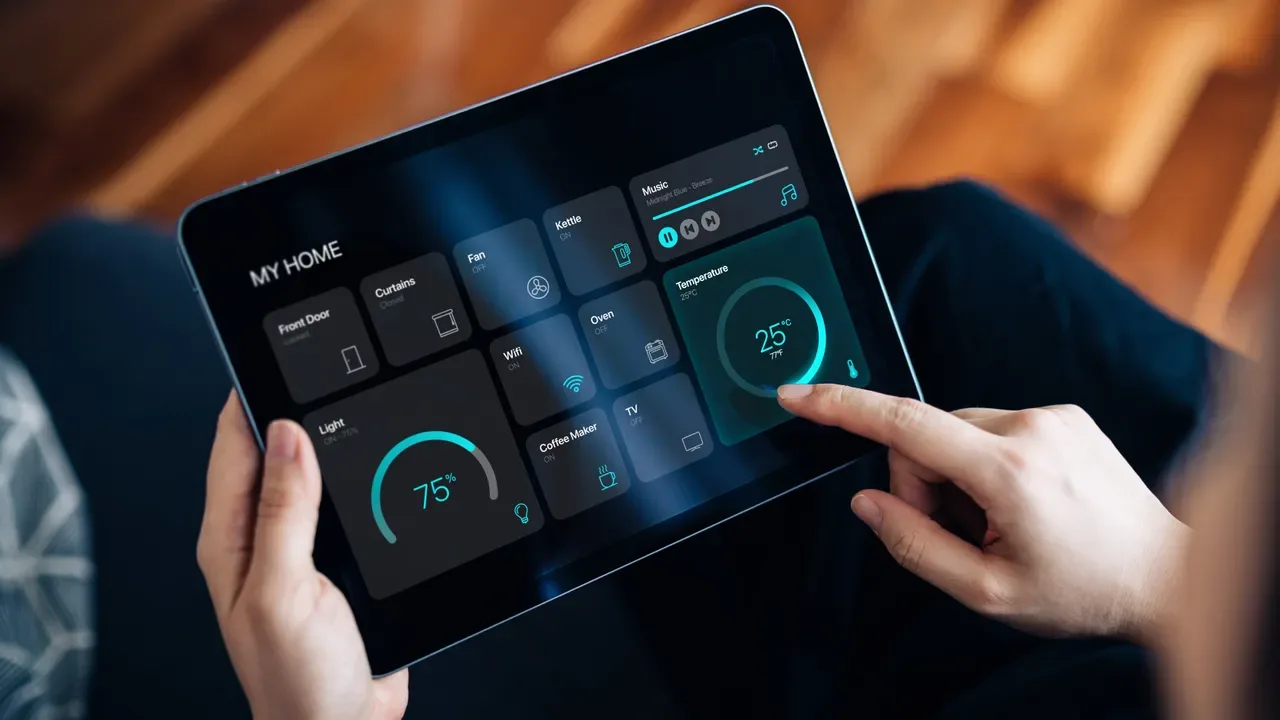
A smart home, in its current form, is characterized by interconnected devices – lights, thermostats, locks, speakers, appliances – that can be controlled remotely, often via a smartphone app or voice assistant. These systems are primarily reactive. You tell your smart speaker to turn on the lights, or you program your thermostat to adjust at specific times. While convenient, smart homes often require explicit user commands or rigid programming. They lack true autonomy and the ability to learn and adapt proactively to complex, nuanced situations. The limitations become apparent when dealing with multiple devices, unexpected events, or the desire for truly seamless, context-aware automation.
Defining Agentic Homes: Proactive Intelligence at Work
An agentic home moves beyond mere connectivity and reactivity. It envisions a home environment orchestrated by sophisticated AI agents. These agents are not just passive tools; they are intelligent entities capable of understanding context, making decisions, learning from their environment and user behavior, and acting autonomously to achieve specific goals. These goals could range from optimizing energy consumption based on weather forecasts and occupancy to ensuring the perfect ambiance for a movie night or proactively identifying and addressing potential maintenance issues with appliances. The core difference lies in the shift from user-initiated actions to AI-driven, proactive management.
How AI Agents Will Control Connected Devices
The transition to agentic homes hinges on the capabilities of advanced AI agents. These agents will interact with your connected devices through a sophisticated understanding of their functions and your home's ecosystem. Here's how it might work:
Contextual Understanding: AI agents will leverage sensors (occupancy, light, temperature, sound) and data streams (weather forecasts, calendar events, user preferences) to understand the current context of the home and its inhabitants.
Predictive Capabilities: Based on learned patterns and real-time data, agents will predict needs and potential issues. For example, an agent might notice a gradual increase in humidity and suggest running a dehumidifier before mold becomes a problem.
Autonomous Decision-Making: Instead of waiting for a command, agents will make decisions. If an agent detects a security anomaly, it might autonomously lock doors, alert the user, and record video footage.
Complex Task Orchestration: AI agents can manage complex, multi-device tasks. For instance, preparing for a dinner party might involve adjusting lighting, preheating the oven, setting the mood with music, and ensuring the climate control is optimal – all initiated by the agent based on your calendar.
Learning and Adaptation: Over time, AI agents will learn your routines, preferences, and even anticipate your moods, refining their actions to provide a personalized and increasingly intuitive living experience. This is akin to how AI agents are reshaping how businesses operate, by taking on complex tasks autonomously.
Key Differences: Smart Home vs. Agentic Home
The distinction between smart and agentic homes can be clarified by looking at their core characteristics:
Intelligence: Smart homes have basic programming; agentic homes possess advanced AI with learning and decision-making capabilities.
Initiation: Smart homes are largely reactive, requiring user input; agentic homes are proactive, initiating actions based on context and goals.
Autonomy: Smart homes offer limited autonomy; agentic homes are designed for significant autonomous operation.
Complexity: Smart homes manage individual devices or simple routines; agentic homes orchestrate complex, multi-faceted scenarios.
Personalization: Smart homes offer basic customization; agentic homes provide deep, adaptive personalization.
Benefits of Agentic Homes
The advent of agentic homes promises a host of advantages that go beyond simple convenience:
Enhanced Comfort and Convenience: Imagine your home adjusting lighting, temperature, and even ambient sound to perfectly suit your activity, whether you're working, relaxing, or entertaining, all without you lifting a finger.
Optimized Energy Efficiency: AI agents can meticulously manage energy consumption by intelligently controlling HVAC systems, lighting, and appliances based on real-time occupancy, weather, and grid demand, leading to significant cost savings and reduced environmental impact. This proactive approach to energy management is a key differentiator.
Improved Security: Beyond basic alerts, agentic homes can intelligently monitor for anomalies, distinguish between routine events and potential threats, and take appropriate automated actions, offering a more robust and responsive security posture.
Predictive Maintenance: AI agents can monitor the performance of appliances and systems, detecting subtle deviations that indicate a potential failure before it occurs. This allows for scheduled maintenance, preventing costly breakdowns and inconvenience.
Greater Accessibility: For individuals with mobility challenges or other disabilities, agentic homes can offer unprecedented levels of independence and control over their living environment.
Challenges and Considerations for Agentic Homes
While the vision of agentic homes is compelling, several challenges and ethical considerations must be addressed:
Privacy and Data Security: The extensive data collection required for AI agents to function effectively raises significant privacy concerns. Robust security measures and transparent data handling policies will be paramount to build user trust. How will AI agents manage my devices securely? This question will be central to adoption.
Ethical Implications: Granting AI agents significant control over our personal environments raises ethical questions. Who is responsible when an autonomous decision leads to an undesirable outcome? The ethical considerations are profound, and understanding the principles behind agentic AI is crucial, much like understanding how to make AI agents work for your business strategically.
Interoperability and Standardization: For agentic homes to become a reality, seamless interoperability between devices from different manufacturers will be essential. A lack of standardization could lead to fragmented and inefficient systems.
Complexity and User Control: While autonomy is a key feature, users will still need intuitive ways to set boundaries, override decisions, and understand what their AI agents are doing. Striking the right balance between automation and user control is critical.
Cost and Accessibility: Initially, the advanced technology required for agentic homes may be expensive, potentially limiting accessibility. Ensuring equitable access will be a societal challenge.
The Future Outlook: Embracing Agentic Living
The journey from smart homes to agentic homes is not just about technological advancement; it's about redefining our relationship with our living spaces. As AI continues to evolve, agentic homes will move from a futuristic concept to a tangible reality, offering unprecedented levels of comfort, efficiency, and security. The widespread adoption of agentic homes will likely be a gradual process, with early adopters paving the way for broader market acceptance. The benefits of having an agentic home – from seamless automation to proactive problem-solving – are substantial. While potential risks, such as privacy breaches and the need for robust security, must be carefully managed, the promise of a truly intelligent, self-managing home is an exciting prospect for the future of living.
Discover how agentic homes are set to redefine our living spaces. Share your thoughts on the future of AI-powered home control in the comments below!
Related Articles
View all articles
2026 AI Breakthrough Winners Put Agentic AI in the Spotlight
Explore the rise of agentic AI. Learn how autonomous systems are shifting from simple chatbots to complex workflows and what this means for the future of work.

Wearables and AI Agents: The Next Personal Assistant May Live on Your Body
Explore the exciting convergence of wearable technology and AI agents. Discover how your next personal assistant might live on your body, transforming daily life.
How to Evaluate AI Voice Agents for Business
Learn how to choose the best AI voice agents for phone calls. Master integration, latency, and data privacy to automate your customer service effectively.
Continue exploring
Find AI agents by workflow
More in Industry Insights
Browse more articles in the Industry Insights category.
AI articles
Explore more guides and insights tagged AI.
Smart Home articles
Explore more guides and insights tagged Smart Home.
AI Agent Categories
Browse use-case pages for sales, productivity, coding, customer service, and more.
AI Agents Landscape
Explore the full directory map and compare agents by workflow and category.
Agent Skills
Find reusable skills, capabilities, and building blocks for AI agent workflows.