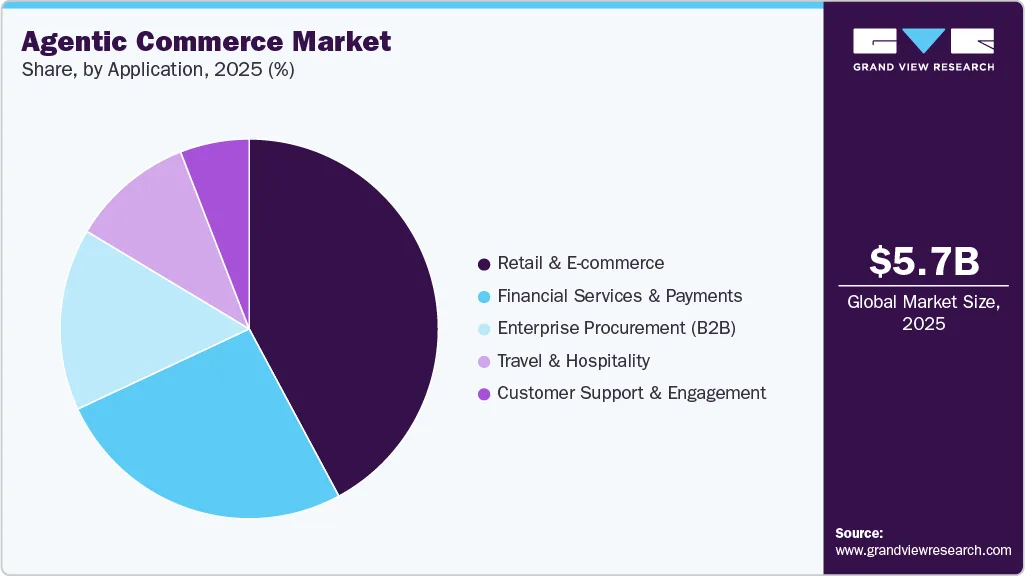
Agentic Commerce Is Starting to Show Real Revenue Share
Defining Agentic Commerce
In the evolving digital landscape, agentic commerce represents a fundamental departure from traditional e-commerce paradigms. While standard conversational AI focuses on answering queries or providing product information, agentic commerce empowers autonomous software agents to act on a user's behalf. These agents do not merely suggest products; they navigate interfaces, compare specifications, manage checkout flows, and confirm transactions to achieve a specific, user-defined goal.
For businesses, this means moving from a model of passive content delivery to one of active, task-oriented service. Understanding the distinction between generative AI and agentic AI in commerce is critical: generative AI generates text or images based on input, whereas agentic AI utilizes those generation capabilities to execute multi-step workflows in a live environment. As Agentic AI Is Reshaping Commerce, it is effectively closing the gap between consumer intent and the final conversion.
The Shift from Passive to Active Shopping
The transition from search-based shopping to intent-based outcomes is the hallmark of modern digital transformation. Historically, users have navigated storefronts by typing keywords into a search bar, filtering results, and manually adding items to a cart. This process is inherently passive and prone to user drop-off. Autonomous shopping agents disrupt this cycle by acting as a concierge that understands the nuance of a request.
When a consumer asks an agent to "find the best ergonomic office chair under $300 that ships by Friday," the agent performs the heavy lifting. It scans inventory, checks shipping logistics, and verifies price points in real-time. By moving from a search interface to an action-oriented workflow, businesses can significantly improve conversion rates. The agent handles the friction of the checkout process, ensuring that the "active" nature of the shopping experience translates into higher completion rates.
How Agentic AI Is Reshaping Commerce
The integration of autonomous agents into retail ecosystems is changing how businesses operate. It is no longer enough to have a static product page; companies must now provide structured data and APIs that allow agents to interact with their storefronts effectively. This paradigm shift requires a deep understanding of how to remove technical barriers in agentic commerce to ensure seamless communication between AI agents and backend inventory systems.
The Role of Personalization in High-Conversion Workflows
Personalization in agentic commerce goes beyond "recommended for you" banners. Because agents have access to a user's historical preferences, past returns, and explicit constraints, they can curate a shopping experience that is hyper-relevant. High-conversion workflows are built on the ability of the agent to maintain context throughout the entire journey, from initial product discovery to final payment verification.
Quantifying the Revenue Impact
Measuring revenue from agentic commerce requires a shift in how businesses define attribution. Traditional analytics focus on click-through rates and page views, but agent-led sales require tracking at the intent level. Businesses should implement a framework that measures the success of the agent in navigating the sales funnel without human intervention.
How do autonomous shopping agents increase revenue?
Autonomous agents increase revenue by reducing the "time-to-purchase" and minimizing abandonment. By handling complex purchasing tasks—such as applying coupon codes, checking loyalty point balances, and coordinating delivery windows—agents remove the hurdles that typically lead to cart abandonment. This efficiency creates a direct line from intent to revenue, effectively capturing sales that might otherwise be lost to the complexity of the traditional checkout process.
Overcoming Technical Hurdles
The promise of autonomous purchasing is often tempered by the reality of legacy infrastructure. Many e-commerce platforms were built for human interaction, not for machine-to-machine communication. To succeed, organizations must focus on API-first architectures that allow for secure and reliable interaction with third-party agents.
What are the risks of using AI agents for purchasing?
While the benefits are significant, businesses must consider the risks:
Data Privacy: Ensuring that agents follow strict data privacy and security standards is non-negotiable.
Error Handling: If an agent misinterprets a constraint (e.g., ordering the wrong size), the cost of returns can escalate.
System Stability: High-frequency automated requests can overwhelm legacy servers if not properly managed.
Best Practices for Implementation
Adopting agentic workflows is a journey, not a switch. Start by identifying high-frequency, low-complexity tasks where an agent can provide immediate value. Ensure that your product data is clean, well-structured, and accessible via secure APIs. As you expand, focus on creating "guardrails" for your agents logic that defines the boundaries of what an agent can and cannot do without human oversight.
By prioritizing interoperability and focusing on the user's ultimate goal, you can position your brand to benefit from the rise of agentic commerce. Ready to integrate autonomous agents into your sales strategy? Contact our team to learn how to prepare your backend infrastructure for the future of agentic commerce.
Related Articles
View all articles
Agentic Commerce 2026: AI Shopping Agents, UCP, and Zero-Click Shopping
Explore agentic commerce in 2026: AI shopping agents, Universal Commerce Platforms (UCP), and zero-click shopping. Discover the future of personalized retail.

Agentic AI Is Reshaping Commerce
Discover how agentic AI is reshaping commerce by moving beyond simple chatbots to autonomous agents that execute complex tasks and optimize supply chains.
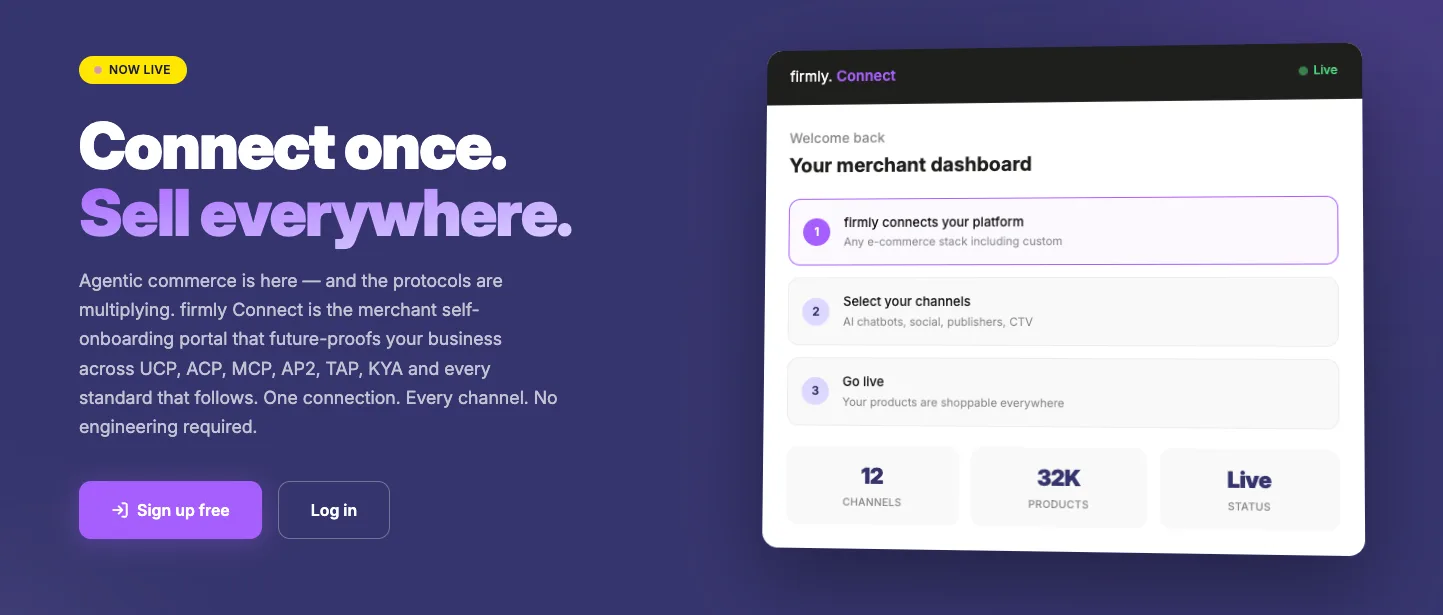
Firmly Tries to Remove the Integration Bottleneck in Agentic Commerce
Overcome the integration bottleneck in agentic commerce by streamlining data flows and API connectivity for autonomous AI agents.
Continue exploring
Find AI agents by workflow
More in Industry Insights
Browse more articles in the Industry Insights category.
AI articles
Explore more guides and insights tagged AI.
Ecommerce articles
Explore more guides and insights tagged Ecommerce.
AI Agent Categories
Browse use-case pages for sales, productivity, coding, customer service, and more.
AI Agents Landscape
Explore the full directory map and compare agents by workflow and category.
Agent Skills
Find reusable skills, capabilities, and building blocks for AI agent workflows.