Docusign Makes Contracts Agent-Operated
The Evolution of Contract Automation
For years, legal technology was defined by static software. Teams used digital templates, cloud storage, and basic e-signature workflows to replace paper processes. While these tools improved efficiency, they remained passive. Today, the industry is shifting toward Docusign agent-operated contracts, a movement that signals a transition from static document management to dynamic, agent-led processes. This evolution allows software not just to store data, but to act upon it.
This shift is part of a broader trend toward AI-driven contract lifecycle management (CLM). Instead of a lawyer manually reviewing every clause, autonomous systems can now interpret intent, flag risks, and even suggest modifications in real-time. For legal and operations professionals, this means moving away from "manual-first" drafting toward a model where AI agents handle the heavy lifting of routine negotiation, leaving humans to handle high-level strategy and complex exceptions.
What Are Agent-Operated Contracts?
In the context of Docusign Intelligent Agreement Management (IAM), agent-operated contracts represent a shift where AI agents—software entities capable of executing tasks with minimal human intervention—manage the lifecycle of an agreement. Unlike simple automation, which follows linear "if-this-then-that" rules, agentic AI uses large language models to reason through context.
Many users ask: What is the difference between AI automation and agentic AI? Traditional automation is rigid; it executes predefined steps. Agentic AI is goal-oriented. If an agent is tasked with "get this NDA signed," it can navigate through unexpected roadblocks, such as a counterparty requesting a specific liability clause change, by evaluating that request against your company's pre-approved playbooks.
The Human-in-the-Loop Requirement
While the goal is autonomy, the reality of legal tech is the necessity of "human-in-the-loop" oversight. Legal compliance requires accountability, meaning that while an agent may draft or negotiate, a qualified professional must ultimately authorize the binding of the organization to the terms. This hybrid approach ensures that the speed of AI is tempered by the professional judgment of legal counsel.
Key Benefits for Legal and Operations Teams
Adopting agent-operated workflows offers significant competitive advantages. By automating the "grunt work" of contract management, teams can focus on higher-value tasks. The core benefits include:
Reduced manual drafting: AI agents can generate initial drafts based on specific deal parameters, significantly shortening the time to first-draft completion.
Faster negotiation cycles: By instantly identifying deviations from standard terms, agents allow for quicker back-and-forth communication with counterparts.
Standardized risk profiles: Agents use AI contract review capabilities to enforce company policy consistently across every document, ensuring that no outlier clause slips through the cracks.
Improved data visibility: Because the agent is involved in the negotiation, the resulting data is cleaner and more easily integrated into ERP or CRM systems.
For those building these systems, understanding the underlying quality of your AI infrastructure is paramount. Before deploying autonomous agents, it is essential to consider the evaluation framework for AI agents to ensure your tools are reliable, accurate, and aligned with legal standards.
Security and Financial Considerations
The integration of autonomous systems into legal tech brings valid concerns regarding security and financial risk. Are AI agents secure for managing sensitive legal documents? The answer depends on the architecture. When agents are granted the authority to trigger workflows—such as financial payments or service provisions—they must operate within strict, encrypted environments.
Does Docusign use autonomous agents for contract negotiation? Docusign is actively moving toward AI-led experiences, but legal teams must remain vigilant. When your contracts are linked to financial outcomes, such as automated billing or escrow releases, you must ensure your technical stack is robust. For teams integrating these workflows with payment gateways, understanding the complexities of secure agent-based payments is a critical step in preventing unauthorized or erroneous financial transactions.
Furthermore, external standards such as the NIST AI Risk Management Framework provide a baseline for how organizations should assess the risks of autonomous systems. Relying solely on vendor claims is insufficient; legal teams should conduct their own internal audits to ensure that the agents are not hallucinating terms or exposing the firm to unintended liability.
Best Practices for Implementing Agentic Workflows
Implementing agent-operated contracts is not a "set it and forget it" task. To succeed, legal departments should follow a phased approach:
Start with low-risk templates: Begin your agentic journey with standardized documents such as an NDA template or basic vendor renewals before moving to more complex agreements like master service agreements. These lower-risk documents provide a practical environment for testing agent-led drafting, review, and negotiation workflows.
Define clear guardrails: Program your agents with strict "stop-loss" parameters. If a request falls outside of pre-defined legal bounds, the agent should be configured to escalate the document to a human immediately.
Continuous monitoring: Treat your AI agents as junior associates. Regularly review their output to ensure they are adhering to current legal standards and company playbooks.
Audit trail maintenance: Ensure that every decision made by an agent is logged. In the event of a dispute, you must be able to prove why a specific term was accepted or rejected.
The future of contract management lies in the balance between autonomous speed and human-directed strategy. By treating Docusign agent-operated contracts as a tool to augment, rather than replace, legal expertise, firms can achieve a level of operational efficiency that was previously impossible. Ready to modernize your legal operations? Subscribe to our newsletter for the latest updates on AI agent integrations in enterprise contract management.
Related Articles
View all articles
Why Do In-House Teams Struggle to Manage Contracts at Scale?
Learn why in-house legal teams struggle to manage contracts at scale, from renewals and intake to version control, visibility, AI extraction, and post-signature risk.
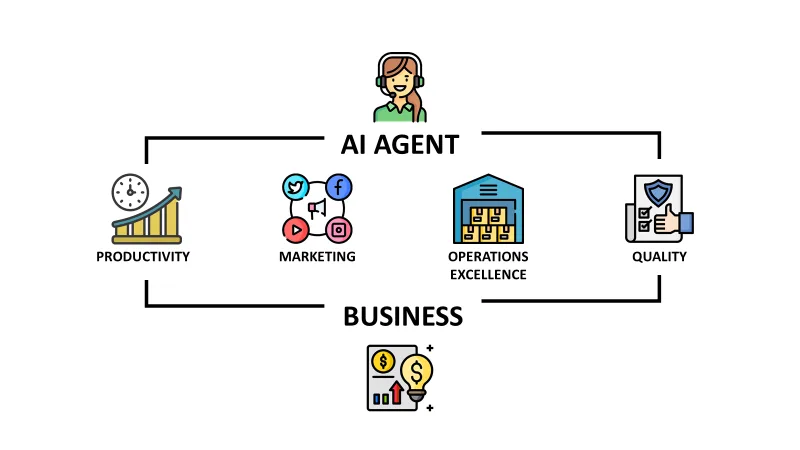
How to Make AI Agents Work for Your Business: A Strategic Guide
Learn how to effectively integrate AI agents into your business operations. Discover strategies for deployment, workflow automation, and scaling your AI capacity.
AI Task Management: How AI Agents Are Changing the Way Teams Organize Work
Discover how AI task management and AI agents help teams automate tasks, prioritize work, manage projects, streamline workflows, and improve productivity.
Continue exploring
Find AI agents by workflow
More in Industry Insights
Browse more articles in the Industry Insights category.
Legal Tech articles
Explore more guides and insights tagged Legal Tech.
AI articles
Explore more guides and insights tagged AI.
AI Agent Categories
Browse use-case pages for sales, productivity, coding, customer service, and more.
AI Agents Landscape
Explore the full directory map and compare agents by workflow and category.
Agent Skills
Find reusable skills, capabilities, and building blocks for AI agent workflows.