
Could AI Agents Replace Traditional Smart Home Apps?
Smart homes have evolved rapidly over the past decade. What began with simple remote controls for lights and thermostats has expanded into connected ecosystems capable of automating everyday routines. Today, most smart devices are managed through dedicated mobile apps that allow homeowners to monitor, schedule, and adjust settings from anywhere. As artificial intelligence becomes more capable, however, many people are beginning to ask whether traditional apps will eventually be replaced by AI agents that understand natural language and make decisions automatically.
While AI agents have the potential to transform the smart home experience, they are unlikely to eliminate traditional apps entirely. Instead, the future will probably combine conversational AI with familiar interfaces, allowing homeowners to choose the level of control that best suits their needs.
AI Agents Can Simplify Everyday Home Management
One of the biggest advantages of AI agents is their ability to understand broader goals rather than individual commands. Instead of opening multiple apps to adjust heating, lighting, and schedules separately, homeowners could simply ask an AI assistant to prepare the house for bedtime or optimize energy usage during the day.
This approach becomes even more effective when devices are built around open standards. Products such as Mysa demonstrate this direction by supporting Matter, allowing compatible thermostats to integrate across major smart home ecosystems including Apple Home, Google Home, and Amazon Alexa without requiring proprietary hubs. Matter compatibility creates a stronger foundation for future AI assistants that can coordinate multiple devices through a shared standard rather than isolated applications. Mysa's Matter-enabled thermostat is designed for central HVAC systems while continuing to offer scheduling, remote access, and smart home integrations without subscription fees.
Rather than replacing existing devices, AI agents may simply become a more intuitive way of interacting with them.
Dedicated Apps Still Offer Greater Precision
Despite the excitement surrounding AI, traditional smart home apps continue providing advantages that conversational interfaces cannot always match. Detailed scheduling, firmware updates, installation guidance, advanced configuration, and diagnostic information are often easier to manage through dedicated applications.
Visual interfaces also make complex settings easier to understand. Energy reports, historical temperature trends, automation rules, and room-by-room adjustments benefit from dashboards that display detailed information at a glance.
For homeowners who enjoy fine-tuning their systems, traditional apps remain valuable because they provide direct access to every available setting.
AI may simplify routine tasks, but specialized controls will likely continue living inside dedicated applications.
Automation Works Best With Human Oversight

Photo by Mohamed Nohassi on Unsplash
A truly intelligent home should reduce unnecessary decisions without removing homeowner control. AI can learn occupancy patterns, recommend energy-saving schedules, and automatically respond to changing weather conditions, but people still want confidence that important decisions remain transparent.
Trust becomes especially important when AI controls heating, cooling, security, or energy consumption. Homeowners generally prefer systems that explain why adjustments were made and allow easy overrides whenever needed.
This balance between automation and manual control helps ensure technology remains helpful instead of unpredictable.
Successful smart homes will likely combine intelligent recommendations with clear user approval whenever significant changes are involved.
Privacy Will Shape Future Smart Homes
As AI agents become more capable, privacy will become an even more important consideration. Smart homes generate large amounts of information, including occupancy patterns, temperature preferences, daily schedules, and device usage.
Many homeowners will expect AI systems to process as much information locally as possible while minimizing unnecessary cloud storage. Open standards such as Matter also support greater interoperability, allowing devices from different manufacturers to communicate more effectively while giving users greater flexibility when choosing platforms.
Manufacturers that combine intelligent automation with transparent privacy practices are likely to earn greater long-term trust from consumers.
Confidence in AI will depend not only on convenience but also on responsible data handling.
The Future Will Combine AI and Traditional Apps
Rather than replacing smart home apps altogether, AI agents are more likely to become another layer of interaction. Routine requests such as adjusting temperatures, creating schedules, or preparing the home for different activities may gradually shift toward natural conversations, while detailed configuration and troubleshooting remain within dedicated applications.
This hybrid approach allows homeowners to benefit from greater convenience without sacrificing the control that traditional apps provide. As smart home technology continues to mature, the goal will not be eliminating existing interfaces but making them easier to use through intelligent assistance.
Ultimately, AI agents represent the next step in the evolution of smart homes, not the end of traditional apps. The most successful systems will combine conversational intelligence, reliable automation, strong privacy protections, and familiar controls, giving homeowners the flexibility to interact with their homes in whatever way feels most natural.
Related Articles
View all articles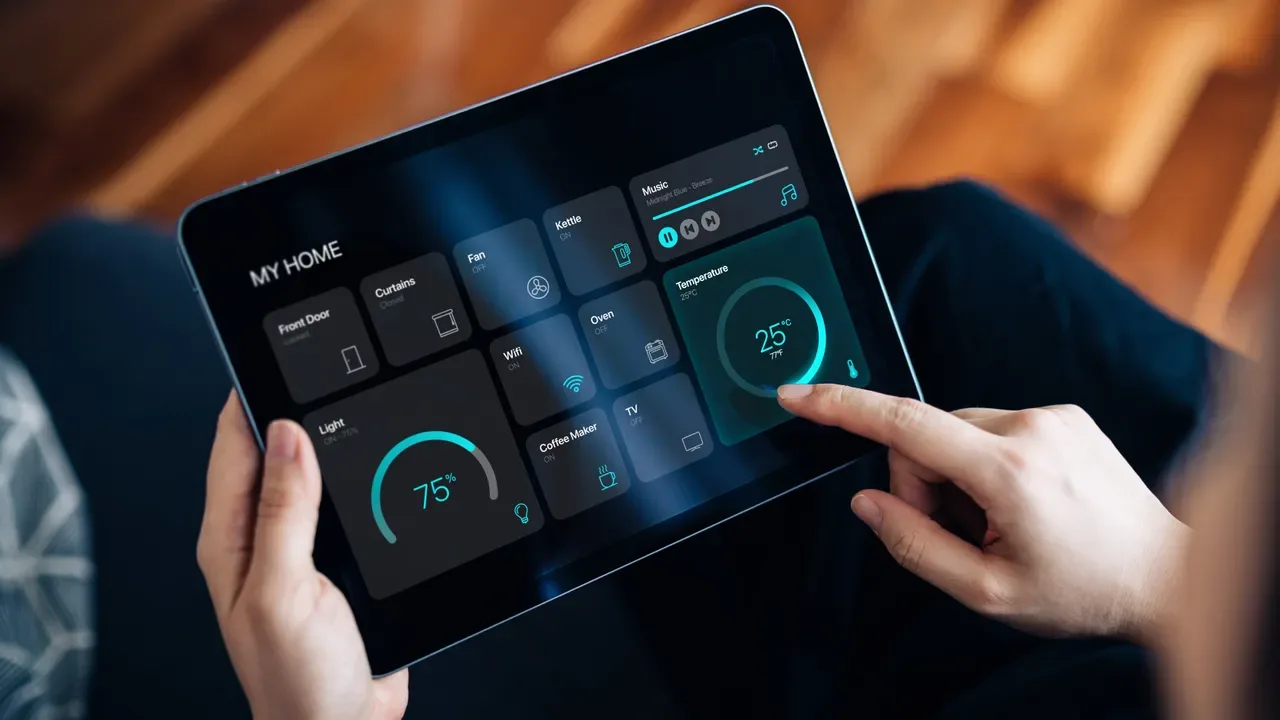
From Smart Homes to Agentic Homes: How AI Agents Will Control Connected Devices
Explore the evolution from smart homes to agentic homes, where AI agents proactively manage connected devices for a truly intelligent living experience.

Could Your Next Smart Home Run on AI Agents Instead of Apps?
Could Your Next Smart Home Run on AI Agents Instead of Apps?
AI Analytics Agents vs. Traditional BI: What’s the Difference?
AI analytics agents vs traditional BI: compare dashboards, natural-language analytics, automated insights, use cases, benefits, and when to use each.
Continue exploring
Find AI agents by workflow
More in Partner Insights
Browse more articles in the Partner Insights category.
smart homes articles
Explore more guides and insights tagged smart homes.
ai articles
Explore more guides and insights tagged ai.
AI Agent Categories
Browse use-case pages for sales, productivity, coding, customer service, and more.
AI Agents Landscape
Explore the full directory map and compare agents by workflow and category.
Agent Skills
Find reusable skills, capabilities, and building blocks for AI agent workflows.