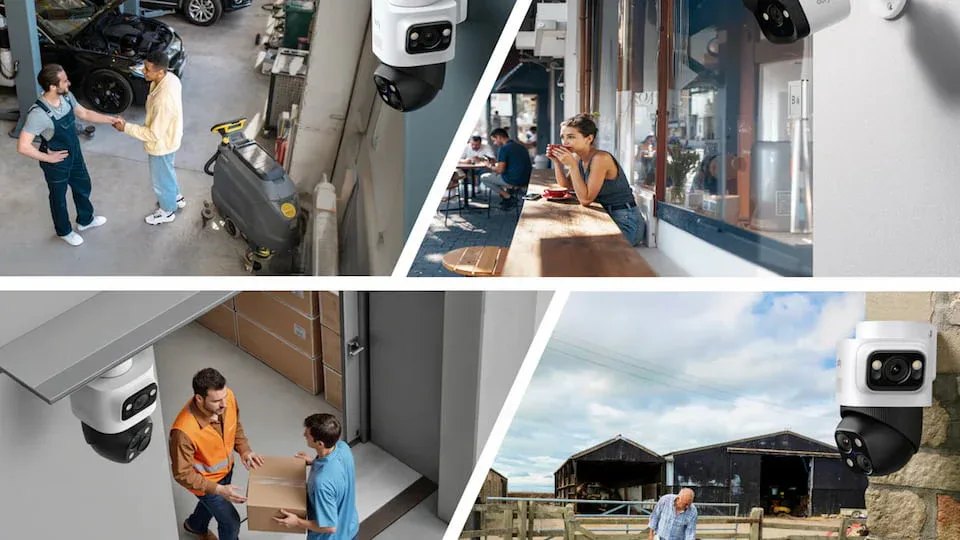
Coram Raises $35M to Turn Security Cameras into Autonomous AI Investigators
Coram's Ambitious Vision for AI in Security
The security landscape is on the cusp of a profound transformation, driven by advancements in artificial intelligence. At the forefront of this evolution is Coram, a company that has secured a significant $35 million in funding. This investment signals a bold new direction: turning passive security cameras into active, autonomous AI investigators. This development promises to move beyond simple monitoring to proactive, intelligent analysis of security events, reshaping how we approach safety and oversight.
What is Coram and What Does This Funding Mean?
Coram's mission is to imbue existing security camera infrastructure with sophisticated artificial intelligence capabilities. Traditionally, security cameras serve as eyes, recording footage that often requires human review after an incident occurs. Coram aims to change this paradigm by enabling cameras to not only see but also to understand, analyze, and investigate events in real-time. The recent $35 million funding round is a substantial validation of this vision and will be crucial for Coram's growth. It will fuel further research and development, expand their engineering team, and accelerate the deployment of their technology. This capital infusion allows Coram to move from a promising concept to a scalable solution, positioning them to make a significant impact on the security technology market.
How Coram Turns Security Cameras into AI Investigators
The core of Coram's innovation lies in its advanced computer vision and AI algorithms. Instead of relying solely on human operators to sift through hours of footage, Coram's system allows cameras to act as intelligent agents. This is achieved through several key technological components:
Advanced Object Recognition and Tracking: The AI can identify, classify, and track various objects and individuals within the camera's field of view with high accuracy.
Behavioral Analysis: Coram's technology goes beyond simple motion detection. It analyzes patterns of behavior, identifying anomalies or suspicious activities that might indicate a security threat or a need for investigation. For example, it can detect loitering, unusual crowd movements, or unauthorized access attempts.
Contextual Understanding: The AI is designed to understand the context of events, allowing it to differentiate between normal activity and potentially problematic situations. This reduces false positives and ensures that human attention is directed where it's most needed.
Autonomous Investigation Capabilities: When a suspicious event is detected, the AI can autonomously initiate an investigation. This might involve automatically flagging relevant footage, cross-referencing with other camera feeds, or even generating preliminary reports, significantly reducing the time and effort required for human investigators.
This sophisticated approach essentially transforms a security camera from a passive recording device into an active participant in maintaining security. The question of how Coram uses AI to investigate is answered by this multi-layered analytical process that mimics and enhances human observational and analytical skills.
The Potential Applications and Benefits of Autonomous AI Investigators
The implications of Coram's technology are far-reaching, offering substantial benefits across various sectors:
Public Safety and Law Enforcement
In public spaces, Coram's AI investigators can help monitor large areas more effectively. They can automatically detect incidents such as altercations, unattended packages, or individuals in distress, alerting authorities faster. This can lead to quicker response times and potentially prevent escalations. The ability to rapidly search through vast amounts of footage for specific events or individuals also drastically improves investigative efficiency for law enforcement agencies.
Retail and Commercial Security
For businesses, these AI investigators can enhance loss prevention by identifying shoplifting behaviors or employee theft. They can also monitor customer flow and behavior to optimize store layout and staffing. Beyond theft, they can detect safety hazards, such as spills or blocked fire exits, and alert relevant personnel.
Enterprise and Industrial Security
In large industrial complexes or corporate campuses, autonomous AI can monitor restricted areas, detect unauthorized access, and ensure compliance with safety protocols. The ability to conduct autonomous investigations means that security teams can focus on higher-level strategic tasks rather than routine surveillance monitoring.
The benefits are clear: increased efficiency, faster response times, reduced human error, and the potential to proactively prevent incidents rather than just react to them. The question of what are the benefits of AI in security cameras is answered by the enhanced capabilities Coram brings to the table.
The Broader Landscape: Vision AI and Autonomous Agents
Coram's innovation is part of a larger, rapidly evolving trend in artificial intelligence, specifically in the realm of computer vision and autonomous agents. The evolution of computer vision has moved from basic image recognition to sophisticated scene understanding and predictive analysis. This shift is enabling systems to not only see but to interpret and act upon visual information. The development of autonomous agents, systems capable of performing tasks independently, is also accelerating. Coram represents a powerful convergence of these two areas, applying them to the critical domain of physical security.
This integration of AI agents into physical security infrastructure is a key trend. It signifies a move towards more proactive and intelligent security systems that can operate with minimal human intervention for routine tasks. As these systems become more capable, they have the potential to fundamentally change how we think about surveillance and security operations. For a deeper dive into this trend, explore The Rise of Vision AI Agents: From Security Cameras to Autonomous Operations.
Challenges and Considerations for Autonomous AI in Surveillance
While the potential of autonomous AI investigators is immense, it also brings forth critical challenges and considerations that need careful attention:
Privacy Concerns
The widespread deployment of AI-powered surveillance systems raises significant privacy concerns. The ability of cameras to continuously monitor, analyze, and potentially identify individuals raises questions about data collection, storage, and usage. Ensuring robust data protection and transparent policies is paramount to building public trust.
Ethical Implications
The autonomy of these AI systems also brings ethical dilemmas. Questions arise about accountability when an AI makes an incorrect judgment, the potential for bias in algorithms, and the impact on civil liberties. Defining clear ethical guidelines and oversight mechanisms is crucial for responsible deployment. The concept of what is autonomous AI investigation necessitates a parallel discussion on its ethical boundaries.
Technical Limitations and Bias
Despite advancements, AI systems can still be prone to errors, especially in complex or rapidly changing environments. Algorithmic bias, where AI systems inadvertently discriminate against certain groups due to biased training data, is another significant technical hurdle. Continuous refinement and rigorous testing are necessary to mitigate these issues.
The Role of Human Oversight
While Coram's technology aims for autonomy, it's important to recognize that human oversight remains critical. AI should be viewed as a tool to augment human capabilities, not replace them entirely. The potential for AI systems to be demoted if not properly managed is a growing concern in the broader autonomous agent landscape. As noted by Gartner, up to 40% of autonomous agents could face demotion by 2027 if they don't meet performance or integration expectations. This highlights the need for careful implementation and ongoing evaluation of AI systems, as discussed in Gartner Warns 40% of Autonomous Agents Could Be Demoted by 2027.
The Future Outlook for Coram and AI-Driven Security
Coram's $35 million funding round positions them to be a significant player in the future of security technology. As AI continues to advance, we can expect to see more sophisticated capabilities integrated into surveillance systems. This includes enhanced predictive analytics, more nuanced understanding of human intent, and even greater levels of autonomy. The trend towards leveraging AI for proactive threat detection and response is likely to accelerate. Companies like Coram are paving the way for a future where security systems are not just reactive but intelligent, adaptive, and capable of anticipating potential threats before they materialize. This represents a significant leap forward from simple monitoring to truly intelligent surveillance.
Conclusion: A New Era of Intelligent Surveillance
Coram's successful $35 million funding round marks a pivotal moment, signaling the transition of security cameras from passive recorders to active, autonomous AI investigators. By integrating advanced computer vision and AI, Coram is empowering surveillance systems to understand, analyze, and respond to events in real-time, offering substantial benefits in public safety, retail, and enterprise security. While challenges related to privacy, ethics, and technical limitations must be addressed, the trajectory is clear: AI is fundamentally reshaping the security industry. This move towards intelligent surveillance promises a more secure and efficient future.
Related Articles
View all articles
The Rise of Vision AI Agents: From Security Cameras to Autonomous Operations
Explore the transformative impact of Vision AI Agents, from enhancing security cameras to powering autonomous operations across industries. Discover their applications and future.

Pivot Raises $40M: What the Funding Round Signals for Agentic Procurement
Explore the implications of Pivot's $40M funding round for agentic procurement. Understand how AI and autonomous sourcing are reshaping enterprise purchasing.

AI Agents Need Eyes: Why Cameras Are Becoming the Next Agent Interface
Explore why cameras are crucial for AI agents, enhancing perception and interaction. Learn about embodied AI and the future of visual AI.
Continue exploring
Find AI agents by workflow
More in Press Release
Browse more articles in the Press Release category.
AI articles
Explore more guides and insights tagged AI.
Security articles
Explore more guides and insights tagged Security.
AI Agent Categories
Browse use-case pages for sales, productivity, coding, customer service, and more.
AI Agents Landscape
Explore the full directory map and compare agents by workflow and category.
Agent Skills
Find reusable skills, capabilities, and building blocks for AI agent workflows.