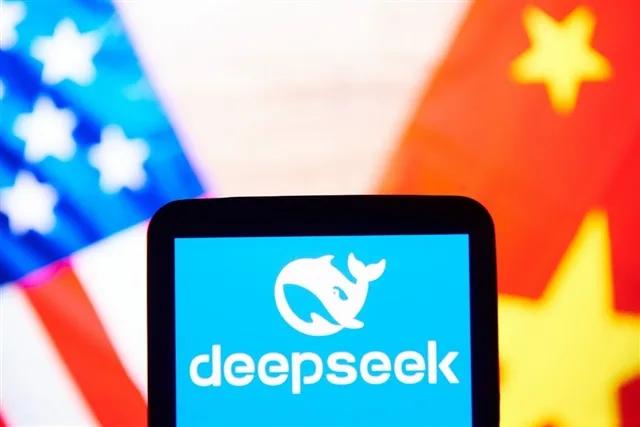
Chinese AI Startups Are Mining Claude For Data: The Inside Story
The AI Data Gold Rush: Why Claude is a Target
The race to build superior artificial intelligence is increasingly a battle for high-quality training data. In this high-stakes environment, reports have surfaced alleging that some Chinese AI startups are mining Claude, Anthropic's advanced AI assistant, for valuable data. This practice highlights a critical, and often contentious, frontier in global AI development: the scramble for the linguistic and reasoning patterns that fuel the next generation of models. As proprietary models like Claude demonstrate impressive capabilities, they become not just tools but potential data sources for competitors seeking to close the gap.
How Data Mining Reportedly Works: Techniques and Tools
The methods used to extract data from systems like Claude are sophisticated, often operating in a legal gray area. While specific techniques are closely guarded, industry observers point to several plausible approaches.
These methods include:
Structured API Querying: Using the Claude API to generate vast volumes of text on diverse topics, which is then cleaned and formatted for use in training datasets.
Prompt Engineering for Coverage: Crafting prompts designed to elicit specific types of reasoning, creative writing, or factual explanations to capture a wide range of capabilities.
Dialogue Tree Generation: Creating complex, multi-turn conversations to harvest high-quality interactive dialogue data.
Output Diversification: Requesting multiple variations of a single answer to understand response boundaries and stylistic range.
"The value isn't in copying outputs, but in reverse-engineering the thought processes and linguistic structures that make a model like Claude effective," notes an AI data strategist who requested anonymity.
The Ethical and Legal Gray Areas in AI Development
This practice sits at the intersection of several unresolved debates in AI ethics and law. The core question is: who owns, or has rights to, the data generated by an AI's interaction with users?
From a legal standpoint, Anthropic's Terms of Service explicitly prohibit using outputs to develop competing models. However, enforcement across jurisdictions, particularly internationally, is challenging. Copyright law is murky, as AI-generated text may not be copyrightable, but large-scale extraction could constitute a violation of terms or even computer fraud laws.
Ethically, the issue is even more complex. It raises concerns about:consent (the original users and the AI company), fair competition, and the sustainability of innovation. If companies can simply mine each other's public interfaces instead of investing in original data collection and research, it could disincentivize the very open advancements that benefit the field.
People Also Ask: Is it legal to mine data from AI like Claude? It likely violates the service's Terms of Service, placing it in a contractual breach, but international enforcement is difficult. What is Anthropic doing to prevent data mining? They likely employ rate-limiting, output watermarking, and monitoring for suspicious patterns of API usage.
The Competitive Pressure Driving Data Acquisition
The drive to mine data from leading models like Claude is fueled by intense competitive pressure within China's booming AI sector. Chinese tech giants and well-funded startups are in a fierce race to develop domestic counterparts to models like GPT-5 and Claude.
However, they face significant hurdles:
Data Scarcity: Access to vast, clean, multilingual datasets (particularly high-quality English data) is a major bottleneck.
Technological Catch-Up: While Chinese firms excel in applied AI, foundational model development requires deep research and unique training data.
Market Expectations: Users and investors demand capabilities on par with global leaders, creating a relentless push for rapid improvement.
People Also Ask: What are the best alternatives to Claude for AI startups? For startups seeking ethical data, alternatives include building proprietary datasets, using carefully curated open-source datasets (like FineWeb or Dolma), and forming data partnerships.
Potential Impacts on Global AI Development
The trend of Chinese AI startups mining Claude is more than an isolated incident; it is a symptom of broader shifts with global implications.
The New AI Cold War: Data as the Strategic Resource
Data is becoming the strategic resource of the AI age, akin to oil in the 20th century. Practices like data mining accelerate capability diffusion but also fuel techno-nationalist tensions, potentially leading to more restrictive data borders and fragmented AI ecosystems.
Open Source vs. Proprietary AI: The Data Scarcity Challenge
Even the open-source community faces a data scarcity challenge. When leading proprietary models become data sources, it questions the sustainability of truly open AI development and may lead to more defensive postures from companies like Anthropic.
Beyond Copyright: Who Owns AI-Generated Content?
This situation forces a re-examination of ownership. Current frameworks are inadequate. We may need new licenses or norms governing the use of AI outputs for training subsequent models.
People Also Ask: How does China regulate AI data collection? China has strict data security and personal information protection laws, but regulations specifically targeting the use of AI-generated content for training are still evolving.
The Future of AI Data Sourcing and Governance
The reported data mining activities are a catalyst for change. The industry is moving towards more sophisticated governance and technological solutions.
Future trends will likely include:Technical Protections like advanced watermarking and dataset poisoning to track misuse; Evolving Regulations that specifically address AI-derived data, both in China and internationally; and New Collaboration Models, such as secure data consortiums or licensed data exchanges, to provide legal avenues for high-quality data access.
The fundamental truth remains: How important is training data for AI performance? It is paramount. The quality, diversity, and scale of training data directly correlate with model capability. This immutable fact ensures that the quest for data, and the conflicts surrounding it, will define the next chapter of AI's evolution. The challenge for the global community is to forge paths for innovation that respect ethical boundaries and promote healthy competition.
Stay informed on the evolving landscape of AI ethics and competition.
Related Articles
View all articles
Anthropic Catches Chinese Labs Stealing Claude at Scale - Largest AI Heist in History!
Discover how Anthropic uncovered a massive operation by Chinese labs allegedly stealing Claude AI at an unprecedented scale. Explore the implications of this AI heist.
Claude Sonnet 4.6: Features, Capabilities & How It Works
Explore Claude Sonnet 4.6, its key features, improvements over previous versions, and how it compares to GPT-4.

Hackers Used Claude to Steal 150GB of Mexican Government Data
Analysis of the cyberattack where hackers leveraged Claude AI to exfiltrate 150GB of sensitive Mexican government data. Explore the security implications.
Continue exploring
Find AI agents by workflow
More in Industry Insights
Browse more articles in the Industry Insights category.
AI Ethics articles
Explore more guides and insights tagged AI Ethics.
Artificial Intelligence articles
Explore more guides and insights tagged Artificial Intelligence.
AI Agent Categories
Browse use-case pages for sales, productivity, coding, customer service, and more.
AI Agents Landscape
Explore the full directory map and compare agents by workflow and category.
Agent Skills
Find reusable skills, capabilities, and building blocks for AI agent workflows.