
All Roads Lead to Decentralized AI: Understanding the Future of Intelligence
The Shifting Paradigm of AI
Artificial Intelligence (AI) has long been envisioned as a powerful force for progress, capable of solving complex problems and transforming industries. However, the dominant model of AI development has been heavily centralized, with large datasets and computational power concentrated in the hands of a few entities. This paradigm is now facing a significant shift. As concerns around data privacy, security, and algorithmic bias grow, a new approach is gaining momentum: decentralized AI. This article will explore what decentralized AI is, its core principles, its advantages over traditional models, the challenges it faces, and its exciting potential applications, ultimately arguing that all roads are indeed leading towards a more distributed future for artificial intelligence.
What is Decentralized AI?
At its core, decentralized AI refers to AI systems where the data, computation, and decision-making processes are distributed across a network of nodes rather than being consolidated in a single, central server or entity. This contrasts sharply with traditional centralized AI models, which often rely on massive data lakes and powerful central processors. In a centralized system, data is collected and processed by a single authority, which can create single points of failure, raise privacy concerns, and limit accessibility. Decentralized AI aims to overcome these limitations by leveraging distributed computing and, in many cases, blockchain technology.
Core Principles of Decentralized AI
Several key concepts underpin the functionality and promise of decentralized AI:
Distributed Computing: Instead of a single supercomputer, decentralized AI utilizes the collective computing power of many devices or nodes. This can include personal computers, servers, or even edge devices.
Federated Learning: This is a crucial technique where AI models are trained on decentralized data sources without the data ever leaving its original location. Instead of sending raw data to a central server, only model updates (gradients or weights) are shared and aggregated. This significantly enhances AI privacy.
Blockchain Technology: While not strictly necessary for all decentralized AI, blockchain offers a secure, transparent, and immutable ledger for managing data access, model provenance, and incentivizing participation in the network. It provides a robust framework for AI governance.
Decentralized Data Storage: Data is stored across a network of nodes, making it more resilient and less susceptible to censorship or single-point attacks compared to centralized databases.
How Does Federated Learning Contribute to Decentralized AI?
Federated learning is a cornerstone of decentralized AI because it directly addresses the critical issue of data privacy. Imagine training a complex AI model for medical diagnosis. In a centralized approach, all patient data would need to be collected and stored on a central server, posing significant privacy risks and regulatory hurdles. With federated learning, the AI model is sent to the devices where the data resides (e.g., hospitals, individual devices). The model learns from this local data, and only the aggregated learning updates are sent back to a central server for global model improvement. This means sensitive patient information never leaves its secure environment, a significant step forward for AI security and privacy.
Key Benefits of Decentralized AI
The shift towards decentralized AI offers a compelling array of advantages:
Enhanced Data Privacy and Security: By keeping data localized and only sharing model insights, decentralized AI dramatically reduces the risk of large-scale data breaches and unauthorized access. This is particularly important given the growing concerns around data privacy and security that are driving interest in this approach.
Increased Resilience and Robustness: Centralized systems are vulnerable to single points of failure. If a central server goes down, the entire AI system can become inoperable. Decentralized systems, by distributing functionality, are inherently more resilient.
Democratized Access and Control: Decentralization can break down the barriers to AI development and deployment, allowing a broader range of individuals and organizations to participate. This fosters greater control over data and algorithms, fueling the decentralized AI movement.
Reduced Bias and Improved Fairness: Centralized datasets can inadvertently reflect the biases of the data collectors. Decentralized training, by incorporating data from diverse sources, has the potential to create more equitable and less biased AI models.
Cost-Effectiveness: Distributing computational load across many nodes can be more cost-effective than investing in and maintaining massive centralized data centers.
Decentralized AI vs. Centralized AI: A Comparative Analysis
Understanding the differences between these two approaches is key to appreciating the value of decentralization. The push for AI democratization and greater control over data fuels the decentralized AI movement.
Centralized AI
Data: Collected and stored in a central location.
Computation: Performed on powerful central servers.
Control: Concentrated with a single entity.
Pros: Easier to manage and update, potentially faster initial training on large datasets.
Cons: Significant privacy risks, single points of failure, potential for bias, high infrastructure costs.
Decentralized AI
Data: Distributed across multiple nodes, often remains local.
Computation: Distributed across the network.
Control: Shared across participants or governed by protocols.
Pros: Enhanced privacy and security, increased resilience, democratized access, reduced bias potential.
Cons: Complexity in coordination and consensus, potential for slower training in some scenarios, computational overhead for network communication.
The potential risks of centralized AI systems are becoming increasingly apparent, from massive data breaches to the concentration of power. Decentralized AI offers a compelling alternative by distributing these risks and responsibilities.
Challenges and Considerations in Decentralized AI
Despite its promising benefits, the widespread adoption of decentralized AI faces several hurdles:
Coordination and Consensus: Ensuring that all participating nodes agree on the state of the model and the data can be complex, especially in large, dynamic networks.
Computational Overhead: Communicating model updates and managing distributed computations can introduce overhead, potentially slowing down the training process compared to highly optimized centralized systems.
Security of Individual Nodes: While the network as a whole might be more secure, individual nodes participating in the network need to be secured against attacks.
Regulatory and Legal Frameworks: Existing regulations are often designed for centralized data handling. New frameworks will be needed to accommodate the nuances of decentralized AI.
Scalability: Scaling decentralized AI systems to handle massive datasets and a global user base presents significant engineering challenges.
Advancements in blockchain technology are enabling new possibilities for decentralized AI, particularly in providing secure and transparent mechanisms for coordination and incentivization. Exploring the ethical implications and governance models for decentralized AI is crucial for its responsible development.
Applications and Use Cases of Decentralized AI
The versatility of decentralized AI opens doors to a wide range of applications across various sectors:
Healthcare: Training AI models for disease prediction and diagnosis using patient data from multiple hospitals without compromising patient privacy.
Finance: Developing fraud detection systems that learn from transaction data across various financial institutions, enhancing AI security without centralizing sensitive financial information.
Internet of Things (IoT): Enabling smart devices to learn and adapt locally, improving efficiency and privacy for consumers. Imagine smart home devices that learn your preferences without sending all your activity data to the cloud.
Autonomous Vehicles: Training self-driving car algorithms on data collected from numerous vehicles, improving safety and performance through collective learning.
Personalized Recommendations: Building recommendation engines that learn user preferences directly on their devices, offering more tailored experiences while protecting personal data. This can be a powerful tool for businesses looking to understand their customers better, similar to how understanding customer needs is vital in converting prospects into customers.
The benefits of decentralized AI extend beyond just technological advancement; they can empower users and foster trust. For businesses looking to leverage data effectively and ethically, understanding these applications is key, much like understanding the foundational principles of lead generation is essential for generating quality leads and closing deals fast.
The Future of Decentralized AI
The trajectory of AI development is undeniably moving towards greater distribution. The growing concerns around data privacy and security are not fleeting trends but fundamental shifts in user and regulatory expectations. As such, decentralized AI is poised to become a dominant force in the coming years. We can anticipate more sophisticated federated learning techniques, more robust blockchain-based governance models, and a proliferation of AI applications that prioritize user control and data sovereignty. The future of AI is not a single, monolithic entity but a complex, interconnected ecosystem where intelligence is shared, secure, and accessible to all. This evolution promises a more equitable, secure, and privacy-preserving digital landscape, fundamentally reshaping how we interact with and benefit from artificial intelligence.
Related Articles
View all articles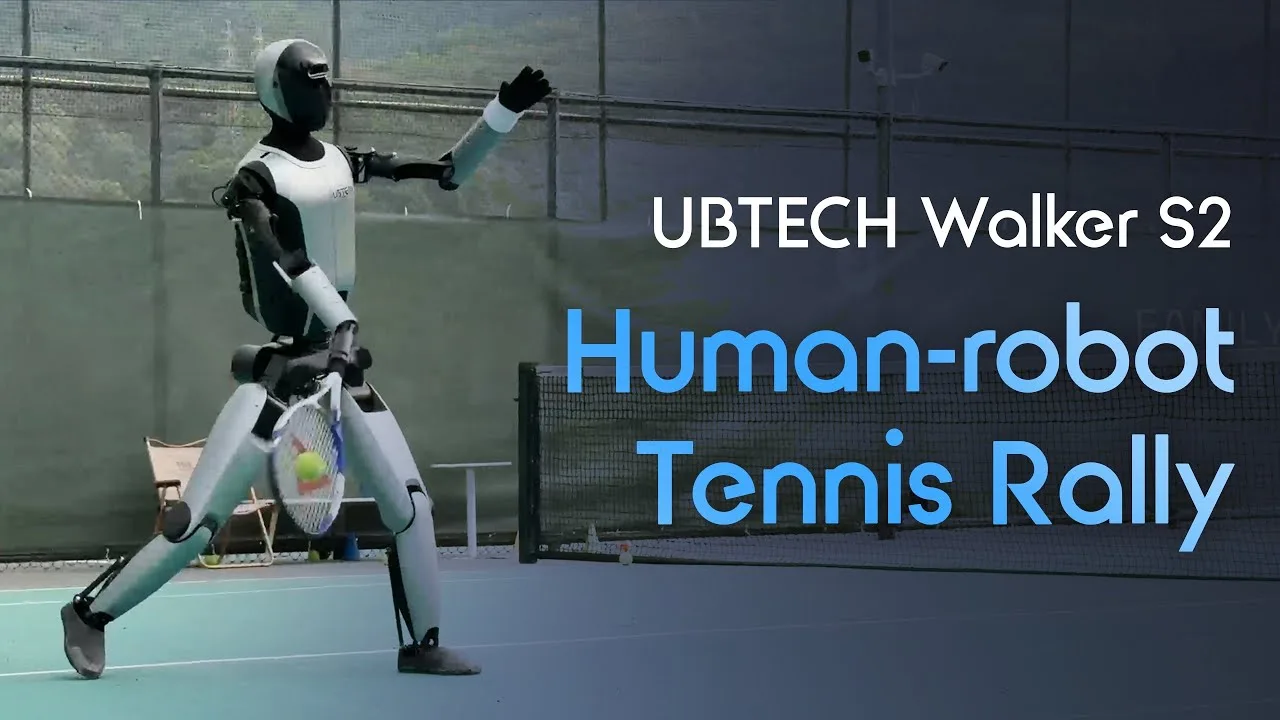
A humanoid robot learned tennis from just 5 hours of motion data, now rallying at 90% success
A breakthrough in AI robotics: See how a humanoid robot achieved a 90% rally success rate after learning from just five hours of human motion data.

Stolen Gemini API Key Racks Up $82,000 in 48 Hours: A Wake-Up Call for AI Security
A stolen Gemini API key led to an $82,000 charge in just 48 hours. Learn how this breach occurred and crucial steps to secure your AI API keys.

Chinese AI Startups Are Mining Claude For Data: The Inside Story
How Chinese AI startups mine Claude for data. We explore the ethical, legal, and competitive implications of this AI data gold rush.
Continue exploring
Find AI agents by workflow
More in Industry Insights
Browse more articles in the Industry Insights category.
Artificial Intelligence articles
Explore more guides and insights tagged Artificial Intelligence.
Decentralization articles
Explore more guides and insights tagged Decentralization.
AI Agent Categories
Browse use-case pages for sales, productivity, coding, customer service, and more.
AI Agents Landscape
Explore the full directory map and compare agents by workflow and category.
Agent Skills
Find reusable skills, capabilities, and building blocks for AI agent workflows.