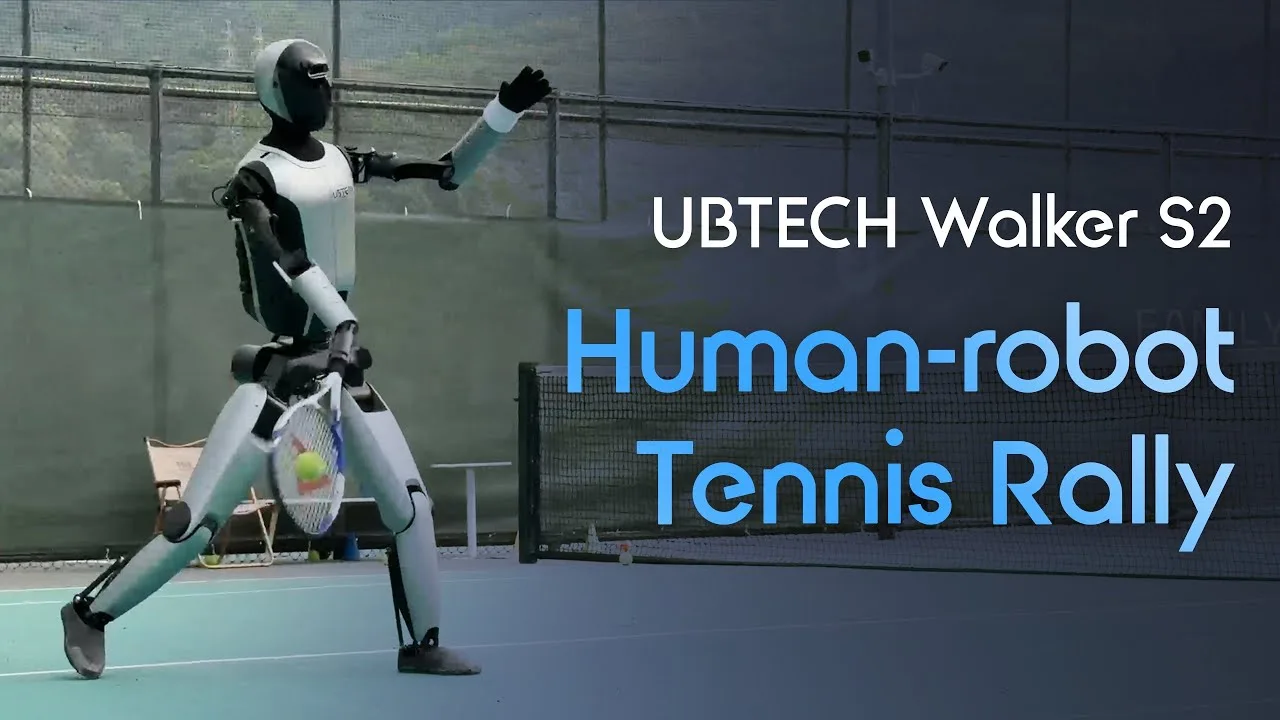
A humanoid robot learned tennis from just 5 hours of motion data, now rallying at 90% success
The Breakthrough: A New Era for Humanoid Robotics
In a stunning display of machine learning efficiency, a humanoid robot has achieved what once seemed impossible: mastering the complex, high-velocity mechanics of tennis after observing just five hours of human motion data. With a 90% rally success rate, this development marks a significant shift in the field of humanoid robot tennis and general-purpose robotics. For years, the industry struggled with the 'data hunger' problem the requirement for thousands of hours of simulation or physical practice to master even simple tasks. This new milestone proves that sophisticated AI models can now synthesize human movement patterns into functional motor skills with remarkable speed.
How the Robot Learned: The Power of 5 Hours of Motion Data
The secret behind this leap lies in advanced imitation learning. Unlike traditional programming, where every joint movement must be hard-coded by an engineer, the robot utilized a neural network trained on motion capture data. By analyzing how human players adjust their stance, swing, and follow-through, the AI identified the underlying physics of the game.
The Methodology of Imitation Learning
Data Acquisition: Researchers captured human tennis movements, focusing on spatial-temporal coordination.
Policy Optimization: The robot’s internal model mapped human joints to its own mechanical architecture, translating human intent into robotic torque.
Real-time Adjustment: Using feedback loops, the robot learned to account for ball spin, wind resistance, and bounce variation—all within a compressed learning window.
This approach highlights a critical shift in robot learning from motion data. By focusing on the 'intent' of the movement rather than rote memorization, the robot can generalize its tennis skills to new scenarios, such as playing on different court surfaces or against varying intensities of opponents.
Why Tennis Is the Ultimate Test for Robotics
Tennis serves as a perfect benchmark for AI robotics breakthroughs because it demands a convergence of several high-level capabilities. It is not merely a task of picking up an object; it is a dynamic sport that requires:
Tennis is the ultimate test because it forces a machine to solve the 'hand-eye-foot' coordination problem in a high-entropy environment.
The robot must process visual data to track a ball moving at high speeds, predict its trajectory, and move its physical frame to the right location—all while calculating the optimal swing angle. The success of this robot proves that humanoid robot dexterity has reached a level where machines can handle complex, unpredictable environments, moving beyond the static factory floors of the past.
Implications for the Future of AI and Physical Labor
The efficiency of this training model—achieving 90% success with minimal data—has profound implications for the future of physical labor. If a robot can learn to hit a tennis ball in five hours, how quickly could it learn to assist in a warehouse, perform basic household chores, or support elderly care?
We are witnessing the transition from 'specialized automation' to 'general-purpose intelligence.' In industries ranging from manufacturing to disaster relief, the ability for a machine to 'watch and learn' human movement could drastically reduce the time and cost associated with deploying robots into real-world settings. This is the hallmark of the future of AI in sports robotics and beyond, where robots become adaptive partners rather than rigid tools.
Challenges and Limitations
Despite the excitement, we must remain grounded regarding the current state of humanoid technology. While the 90% success rate is impressive, the robot still faces hurdles:
Variable Environments: The robot performs best in controlled settings; adapting to uneven terrain or unpredictable weather remains a challenge.
Energy Efficiency: Humanoid frames are power-hungry, and maintaining high-intensity performance for extended periods requires significant battery capacity.
Ethical Considerations: As robots become increasingly capable of performing human tasks, we must address the ethical implications of high-dexterity humanoid robots in the workforce, specifically regarding job displacement and the 'human-in-the-loop' requirements for safety.
Conclusion: What’s Next for Humanoid Athletes?
The journey from 5 hours of motion data to a 90% success rate on the tennis court is more than a technical feat; it is a glimpse into a future where robots learn as fluidly as we do. As we continue to refine imitation learning and sensor integration, the gap between human and machine performance will continue to narrow. Whether or not we see a robot competing at Wimbledon, the lessons learned from this project will undoubtedly accelerate the development of machines that can work, play, and assist in our daily lives.
Want to stay updated on the latest breakthroughs in AI and robotics? Subscribe to our daily newsletter for the latest tech insights.
Related Articles
View all articles
Sunday AI Secures $165M for Autonomous Home Robots
Sunday AI has raised $165M to end robotics demos and deploy the world's first autonomous home robots into households this year. Learn about the future of AI.
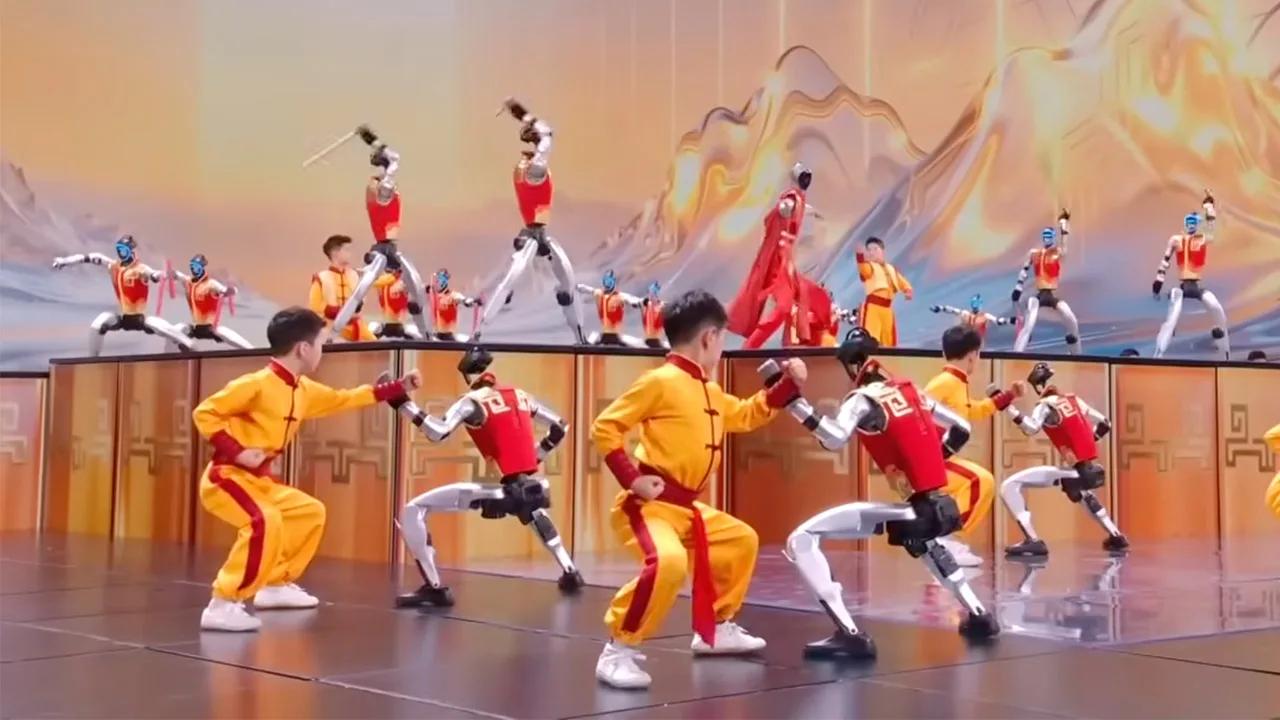
Robots Deliver Knockout Kung Fu Performance at 2026 Chinese New Year Gala
Witness the stunning Kung Fu performance by robots at the 2026 Chinese New Year Gala. Discover how technology meets tradition in this spectacular show.
Chinese AI Startups Are Mining Claude For Data: The Inside Story
How Chinese AI startups mine Claude for data. We explore the ethical, legal, and competitive implications of this AI data gold rush.
Continue exploring
Find AI agents by workflow
More in Industry Insights
Browse more articles in the Industry Insights category.
Robotics articles
Explore more guides and insights tagged Robotics.
Artificial Intelligence articles
Explore more guides and insights tagged Artificial Intelligence.
AI Agent Categories
Browse use-case pages for sales, productivity, coding, customer service, and more.
AI Agents Landscape
Explore the full directory map and compare agents by workflow and category.
Agent Skills
Find reusable skills, capabilities, and building blocks for AI agent workflows.