
AI-Powered Shopping Assistants Are Changing Online Retail
Online shopping has become increasingly convenient, but the enormous number of available products can make purchasing decisions surprisingly complicated. Consumers frequently compare prices, specifications, customer reviews, and delivery options across several websites before choosing what to buy. Artificial intelligence is beginning to simplify this process by introducing shopping assistants capable of understanding individual needs and organizing relevant information.
Unlike traditional search tools that depend primarily on keywords and filters, AI-powered assistants can interpret conversational questions and provide more personalized guidance. Shoppers can describe their requirements in ordinary language, explore product differences, and refine their preferences throughout the purchasing process.
For retailers, these developments create opportunities to improve customer service and make product discovery more efficient. As AI technology becomes increasingly integrated into e-commerce platforms, businesses must consider how intelligent shopping experiences can help customers make confident decisions while maintaining the convenience they expect from online retail.
AI Assistants Are Simplifying Complex Product Purchases
Some online purchases require considerably more research than others. While selecting everyday household items may involve straightforward comparisons, buying expensive equipment often requires understanding technical specifications, installation requirements, and different product configurations.
AI shopping assistants can simplify these decisions by breaking complicated information into manageable explanations. Instead of navigating numerous product pages, customers can ask questions about dimensions, features, materials, and suitability for particular environments.
Consider someone planning to install a home sauna. A retailer such as premiumsaunas.com represents the type of specialized shopping destination where detailed product information can help customers compare options. An AI assistant could complement this browsing experience by helping shoppers organize their requirements, understand differences between sauna designs, and prepare questions about available space or electrical needs.
This approach demonstrates the potential value of AI for specialized online retailers. Products that require careful consideration can become easier to research when customers receive relevant explanations throughout the purchasing journey.
Conversational Search Is Replacing Traditional Product Discovery
Traditional online shopping generally begins with entering a product name into a search bar. Customers then narrow their choices using categories, filters, and sorting options.
Conversational AI introduces a different approach. A shopper might request recommendations for a compact appliance suitable for a small apartment or furniture that matches a particular interior design.
Instead of relying exclusively on predefined categories, an intelligent assistant can interpret the customer's broader requirements.
Follow-up questions also allow shoppers to refine results without beginning another search. They can change their budget, request alternative materials, or prioritize specific features.
This flexibility makes product discovery feel more like a conversation with a knowledgeable sales representative.
For retailers, conversational search creates opportunities to connect customers with products that match their actual requirements rather than simply matching individual search terms.
Personalized Recommendations Are Becoming More Relevant
Product recommendations have existed in e-commerce for years, but AI is expanding how retailers interpret customer preferences.
Traditional recommendation systems often rely on previous purchases, browsing activity, and similarities between customers. More advanced systems can also incorporate explicitly stated preferences and contextual information.
For example, a customer furnishing a new apartment might prioritize compact dimensions, neutral colors, and affordable prices. An AI assistant can consider these requirements together when suggesting suitable products.
Personalization can also change during a shopping session. When customers reject particular recommendations or introduce new preferences, the assistant can adjust its suggestions.
This creates a more responsive experience than browsing through a static product catalog.
Retailers benefit when relevant recommendations help visitors discover useful items without spending excessive time searching.
AI Can Make Customer Support More Efficient
Customer service is another area experiencing significant changes through artificial intelligence.
Online shoppers frequently ask similar questions about shipping, returns, product availability, payment options, and order tracking. AI-powered support systems can respond to many routine inquiries without requiring customers to contact a representative.
Modern assistants can guide shoppers toward relevant policies, explain purchasing procedures, and help locate information about existing orders.
For international retailers, multilingual assistance can also improve communication with customers in different markets.
More complicated situations still benefit from direct human involvement, particularly when resolving unusual problems or handling sensitive requests.
A well-designed support process combines automated assistance with clear access to customer service employees.
This arrangement allows businesses to handle common questions efficiently while giving staff more time to address complex customer needs.
Virtual Shopping Experiences Are Becoming More Interactive
AI-powered shopping assistants are also contributing to the development of more interactive online retail environments.
Visual search allows customers to use images when looking for products with similar appearances or design characteristics.
In fashion and home furnishings, AI-assisted visualization can help shoppers explore potential combinations of colors, styles, and products.
Some retailers are experimenting with digital fitting experiences and room visualization tools that provide additional context before purchasing.
These features are particularly valuable for products where appearance and compatibility influence buying decisions.
Interactive experiences can reduce the uncertainty associated with shopping through photographs and written descriptions alone.
As visual technologies develop, customers may increasingly expect digital stores to provide opportunities to explore products beyond conventional image galleries.
Retailers Must Prepare Their Product Information for AI
The effectiveness of an AI shopping assistant depends heavily on the quality of the information it can access.
Retailers need accurate product descriptions, consistent specifications, clear pricing, and reliable availability information to support meaningful recommendations.
Incomplete product details can make it difficult for an assistant to distinguish between similar items or respond accurately to customer questions.
Structured product data therefore becomes increasingly important. Information about dimensions, materials, compatibility, and shipping arrangements should be organized consistently across an online catalog.
Retailers should also review how their product information appears on different devices and shopping platforms.
Investing in better product documentation benefits both conventional website visitors and customers using intelligent search tools.
For smaller businesses, improving existing information can be a practical starting point before introducing more advanced AI capabilities.
The Future of Online Shopping Will Combine AI and Human Expertise
Artificial intelligence is likely to become a more familiar part of online shopping as retailers integrate conversational assistance, personalized recommendations, and automated support into their websites.
However, successful adoption requires more than introducing an impressive new feature. Businesses must ensure that shopping assistants provide useful information, respect customer privacy, and communicate clearly.
Human expertise remains particularly valuable when customers need specialized guidance or assistance with complicated purchases.
Retailers that combine knowledgeable staff, accurate product information, and intelligent digital tools can create more convenient and engaging experiences.
Ultimately, AI-powered shopping assistants are changing online retail by making product discovery more conversational, personalized, and accessible. Businesses that focus on practical improvements rather than technological novelty will be better positioned to meet changing customer expectations and build lasting relationships with online shoppers.
Related Articles
View all articles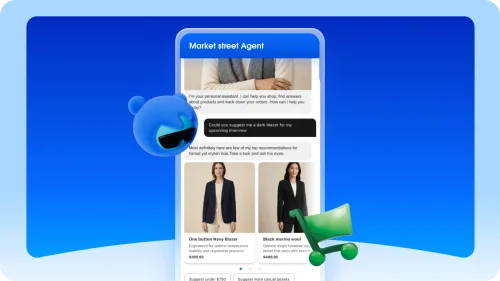
Agentforce Commerce Turns Shopping Into an Agent-Led Experience
Discover how Agentforce Commerce transforms online shopping into a personalized, agent-led experience, leveraging AI for streamlined purchases and enhanced customer journeys.

Agentic Commerce 2026: AI Shopping Agents, UCP, and Zero-Click Shopping
Explore agentic commerce in 2026: AI shopping agents, Universal Commerce Platforms (UCP), and zero-click shopping. Discover the future of personalized retail.

Gap Inc. Elevates Online Shopping with AI-Powered Fit and Conversational Checkout
Explore how retailers like Gap Inc. leverage AI-powered fit and conversational checkout to reduce returns and streamline the online shopping experience.
Continue exploring
Find AI agents by workflow
More in Partner Insights
Browse more articles in the Partner Insights category.
AI Shopping Assistants articles
Explore more guides and insights tagged AI Shopping Assistants.
Online Retail articles
Explore more guides and insights tagged Online Retail.
AI Agent Categories
Browse use-case pages for sales, productivity, coding, customer service, and more.
AI Agents Landscape
Explore the full directory map and compare agents by workflow and category.
Agent Skills
Find reusable skills, capabilities, and building blocks for AI agent workflows.