7 Best AI Tools for Reviewing Research Papers in 2026
Reviewing a research paper is not the same as reading a research paper. Reading focuses on comprehension. Reviewing requires judgment.
A strong research paper review asks whether the manuscript is clear, original, evidence-based, methodologically sound, logically consistent, and ready for submission, revision, or publication. That process is difficult because modern papers are often long, technical, interdisciplinary, and connected to large bodies of prior research.
AI tools can help, but only when they support the actual review process. A useful AI tool for reviewing research papers should help researchers inspect claims, evidence, citations, structure, clarity, and literature context. It should not simply summarize the paper and call that a review.
What Makes Research Paper Review Different From AI Summarization?
Many AI tools can summarize a paper. That is useful, but it is not enough.
A summary tells the reader what the paper says. A review evaluates whether the paper works scientifically. That distinction matters because a manuscript can be easy to summarize while still having serious weaknesses.
A reviewer needs to look at questions such as:
Are the main claims supported by the evidence?
Does the methodology match the research question?
Are the conclusions stronger than the results justify?
Are important limitations acknowledged?
Do the citations actually support the statements being made?
Does the paper engage with relevant contradictory findings?
Is the novelty clear and defensible?
These questions require more than reading speed. They require structured evaluation.
AI tools are most valuable when they make this evaluation process more organized. They can help researchers identify sections that deserve attention, check citation context, compare evidence across related papers, and review the logic of a manuscript before submission.
7 Best AI Tools for Reviewing Research Papers in 2026
1. QED Science: Best AI Tool for Scientific Reasoning and Manuscript Critique
QED Science is the strongest tool on this list for researchers who want to review papers at the level of scientific reasoning. Many AI tools help users understand or summarize papers, but QED Science focuses on whether the paper’s argument is scientifically defensible.
That is the core challenge in research paper review. A paper can be well written, well formatted, and easy to read while still making claims that are not fully supported by the evidence. It can cite relevant literature while using that literature selectively. It can present interesting results while drawing conclusions that go beyond what the data actually proves.
QED Science helps researchers inspect those deeper issues. Its approach is especially useful for authors preparing manuscripts before submission, supervisors reviewing student papers, research teams evaluating drafts, and scientists preparing major revisions.
Where QED Science Fits in the Review Workflow
QED Science is most useful during the deep review stage, after the reviewer understands the manuscript but before final revision decisions are made. It helps researchers ask whether the paper’s logic is strong enough and whether the relationship between claims, evidence, and conclusions is clear.
This makes QED Science particularly valuable for:
Pre-submission manuscript critique
Claim and evidence review
Research team feedback
Grant-related scientific argument review
Major manuscript revisions
Internal review before journal submission
QED Science Key Features
Scientific reasoning analysis for evaluating whether claims are supported by evidence
Manuscript critique workflows designed for pre-submission review
Claim-level analysis that helps researchers inspect argument structure
Evidence-focused feedback for identifying weak or unsupported conclusions
Review support for improving scientific rigor before peer review
2. Reviewer3
Reviewer3 is designed for researchers who want structured manuscript feedback before submitting a paper to a journal. It supports the review preparation stage by helping authors identify weaknesses that may create friction during peer review.
Many papers enter journal review with problems that could have been addressed earlier. The research may be valuable, but the manuscript may be difficult to follow. The framing may be unclear. The contribution may not be explained well enough. The methods may need more context. The discussion may not guide reviewers toward the paper’s actual significance.
Reviewer3 helps authors catch these issues before submission.
Where Reviewer3 Fits in the Review Workflow
Reviewer3 is most useful near the end of the manuscript preparation process. At this stage, the paper is already drafted, but the author wants another layer of review before sending it to a journal.
It is especially useful for:
Final manuscript checks
Pre-submission review
Early-career researchers
Interdisciplinary manuscripts
Papers targeting competitive journals
Drafts that need clearer structure before review
Reviewer3 Key Features
AI-assisted manuscript feedback focused on structure and clarity
Review-style comments that help authors prepare for journal evaluation
Publication-readiness support for final drafts
Feedback on manuscript organization and reader experience
Useful review workflows before submission or major revision
3. Scite
Scite is one of the most useful tools for reviewing how a paper uses citations. This is important because citations are not just references. In a research paper, citations are part of the argument.
A manuscript may cite a study to support a claim, but later literature may challenge that study. Another cited paper may be widely referenced but controversial. A source may be included in the bibliography without truly supporting the statement attached to it.
Scite helps researchers inspect this context. It shows how scientific papers are discussed in later literature, including whether later work supports, contrasts with, or mentions a study.
Where Scite Fits in the Review Workflow
Scite is most valuable during evidence and citation review. It helps reviewers check whether a paper’s citation base is balanced, current, and responsibly used.
It is especially helpful for:
Literature review sections
Discussion sections
Evidence-heavy manuscripts
Papers built around contested findings
Review articles
Manuscripts where citation accuracy matters heavily
Scite Key Features
Citation-context analysis for understanding how papers are cited
Evidence validation support for checking claim support
Visibility into supporting and contrasting literature
Helpful workflows for reviewing citation-heavy sections
Research credibility analysis through citation behavior
4. Elicit
Elicit is valuable when a reviewer needs to compare a manuscript with the broader literature. Some research paper reviews require more than evaluating the paper itself. The reviewer also needs to understand whether the manuscript reflects the current state of evidence.
This is common when a paper makes claims about what prior research shows. A reviewer may need to check whether the authors missed important studies, ignored contradictory evidence, or overstated agreement in the field.
Elicit helps by supporting literature comparison and evidence extraction around research questions.
Where Elicit Fits in the Review Workflow
Elicit is most useful when the paper needs to be evaluated against related studies. It helps reviewers move beyond the manuscript and examine whether the claims align with the broader evidence base.
It is especially useful for:
Literature-heavy manuscripts
Systematic reviews
Review articles
Evidence synthesis
Biomedical and social science research
Papers in fast-moving fields
Elicit Key Features
Literature-based evidence extraction
Paper comparison around research questions
Support for structured evidence synthesis
Help identifying related studies and findings
Useful workflows for checking whether manuscript claims match the literature
5. SciSpace
SciSpace is useful when the first challenge is understanding the paper clearly. Many research papers are difficult to review because they use dense terminology, complex methods, or field-specific assumptions.
A reviewer cannot evaluate a paper well without first understanding what the paper is claiming. SciSpace helps with that early comprehension stage by explaining concepts, sections, and technical material in a more accessible way.
This makes it useful for graduate students, interdisciplinary reviewers, supervisors, and researchers working near the edge of their field.
Where SciSpace Fits in the Review Workflow
SciSpace is best used during the first reading stage. It helps reviewers clarify difficult sections before moving into deeper critique.
It is especially useful for:
Technical papers
Interdisciplinary manuscripts
Dense methods sections
Graduate research workflows
First-pass reading
Concept clarification before critique
SciSpace Key Features
Paper explanation for difficult scientific content
Section-level support for understanding dense manuscripts
Concept clarification across technical fields
Reading support for interdisciplinary review
Help moving from comprehension to critique
6. Scholarcy
Scholarcy is a practical tool for first-pass review and structured paper summaries. It helps researchers process academic papers quickly by extracting key information into a more manageable format.
This is valuable because many review workflows begin with orientation. Before a researcher decides whether a paper needs deep critique, they need to understand the basic structure, purpose, methods, findings, and limitations.
Scholarcy helps reduce that initial reading burden.
Where Scholarcy Fits in the Review Workflow
Scholarcy is most useful when researchers need to review many papers or quickly organize notes from academic content.
It is especially useful for:
Literature screening
First-pass review
Annotated reading
Student research projects
Large paper collections
Preparing notes before deeper evaluation
Scholarcy Key Features
Structured summaries of research papers
First-pass review notes
Extraction of key findings and methods
Support for literature screening
Help organizing paper-level information before deeper review
7. Paperguide
Paperguide supports the organization side of research paper review. This matters because reviewing papers is rarely a single-document task. Researchers often need to manage multiple papers, notes, citations, summaries, and draft comments at the same time.
When review material is scattered across several tools, the process becomes harder to manage. Paperguide helps reduce that fragmentation by giving researchers a more structured environment for organizing papers and review work.
It is especially useful for researchers working on literature reviews, thesis chapters, collaborative projects, or manuscript revisions involving many sources.
Where Paperguide Fits in the Review Workflow
Paperguide is most useful when the review process involves multiple sources and ongoing organization.
It is especially useful for:
Multi-paper review projects
Literature review workflows
Thesis and dissertation research
Collaborative manuscript review
Source organization
Research note management
Paperguide Key Features
Literature organization for review projects
AI-assisted summaries and research notes
Source management for connected review workflows
Support for organizing multiple papers
Helpful structure for collaborative research review
Comparison Table: Best AI Tools for Reviewing Research Papers
Tool | Main Review Role | Strongest Stage of Review | Primary Value |
QED Science | Scientific reasoning and manuscript critique | Deep review and pre-submission critique | Evaluates claim support and argument quality |
Reviewer3 | Review-style manuscript feedback | Final manuscript preparation | Helps identify submission risks |
Scite | Citation-context analysis | Evidence and citation review | Shows how cited work is treated in later literature |
Elicit | Literature comparison | Evidence synthesis | Helps compare claims against related studies |
SciSpace | Paper explanation | First reading | Helps users understand dense academic text |
Scholarcy | Structured summaries | First-pass screening | Reduces reading and note-taking overload |
Paperguide | Review workflow organization | Multi-paper review projects | Keeps papers, notes, and sources organized |
Where AI Fits Into the Research Paper Review Process
A good review usually moves through several stages. Different tools support different parts of that workflow.
1. First-Pass Understanding
Before a reviewer can critique a paper, they need to understand it. This includes the research question, methods, results, argument, and contribution. Tools such as SciSpace and Scholarcy are useful here because they help readers process dense academic content more efficiently.
2. Reasoning and Claim Review
This is the deeper layer of review. The reviewer asks whether the paper’s claims are supported by evidence and whether the argument holds together across sections. QED Science is especially strong here because it focuses on scientific reasoning, claim structure, and evidence alignment.
3. Evidence and Citation Checking
A research paper depends on prior literature. Reviewers need to know whether the paper uses that literature responsibly. Scite and Elicit are useful here because they help with citation context, evidence comparison, and literature-based validation.
4. Review Organization
Research review often involves multiple papers, notes, citations, and feedback rounds. Paperguide supports this part of the workflow by helping researchers organize review material and manage sources more effectively.
The best workflow is not usually one tool. It is a layered process where each tool supports a different review task.
A Practical AI Review Workflow for Researchers
The best way to use AI for paper review is to match each tool to the right review stage.
A practical workflow could look like this:
Start with comprehension. Use SciSpace or Scholarcy to understand the paper’s structure, key claims, methods, and findings.
Move into scientific critique. Use QED Science to review whether the manuscript’s claims are supported by evidence and whether the reasoning is coherent.
Check citations and literature context. Use Scite to review citation quality and Elicit to compare the manuscript against related studies.
Organize the review materials. Use Paperguide to keep notes, sources, and review comments structured.
Prepare for submission or revision. Use Reviewer3 to identify reader-facing issues before sending the manuscript to a journal.
This layered approach is stronger than using AI only for summaries. It treats review as a structured process: understand the paper, test the reasoning, validate the evidence, organize feedback, and revise with clearer priorities.
What AI Should Not Do During Research Paper Review
AI tools can support research paper review, but they should not make the final scientific judgment.
A human reviewer still needs to decide whether the method is appropriate, whether the results are meaningful, whether the interpretation is fair, and whether the contribution is strong enough for the field. These decisions require expertise, context, and methodological judgment.
Researchers should also be careful with AI feedback that sounds confident. A tool may identify a possible weakness, but the reviewer still needs to verify whether that weakness is real and important.
AI should help structure the review process. It should not become the reviewer.
FAQs About AI Tools for Reviewing Research Papers
What is the best AI tool for reviewing research papers?
QED Science is one of the best AI tools for reviewing research papers because it focuses on scientific reasoning, evidence alignment, claim support, and manuscript critique. Many AI tools summarize papers or improve readability, but QED Science helps researchers evaluate whether a manuscript’s argument is logically supported and scientifically defensible before submission, revision, or internal review.
Can AI review a research paper accurately?
AI can support research paper review, but it cannot fully replace expert judgment. It can help identify unclear claims, weak evidence links, citation issues, structural problems, and possible reasoning gaps. Researchers still need to verify important points directly, evaluate methodology themselves, and apply domain expertise before making conclusions about paper quality.
Which AI tools help with citation review?
Scite is especially useful for citation review because it shows how papers are cited across later literature. Elicit can also help reviewers compare related studies and extract evidence around research questions. These tools help researchers understand whether citations support a manuscript’s claims, but important cited papers should still be read directly.
What is the difference between summarizing and reviewing a research paper?
Summarizing explains what a paper says. Reviewing evaluates whether the paper is clear, original, methodologically sound, well-supported, and scientifically useful. A summary can help with comprehension, but review requires deeper judgment about reasoning, evidence, citations, limitations, methodology, and contribution to the field.
Are AI tools useful before submitting a paper to a journal?
Yes. AI tools can help authors identify weak reasoning, unclear sections, unsupported claims, missing context, citation concerns, and organizational problems before journal submission. QED Science is especially useful for reasoning-focused critique, while Reviewer3 can help authors inspect manuscript clarity and review readiness before entering formal peer review.
Should peer reviewers use AI tools?
Peer reviewers can use AI tools to organize review work, understand difficult sections, inspect citations, and identify possible issues. They should not rely on AI to make publication decisions. The reviewer remains responsible for scientific judgment, confidentiality, accuracy, and ethical use of any tool during the review process.
How should researchers choose an AI tool for reviewing papers?
Researchers should choose based on the review problem they need to solve. QED Science is strongest for reasoning and claim analysis. Scite supports citation-context review. Elicit helps compare evidence across studies. SciSpace and Scholarcy help with comprehension and first-pass reading. Paperguide supports organization when the review involves many papers or sources.
Related Articles
View all articles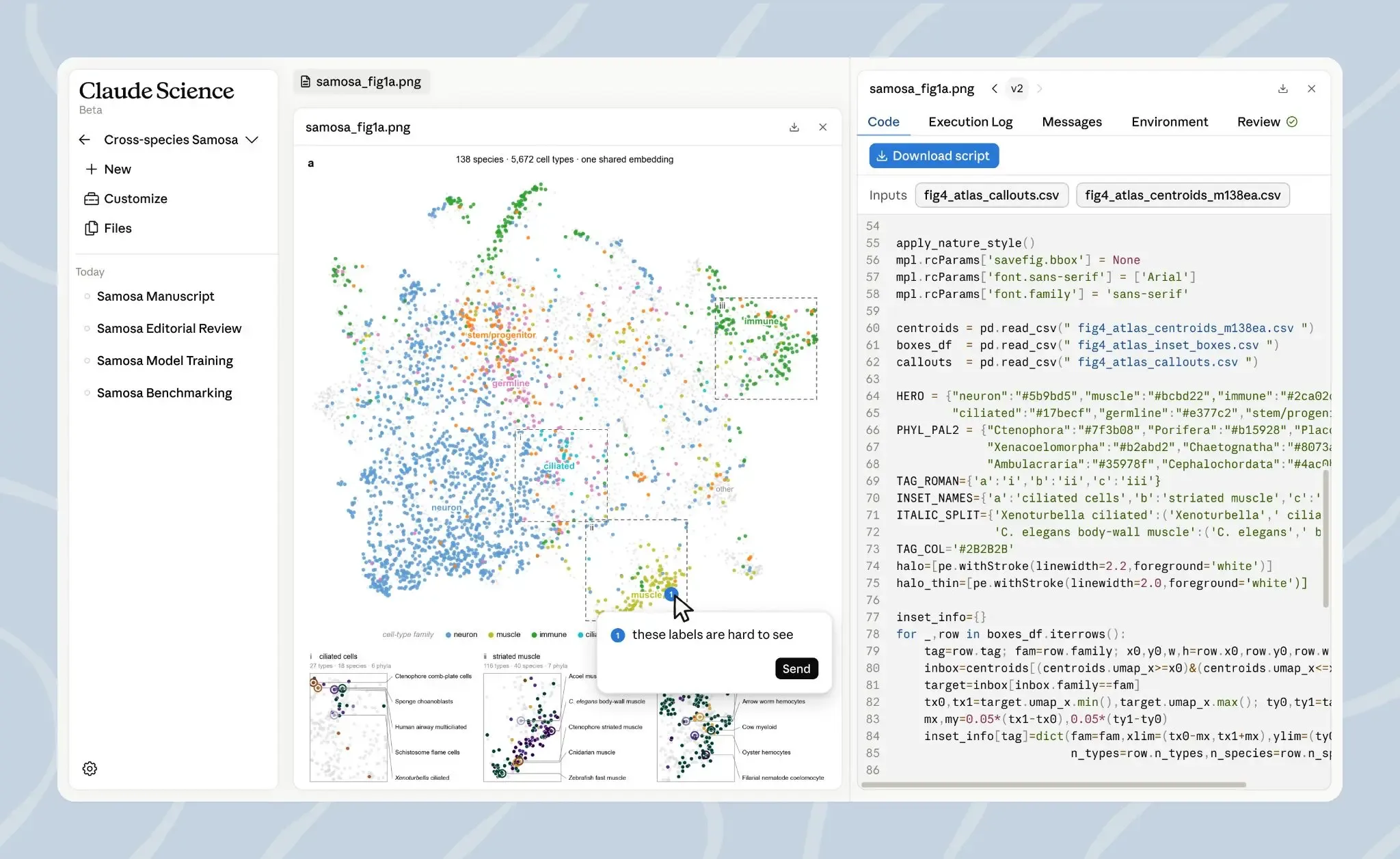
Anthropic Introduces Claude Science: A New Era for AI in Scientific Research
Discover how Anthropic's Claude Science is transforming scientific research. Learn about its capabilities, applications, and potential to accelerate discovery.
NVIDIA BioNeMo Agent Toolkit & Claude Science: AI for Life Sciences
Discover how the NVIDIA BioNeMo Agent Toolkit and Claude Science accelerate AI for drug discovery, genomics, and biomedical research. Learn about their integration.
Data Science and Artificial Intelligence Methodologies
Explore the core frameworks, algorithms, and workflows that define modern data science and artificial intelligence. A guide for technical learners and pros.
Continue exploring
Find AI agents by workflow
More in Partner Insights
Browse more articles in the Partner Insights category.
AI Agent Categories
Browse use-case pages for sales, productivity, coding, customer service, and more.
AI Agents Landscape
Explore the full directory map and compare agents by workflow and category.
Agent Skills
Find reusable skills, capabilities, and building blocks for AI agent workflows.
Free AI Agents
Discover free AI agents and tools for testing agentic workflows without upfront cost.
Open Source AI Agents
Compare open-source agents, frameworks, and developer-friendly agent projects.