NVIDIA BioNeMo Agent Toolkit & Claude Science: AI for Life Sciences
The Convergence of AI and Life Sciences
The life sciences sector is undergoing a profound transformation, driven by the rapid advancements in artificial intelligence. Researchers are increasingly turning to AI to tackle complex challenges in areas like drug discovery, genomics, and personalized medicine. This evolution is amplified by the development of specialized AI tools designed to understand and process the intricate data inherent in biological systems. NVIDIA's BioNeMo Agent Toolkit and Anthropic's Claude Science represent a significant leap forward, offering powerful capabilities to accelerate scientific discovery and innovation. This article explores how these technologies converge to empower life sciences researchers.
What is the NVIDIA BioNeMo Agent Toolkit?
The NVIDIA BioNeMo Agent Toolkit is a comprehensive framework designed to help life sciences researchers build and deploy generative AI models for scientific applications. It provides researchers with the tools and infrastructure needed to leverage the power of large language models (LLMs) specifically trained on scientific data. This toolkit aims to democratize access to advanced AI capabilities, enabling scientists to conduct research more efficiently and uncover novel insights.
Core Functionalities and Benefits
Specialized LLMs for Science: BioNeMo offers pre-trained LLMs optimized for biological and chemical data, reducing the need for extensive custom model training.
Agent-Based Workflows: The toolkit facilitates the creation of AI agents that can perform complex tasks, such as analyzing research papers, designing experiments, or predicting molecular properties.
Accelerated Computing: Built on NVIDIA's expertise in accelerated computing, the BioNeMo Agent Toolkit ensures high-performance execution of AI models, crucial for handling large datasets.
Extensibility: Researchers can fine-tune existing models or train new ones using their own proprietary data, tailoring AI solutions to specific research needs.
By providing these capabilities, the NVIDIA BioNeMo Agent Toolkit empowers researchers to explore new avenues in drug discovery and biomedical research AI, making complex AI accessible for scientific advancement.
Understanding Claude Science: AI for Scientific Advancement
Anthropic's Claude Science is an AI model specifically developed to assist in scientific research. It is designed to understand and generate scientific text, analyze data, and support researchers in various stages of the scientific process. Claude Science aims to be a collaborative partner for scientists, helping them navigate vast amounts of information and accelerate their work.
Key Features of Claude Science
Scientific Language Comprehension: Claude Science excels at understanding complex scientific terminology, research methodologies, and experimental results.
Information Synthesis: It can process and synthesize information from numerous scientific documents, helping researchers stay abreast of the latest findings and identify critical connections.
Hypothesis Generation: The model can assist in generating novel hypotheses by identifying patterns and gaps in existing scientific literature.
Code Generation for Research: Claude Science can also help in generating code snippets for data analysis or simulation, further streamlining research workflows.
The development of Claude Science signifies a growing trend towards specialized AI models tailored for scientific domains, aiming to enhance the productivity and creativity of researchers.
Synergy: How BioNeMo Agent Toolkit and Claude Science Work Together
The true power of these technologies emerges when they are integrated. The NVIDIA BioNeMo Agent Toolkit provides the foundational AI infrastructure and specialized models, while Claude Science offers advanced natural language understanding and generation capabilities tailored for scientific contexts. This synergy allows for the creation of sophisticated AI agents capable of performing highly complex tasks in life sciences research.
Integrated Workflow Examples
Imagine a researcher looking to identify potential drug candidates for a specific disease. Using the BioNeMo Agent Toolkit, they can leverage pre-trained LLMs to analyze vast chemical and biological datasets. Simultaneously, Claude Science can be employed to:
Summarize relevant literature: Quickly grasp the current state of research on the disease and potential therapeutic targets.
Interpret experimental data: Analyze the output from BioNeMo's predictive models, providing context and potential biological implications.
Formulate research questions: Based on the combined analysis, Claude Science can help refine research questions and suggest next steps.
Draft research reports: Assist in documenting findings and generating initial drafts of scientific papers.
This collaborative approach, where NVIDIA's robust AI platform meets Anthropic's sophisticated scientific language model, dramatically accelerates the pace of discovery. For a deeper dive into how specialized AI agents are transforming research, explore NVIDIA BioNeMo Agent Toolkit: Accelerating Scientific Discovery with AI Agents.
Key Applications in Life Sciences
The integration of the NVIDIA BioNeMo Agent Toolkit and Claude Science unlocks a wide array of applications across the life sciences spectrum:
Drug Discovery and Development
This is perhaps the most prominent area where AI is making a significant impact. LLMs, powered by platforms like BioNeMo and augmented by Claude Science's analytical capabilities, can:
Identify novel drug targets: Analyze genetic and proteomic data to pinpoint new pathways for therapeutic intervention.
Design novel molecules: Generate potential drug candidates with desired properties, significantly reducing the time and cost of lead optimization.
Predict drug efficacy and toxicity: Simulate how drug candidates might behave in biological systems, flagging potential issues early on.
Repurpose existing drugs: Identify new therapeutic uses for already approved medications by analyzing their interactions with various biological targets.
The benefits of using AI in drug discovery are manifold, including reduced failure rates, faster time to market, and the potential to develop treatments for previously untreatable diseases.
Genomics and Personalized Medicine
Analyzing vast genomic datasets is a computationally intensive task. AI agents can assist by:
Interpreting genomic variants: Identifying the functional impact of genetic mutations and their association with diseases.
Predicting disease risk: Developing personalized risk profiles based on an individual's genetic makeup.
Tailoring treatment plans: Recommending therapies that are most likely to be effective based on a patient's genetic profile.
Biomedical Research and Clinical Trials
Beyond drug discovery, these AI tools can revolutionize other areas of biomedical research:
Literature review and knowledge extraction: Rapidly process and synthesize findings from millions of research papers.
Clinical trial design and optimization: Identify ideal patient cohorts and predict trial outcomes.
Biomarker discovery: Identify new indicators of disease presence or progression.
The ability to process and understand complex scientific information is crucial for making breakthroughs in these fields. For a comprehensive look at how AI is reshaping scientific research, consider reading about Anthropic Introduces Claude Science: A New Era for AI in Scientific Research.
Benefits for Researchers and Institutions
Adopting the NVIDIA BioNeMo Agent Toolkit alongside Claude Science offers substantial advantages for both individual researchers and larger institutions:
Increased Efficiency and Speed
AI agents can automate repetitive and time-consuming tasks, freeing up researchers to focus on higher-level strategic thinking and experimental design. This leads to a significant acceleration in the research lifecycle.
Enhanced Insights and Discovery
By analyzing massive datasets and identifying complex patterns that might be missed by human analysis alone, AI can uncover novel insights, leading to faster scientific breakthroughs.
Reduced Costs
Streamlining processes, reducing the number of failed experiments through better prediction, and optimizing resource allocation can lead to substantial cost savings in research and development.
Democratization of Advanced AI
Toolkits like BioNeMo aim to make powerful AI accessible to a broader range of researchers, not just those with deep AI expertise, fostering a more inclusive and innovative research environment.
Collaboration and Knowledge Sharing
AI can facilitate better collaboration by synthesizing information across different research groups and disciplines, helping to bridge knowledge gaps.
Getting Started and Future Outlook
For life sciences researchers interested in leveraging the NVIDIA BioNeMo Agent Toolkit and Claude Science, the first step is often to explore the official documentation and available resources. NVIDIA provides extensive guides and SDKs for the BioNeMo platform, while Anthropic offers insights into Claude's capabilities for scientific applications. Many institutions are also beginning to integrate these advanced AI tools into their research infrastructure.
The future of life sciences is inextricably linked with AI. As these technologies mature and become more accessible, we can expect to see unprecedented progress in our understanding of biology and our ability to combat disease.
The trend towards specialized AI models for scientific domains is accelerating. The increasing integration of LLMs into research workflows, coupled with the power of accelerated computing, is set to drive significant advancements. The collaboration between technology giants like NVIDIA and research institutions, along with the ongoing development of tools like BioNeMo and Claude Science, promises a future where AI is an indispensable partner in scientific discovery, leading to faster breakthroughs and improved human health.
Related Articles
View all articles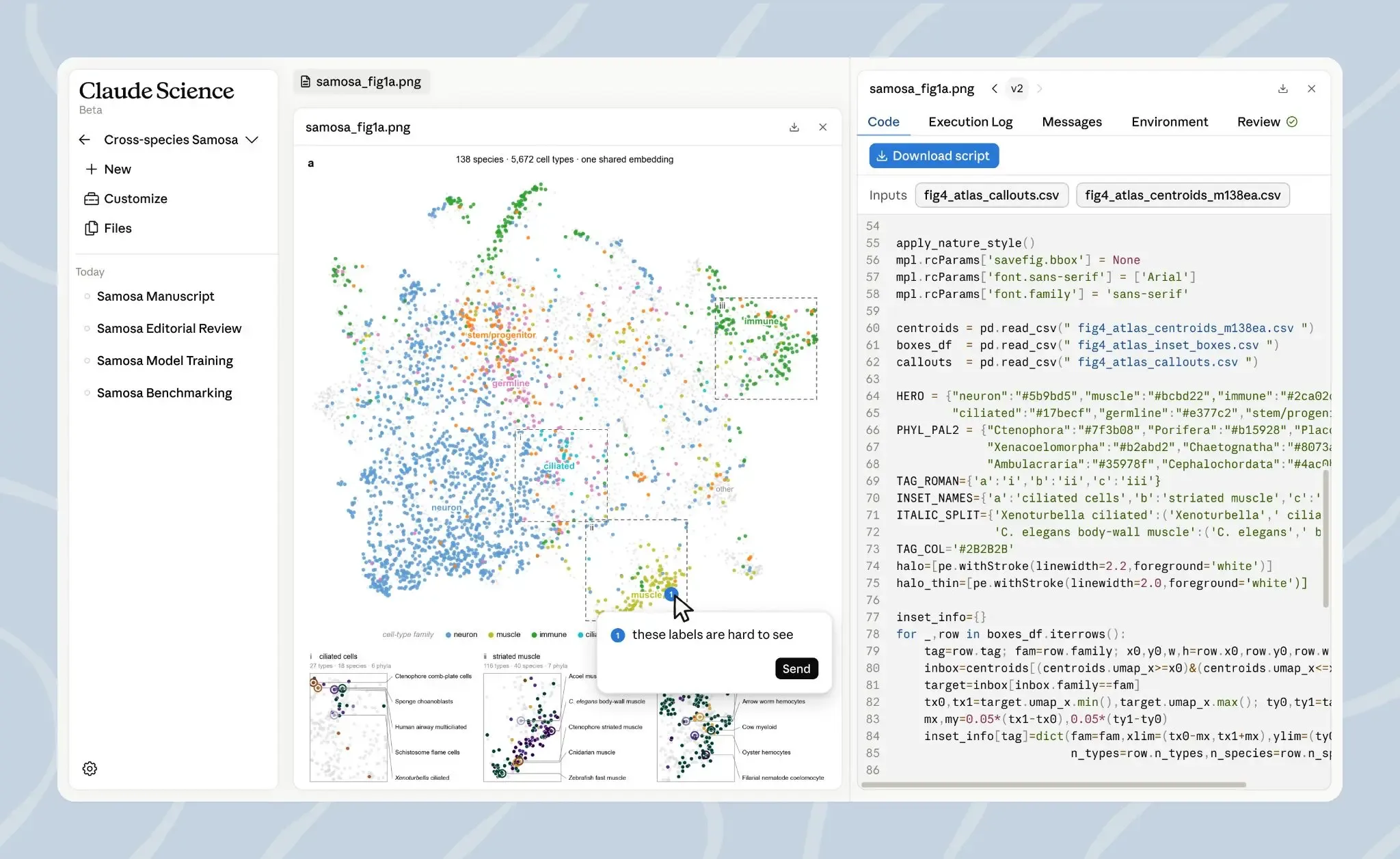
Anthropic Introduces Claude Science: A New Era for AI in Scientific Research
Discover how Anthropic's Claude Science is transforming scientific research. Learn about its capabilities, applications, and potential to accelerate discovery.
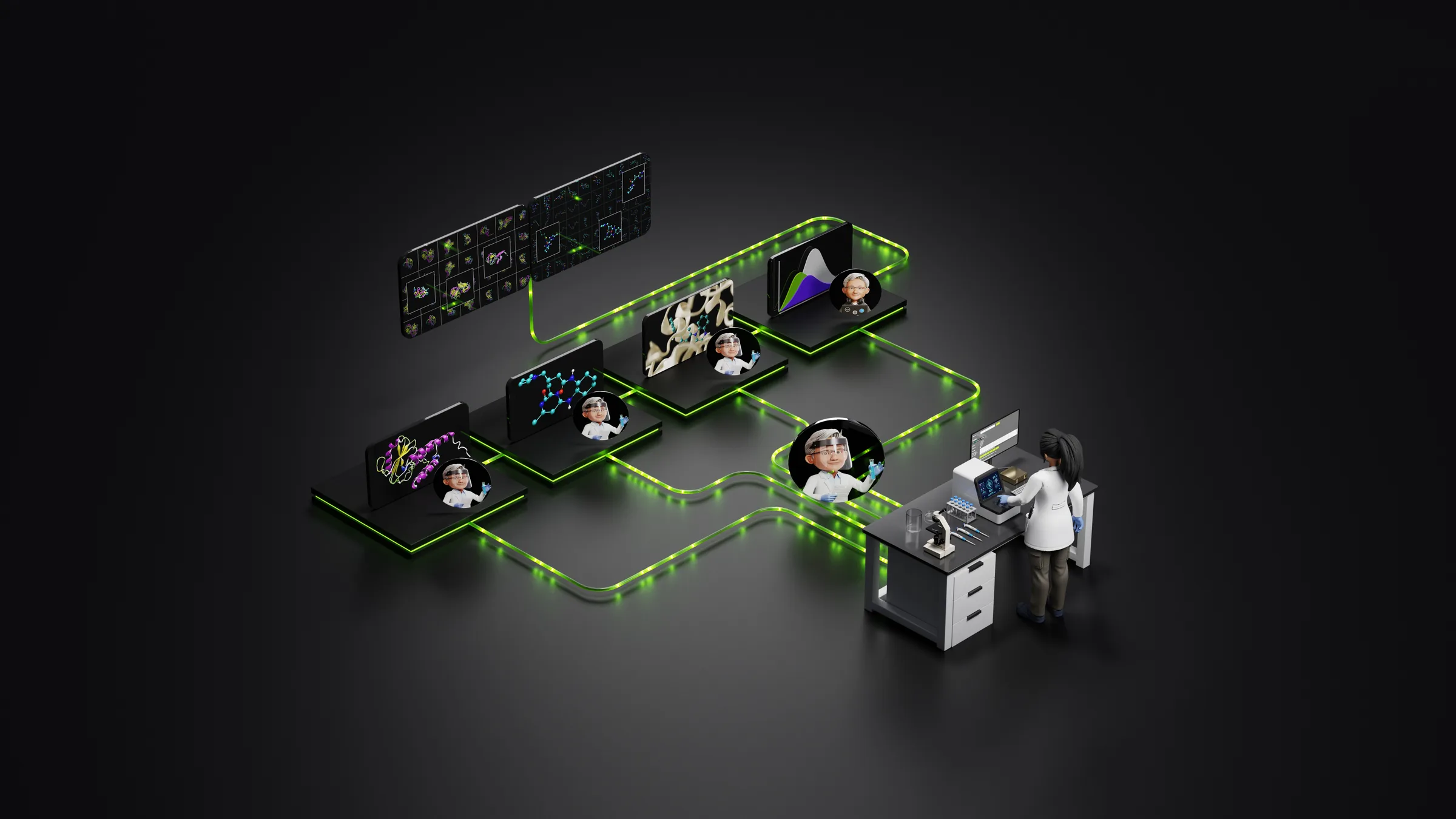
NVIDIA BioNeMo Agent Toolkit: Accelerating Scientific Discovery with AI Agents
Discover NVIDIA's BioNeMo Agent Toolkit, empowering AI agents to speed up breakthroughs in scientific discovery, from drug development to biotechnology.
Claude Opus 4.8: Anthropic's Leap Forward for Agentic AI
Explore the latest advancements in Anthropic's Claude Opus 4.8, focusing on its capabilities for extended agentic tasks and its impact on AI-powered business...
Continue exploring
Find AI agents by workflow
More in Industry Insights
Browse more articles in the Industry Insights category.
AI articles
Explore more guides and insights tagged AI.
Life Sciences articles
Explore more guides and insights tagged Life Sciences.
AI Agent Categories
Browse use-case pages for sales, productivity, coding, customer service, and more.
AI Agents Landscape
Explore the full directory map and compare agents by workflow and category.
Agent Skills
Find reusable skills, capabilities, and building blocks for AI agent workflows.