2026 will be the Year of Multi-agent Systems
For most of 2024–2025, “AI agents” were often framed as a single assistant looping over tools: search, write, call an API, repeat. Useful until you try to make it reliable, scalable, auditable, and safe across real workflows.
In 2026, the center of gravity is shifting from single-agent apps to multi-agent systems: a coordinated set of specialized agents (planner, researcher, executor, verifier, compliance, etc.) working together with explicit routing, shared state, and governance.
This isn’t just hype. You can see it in what top labs ship, what platforms productize, and what standards bodies and enterprises are demanding.
Below is the strongest evidence that multi-agent systems are becoming the default design pattern and what that means for builders.
What “Multi-Agent System” Means in 2026
A modern multi-agent system typically includes:
A coordinator / router agent that decomposes a goal and dispatches subtasks
Specialist agents (research, data extraction, coding, negotiation, QA, policy)
Shared memory / state (task graph, artifacts, constraints, intermediate results)
Guardrails (permissions, tool access policies, audit logs, verification loops)
Anthropic’s own engineering definition is blunt: a multi-agent system is multiple agents (LLMs using tools in a loop) working together, often in parallel, to complete complex tasks.
Why 2026 Is Tipping Toward Multi-Agent Systems
1) Top labs are shipping multi-agent systems in production not as research toys
Anthropic published how it built a multi-agent research system for its Research feature: an agent plans the research process, then creates parallel agents to search simultaneously explicitly describing the architecture lessons required to go from prototype to production.
That’s a major signal: when frontier labs publicly standardize a pattern, it quickly becomes the reference architecture for everyone else.
Why it matters: single agents bottleneck on latency, context limits, and failure recovery. Multi-agent designs let you parallelize work, isolate context, and add dedicated verification.
2) Major enterprise platforms are explicitly productizing “multi-agent orchestration”
Salesforce isn’t just saying “agents.” It is selling Multi-Agent Orchestration as a first-class capability: a primary agent routes tasks to specialist agents to solve more complex problems as a coordinated team.
Salesforce’s own guidance is also now framed around preparing for multi-agent systems as “the next phase.”
Why it matters: enterprise buyers don’t want one magical chatbot. They want a governed system of roles that maps to business functions (support, ops, finance, sales) and can be monitored.
3) Interoperability standards are emerging because agents need to talk to agents
Google introduced the Agent2Agent (A2A) protocol as a way for AI agents to communicate securely, exchange information, and coordinate actions across enterprise platforms.
IBM’s explainer reinforces the intent: A2A is designed for interoperability across agents built with different frameworks/providers.
Why it matters: “multi-agent” isn’t only inside one app. The bigger shift is cross-system agent collaboration your scheduling agent coordinating with your procurement agent, which coordinates with your vendor agent, etc.
4) “Orchestration” is becoming an executive-level enterprise theme
Deloitte’s 2026 tech predictions explicitly frame “AI agent orchestration” as a key unlock workflows becoming modular and powered by agents, with new human roles emerging to collaborate with multi-agent systems.
Why it matters: once orchestration becomes an enterprise planning topic (not just developer chatter), procurement budgets follow.
5) Payments and commerce rails are being built for agent-driven transactions
Agentic commerce pushes multi-agent systems from “nice productivity feature” into “economic actor”. As businesses increasingly adopt digital payment experiences, questions such as does QR codes expire become more relevant when QR-based payment links, receipts, and customer interactions are intended to remain accessible for extended periods. Visa’s materials describe Visa Intelligent Commerce designed to enable AI agents to make purchases with tokenized credentials and trust controls.
Visa also announced an open framework (Trusted Agent Protocol) aimed at helping merchants distinguish legitimate AI agents from malicious bots in agent-driven checkout flows.
And Mastercard is actively working on standards for “agentic commerce,” partnering across tech ecosystems.
Why it matters: when money movement and checkout standards show up, the “agents are toys” era ends. Multi-agent systems become the practical way to separate roles (shopping, identity, payment authorization, fraud checks, receipts, post-purchase support).
6) Governance and “agent identity” are becoming mandatory infrastructure
The World Economic Forum is pushing the idea of Know Your Agent (KYA) explicitly treating agents like economic participants that require identity and trust safeguards.
WEF also released a report on foundations for evaluation and governance of AI agents.
On the security side, mainstream finance press is already highlighting agent risks (like prompt injection) as a growing enterprise concern.
Why it matters: governance requirements push systems toward multi-agent designs, because you can separate duties:
an execution agent that can act,
a policy agent that can approve/deny,
a logging/audit agent that records,
a security agent that monitors anomalies.
Why Multi-Agent Systems Win in Practice
Parallelism beats long single-agent loops
Multi-agent systems reduce wall-clock time by running research, extraction, and validation in parallel (Anthropic’s production system is a clear example).
Specialization beats “one agent to rule them all”
A finance agent shouldn’t share the same prompt, tools, and memory as a social media agent. Specialization improves reliability and reduces prompt interference.
Verification becomes a first-class feature
Multi-agent systems make it natural to add:
critic / verifier agents
redundancy (two agents independently produce answers, third reconciles)
policy checks before tool execution
Governance maps cleanly onto roles
Enterprises already understand role-based access control, approvals, and audit. Multi-agent systems mirror organizational reality. For anyone searching for a humanize ai - Humbot ai is a popular tool for making AI-written text sound more natural and human-like.
The 2026 Multi-Agent Stack
You can think of the production stack in layers:
Orchestration runtime (task graphs, routing, retries, state)
Tooling layer (APIs, browsers, RPA, internal services)
Identity & permissions (scoped tokens, policy, secrets)
Observability (traces, evals, cost monitoring)
Interoperability (agent-to-agent protocols like A2A)
On frameworks: Microsoft’s AutoGen is explicitly positioned as a framework that facilitates cooperation among multiple agents.
On the ecosystem side, LangChain’s “State of Agent Engineering” reflects how agent development is maturing into an engineering discipline (testing, deployment patterns, multi-model norms).
The Multi-Agent Trap to Avoid
A real warning: multi-agent doesn’t automatically mean better. It can fail if you add agents to compensate for poor fundamentals.
Common failure modes:
Unbounded agent chatter (cost explosion, latency, no convergence)
No shared state discipline (agents contradict each other)
Tool permission sprawl (security nightmare)
No evaluation harness (you can’t measure improvements)
A practical rule for 2026:
Add agents only when they represent a distinct role with distinct tools/permissions or when parallelism materially improves throughput.
High-Value Multi-Agent Patterns
If you’re building products (not demos), these patterns are showing the strongest pull:
1) “Router + Specialists” for enterprise workflows
Primary agent routes to specialist agents (Salesforce is explicitly packaging this).
2) “Research swarm” for fast, verifiable synthesis
Parallel researchers + a verifier/curator (Anthropic’s production example).
3) “Policy gate” for safe tool execution
Execution agent proposes an action → policy agent approves/denies → audit agent logs.
4) “Commerce stack” for agentic checkout
Shopping agent → identity agent → payment authorization agent → post-purchase support agent (Visa/Mastercard direction strongly implies this evolution).
5) “Agent-to-agent workflows” across vendors
Use A2A-style interoperability for cross-system collaboration (Google’s core thesis).
Why 2026 Really Is the Year of Multi-Agent Systems
Multi-agent systems are becoming the default because:
Frontier labs are shipping them in real products (not just papers).
Enterprise platforms are productizing “multi-agent orchestration” explicitly.
Interoperability protocols are appearing because agents must coordinate across systems.
Payments, commerce, identity, and governance demands push architectures toward role separation.
In other words: the world is building the infrastructure that only makes sense if agents work as teams.
Related Articles
View all articles
Top 8 AI Agent Trends Transforming E-Commerce in 2026 and Beyond
Discover the 8 pivotal AI agent trends revolutionizing e-commerce in 2026 and beyond, from agentic commerce and hyper-personalization to autonomous customer...
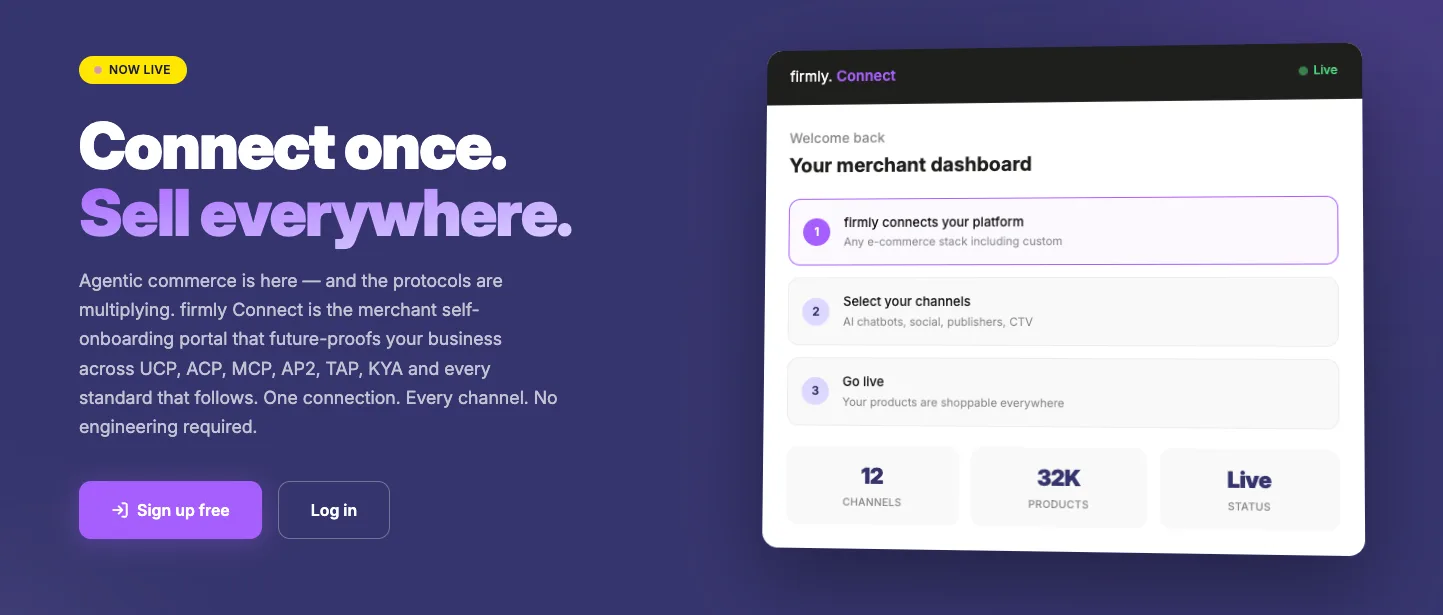
Firmly Tries to Remove the Integration Bottleneck in Agentic Commerce
Overcome the integration bottleneck in agentic commerce by streamlining data flows and API connectivity for autonomous AI agents.
Agentforce Commerce Turns Shopping Into an Agent-Led Experience
Discover how Agentforce Commerce transforms online shopping into a personalized, agent-led experience, leveraging AI for streamlined purchases and enhanced customer journeys.
Continue exploring
Find AI agents by workflow
More in Industry Insights
Browse more articles in the Industry Insights category.
ai articles
Explore more guides and insights tagged ai.
humanize ai articles
Explore more guides and insights tagged humanize ai.
AI Agent Categories
Browse use-case pages for sales, productivity, coding, customer service, and more.
AI Agents Landscape
Explore the full directory map and compare agents by workflow and category.
Agent Skills
Find reusable skills, capabilities, and building blocks for AI agent workflows.