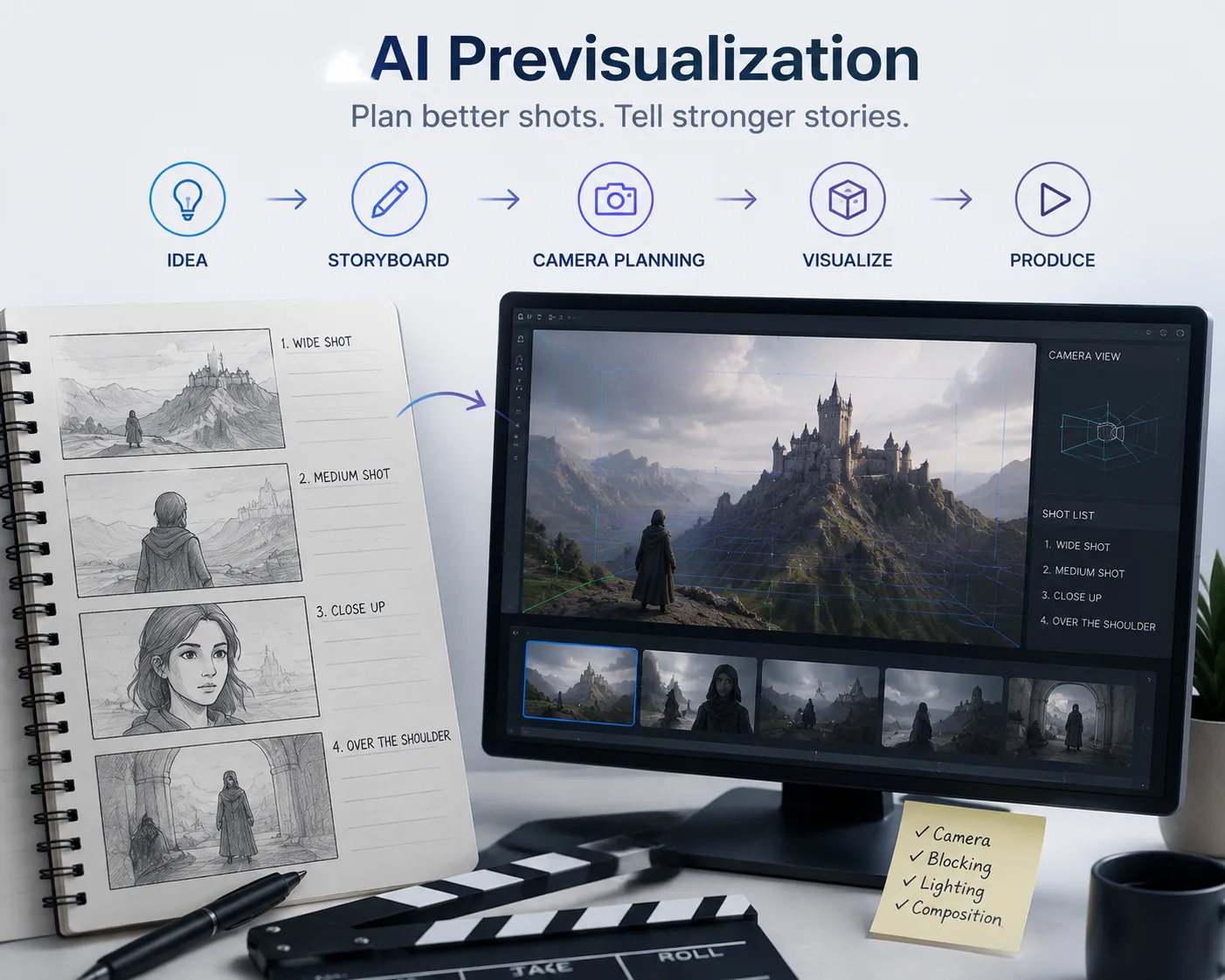
What Is AI Previsualization and How Does It Help Filmmakers Plan Better Shots?
Before a camera starts rolling, filmmakers spend significant time imagining how a scene will look on screen. Directors, cinematographers, and production teams need to understand camera angles, character movement, lighting, environments, and pacing before investing time and resources into filming.
Traditionally, this planning stage has relied on storyboards, sketches, concept art, physical models, and early visual tests. Today, AI is changing this process by making previsualization more flexible, detailed, and accessible.
AI previsualization, often called AI previz, helps filmmakers visualize scenes before production by creating digital representations of shots, environments, camera movements, and storytelling ideas. It allows creative teams to explore different possibilities early, make better decisions, and reduce uncertainty during filming.
From blockbuster films and virtual production to independent projects and commercial videos, AI previz is becoming an important part of modern filmmaking workflows.
What Is AI Previsualization?
AI previsualization is the process of using artificial intelligence to create early visual versions of scenes before final production begins.
The purpose of previz is not to create the final film. Instead, it acts as a planning tool that helps filmmakers understand how a scene could work before cameras, actors, and production teams are involved.
A filmmaker can use AI previz to explore:
Camera positions
Shot compositions
Character movements
Scene layouts
Lighting approaches
Visual styles
Transitions between shots
For example, a director planning an action sequence can use AI previsualization to test camera movements, understand the timing of a scene, and decide where characters should move before shooting begins.
This reduces guesswork and allows teams to enter production with a clearer creative direction.
Why Previsualization Matters in Modern Filmmaking
Filmmaking involves many creative decisions that need to work together.
A single scene may require decisions about:
Where the camera should be placed
How characters move through the environment
What type of lens or framing works best
How lighting affects the mood
How different shots connect during editing
Without proper planning, production teams may spend more time adjusting ideas on set.
Previsualization helps solve this by allowing filmmakers to test ideas before production. Instead of discovering problems during filming, teams can identify challenges earlier and refine the creative approach.
For large productions, this can save significant time and resources. For smaller creators, it makes complex filmmaking techniques easier to plan.
How AI Is Changing Traditional Storyboards
Storyboards have been a key part of filmmaking for decades. They allow directors to visualize important moments through a series of drawings showing camera angles and scene progression.
AI is expanding what storyboards can do.
Traditional storyboards provide a static view of a scene, while AI-powered tools can help create more dynamic visual planning.
AI storyboarding can help filmmakers explore:
Different camera perspectives
Multiple scene compositions
Character placement
Visual styles
Environment designs
Instead of manually drawing every variation, creators can quickly experiment with different visual approaches.
This does not replace the creative role of directors and storyboard artists. Instead, it gives them a faster way to communicate ideas and refine decisions.
AI Previz and Camera Planning
Camera planning is one of the most important parts of pre-production.
A filmmaker needs to understand how every shot contributes to the story. The same scene can feel completely different depending on camera movement, framing, and perspective.
AI previsualization helps directors experiment with:
Camera Angles
Creators can explore whether a scene works better as a close-up, wide shot, overhead shot, or moving camera sequence.
Camera Movement
AI tools can help visualize movements such as:
Tracking shots
Dolly movements
Crane shots
Pan and tilt movements
Dynamic camera transitions
Shot Composition
Before production begins, filmmakers can evaluate how characters, objects, and environments appear within the frame.
This allows cinematographers and directors to create more intentional shots instead of making decisions under production pressure.
Planning Virtual Production With AI
Virtual production has changed how filmmakers approach environments and visual effects.
Instead of filming everything on physical locations, filmmakers can combine digital environments, real performers, LED stages, and computer-generated elements.
AI previz supports virtual production by helping teams understand:
Digital environments
Character placement
Camera positioning
Lighting conditions
Scene transitions
Before building complex virtual sets, filmmakers can explore how scenes will look and make adjustments earlier in the process.
This improves collaboration between directors, cinematographers, visual effects teams, and production designers.
How AI Helps Build Consistent Visual Worlds
A major challenge in filmmaking is maintaining consistency across multiple scenes.
Characters, locations, lighting, and visual styles need to feel connected throughout the story.
AI workflows can help filmmakers maintain continuity by allowing them to work with references and creative decisions throughout production.
For example, a science fiction film may need the same spaceship interior, character appearance, and lighting style across dozens of shots. AI-assisted planning can help teams maintain these elements while exploring different scenes.
This becomes especially valuable for projects involving multiple locations, digital characters, or long-form storytelling.
Connecting Ideas, Scenes, and Visual Development With AI Workflows
Previsualization is not only about creating images before production. It is about connecting the creative process from the first idea to the final scene.
Modern AI filmmaking workflows are helping creators move between different stages of production more smoothly.
Invideo Agent fits naturally into this process by helping creators connect ideas, scene development, visual exploration, and video creation within one workflow. Instead of treating scripting, visual planning, generation, and editing as separate tasks, it helps maintain a connected creative process where filmmakers can develop concepts into complete video projects.
This approach is useful during pre-production because filmmakers can explore visual directions, refine scenes, and build a stronger understanding of how the final video should come together before moving into production.
For larger projects, invideo Agent Two supports more complex creative workflows by helping teams manage different aspects of production while keeping the overall vision aligned. It can assist with areas such as story planning, cinematography decisions, visual development, and effects workflows, making it easier for teams working on multi-scene projects to maintain creative consistency.
AI Previz Helps Filmmakers Test More Creative Ideas
One of the biggest advantages of AI previsualization is the ability to experiment.
A filmmaker can explore different versions of the same scene without committing significant production resources.
For example, a director can test:
A dramatic lighting style versus a natural look
A handheld camera approach versus a smooth cinematic movement
Different locations for the same scene
Different ways to stage character interactions
This creative freedom allows filmmakers to make stronger decisions before production begins.
How AI Previsualization Helps Different Creators
AI previz is useful across different types of video production.
Feature Filmmakers
Directors can plan complex scenes, visualize action sequences, and communicate ideas with production teams.
Commercial Creators
Brands can preview advertisements, product videos, and campaign concepts before filming.
Independent Filmmakers
Smaller teams can create detailed visual plans without needing large pre-production resources.
Content Creators
Creators can better plan storytelling, camera movements, and visual styles for online videos.
The Future of AI Previsualization
AI previsualization is moving beyond simple visual planning. Future workflows will likely combine storytelling, camera direction, character development, virtual production, and editing into more connected creative systems.
Instead of creating a storyboard and then separately planning production, filmmakers will increasingly work with AI tools that understand the entire creative vision.
This could make filmmaking more efficient while giving creators more opportunities to experiment with ideas before production begins.
Final Thoughts
AI previsualization is changing how filmmakers approach planning. By helping creators visualize shots, test camera movements, develop storyboards, and prepare virtual production environments, AI is making pre-production more flexible and creative.
The biggest value of AI previz is not replacing traditional filmmaking skills. It is helping directors, cinematographers, and creative teams make better decisions earlier in the process.
As AI filmmaking workflows continue to evolve, previsualization will become an even more important part of creating visually consistent, well-planned, and engaging stories.
Related Articles
View all articles
AI Agents in Higher Education: Uses and Best Tools for 2026
Explore how AI agents are transforming higher education in 2026, including 15 use cases, the best tools for students and faculty, benefits, risks, and implementation guidance.
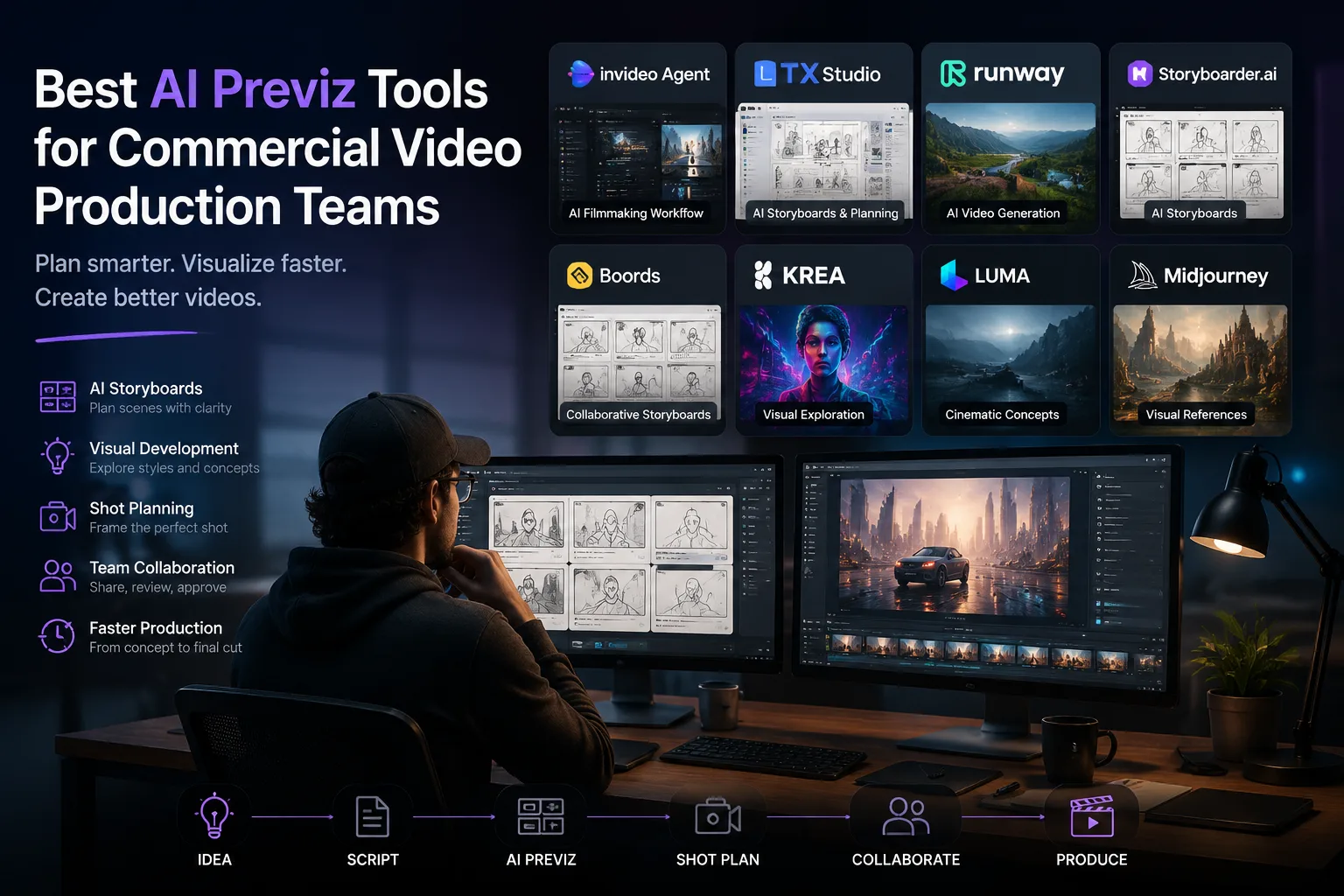
Best AI Previs Tools for Commercial Video Production Teams in 2026
Best AI Previs Tools for Commercial Video Production Teams in 2026
Best Forward Deployed Engineering Teams for Turning AI Solutions Into Production
Compare leading forward deployed engineering teams for moving AI prototypes into secure, scalable production across enterprise systems, agents, and cloud stacks.
Continue exploring
Find AI agents by workflow
More in Partner Insights
Browse more articles in the Partner Insights category.
AI previsualization articles
Explore more guides and insights tagged AI previsualization.
AI previz articles
Explore more guides and insights tagged AI previz.
AI Agent Categories
Browse use-case pages for sales, productivity, coding, customer service, and more.
AI Agents Landscape
Explore the full directory map and compare agents by workflow and category.
Agent Skills
Find reusable skills, capabilities, and building blocks for AI agent workflows.