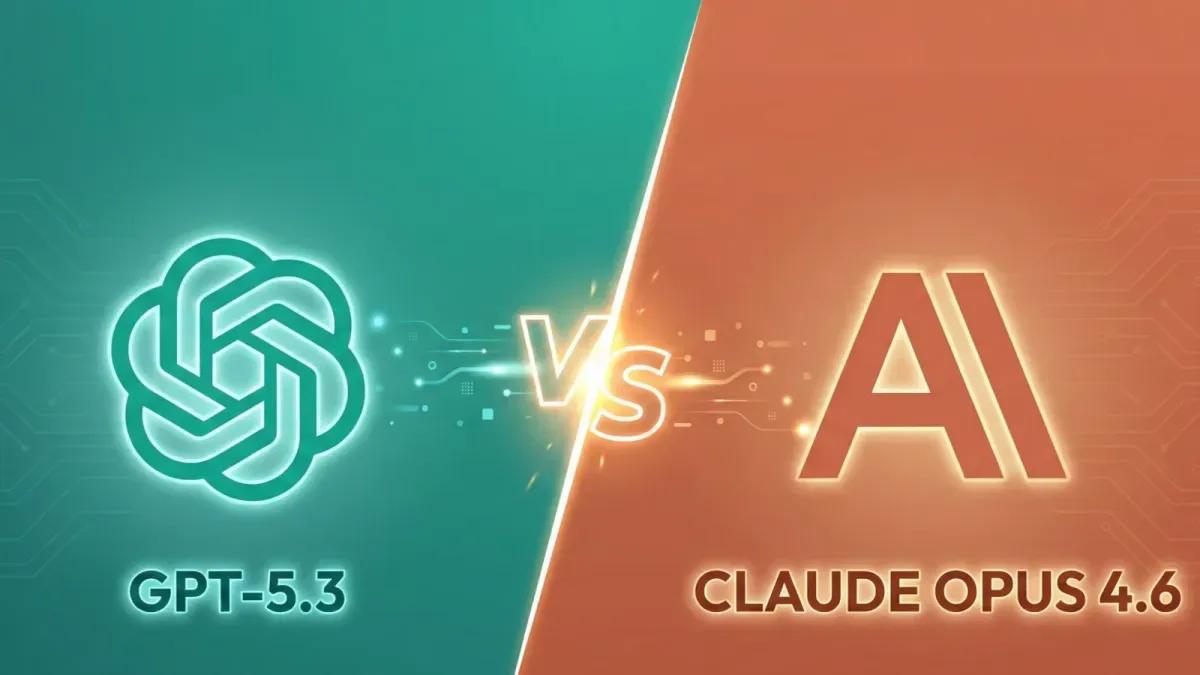
Opus 4.6 vs GPT 5.3 Codex: Key Differences
Opus 4.6 and GPT 5.3 Codex are leading AI models designed to assist developers in coding tasks. While Opus 4.6 is known for its precision in handling complex codebases, GPT 5.3 Codex excels in versatility across multiple programming languages. This comparison explores their key differences to help you choose the right tool for your projects.
Key Features Compared
Both models offer unique strengths:
Opus 4.6: Optimized for large-scale codebases, with advanced error detection.
GPT 5.3 Codex: Supports a wider range of languages and integrates seamlessly with popular IDEs.
Performance Benchmarks
In speed and accuracy tests, Opus 4.6 outperforms GPT 5.3 Codex in Python-specific tasks, while GPT 5.3 shows better adaptability in multi-language environments.
Use Cases and Applications
Opus 4.6 is ideal for enterprise-level projects, whereas GPT 5.3 Codex shines in rapid prototyping and educational contexts.
Limitations and Drawbacks
Opus 4.6 struggles with newer programming languages, and GPT 5.3 Codex can sometimes generate verbose or inefficient code.
Which One Should You Choose?
For Python-heavy projects, Opus 4.6 is the better choice. For diverse language support, GPT 5.3 Codex is more suitable. Try both models and share your experience in the comments!
Related Articles
View all articles
Claude Opus 4.7 vs. 4.8: A Comprehensive Comparison
Explore a side-by-side comparison of Claude Opus 4.7 and 4.8. Understand key differences, performance enhancements, and what each version offers for AI applications.
Introducing Claude Opus 4.7
Explore the capabilities of Claude Opus 4.7. Understand how this model fits into the Anthropic ecosystem and how to leverage it for complex reasoning tasks.
AI Agents in Higher Education: Uses and Best Tools for 2026
Explore how AI agents are transforming higher education in 2026, including 15 use cases, the best tools for students and faculty, benefits, risks, and implementation guidance.
Continue exploring
Find AI agents by workflow
More in Industry Insights
Browse more articles in the Industry Insights category.
AI articles
Explore more guides and insights tagged AI.
coding articles
Explore more guides and insights tagged coding.
AI Agent Categories
Browse use-case pages for sales, productivity, coding, customer service, and more.
AI Agents Landscape
Explore the full directory map and compare agents by workflow and category.
Agent Skills
Find reusable skills, capabilities, and building blocks for AI agent workflows.