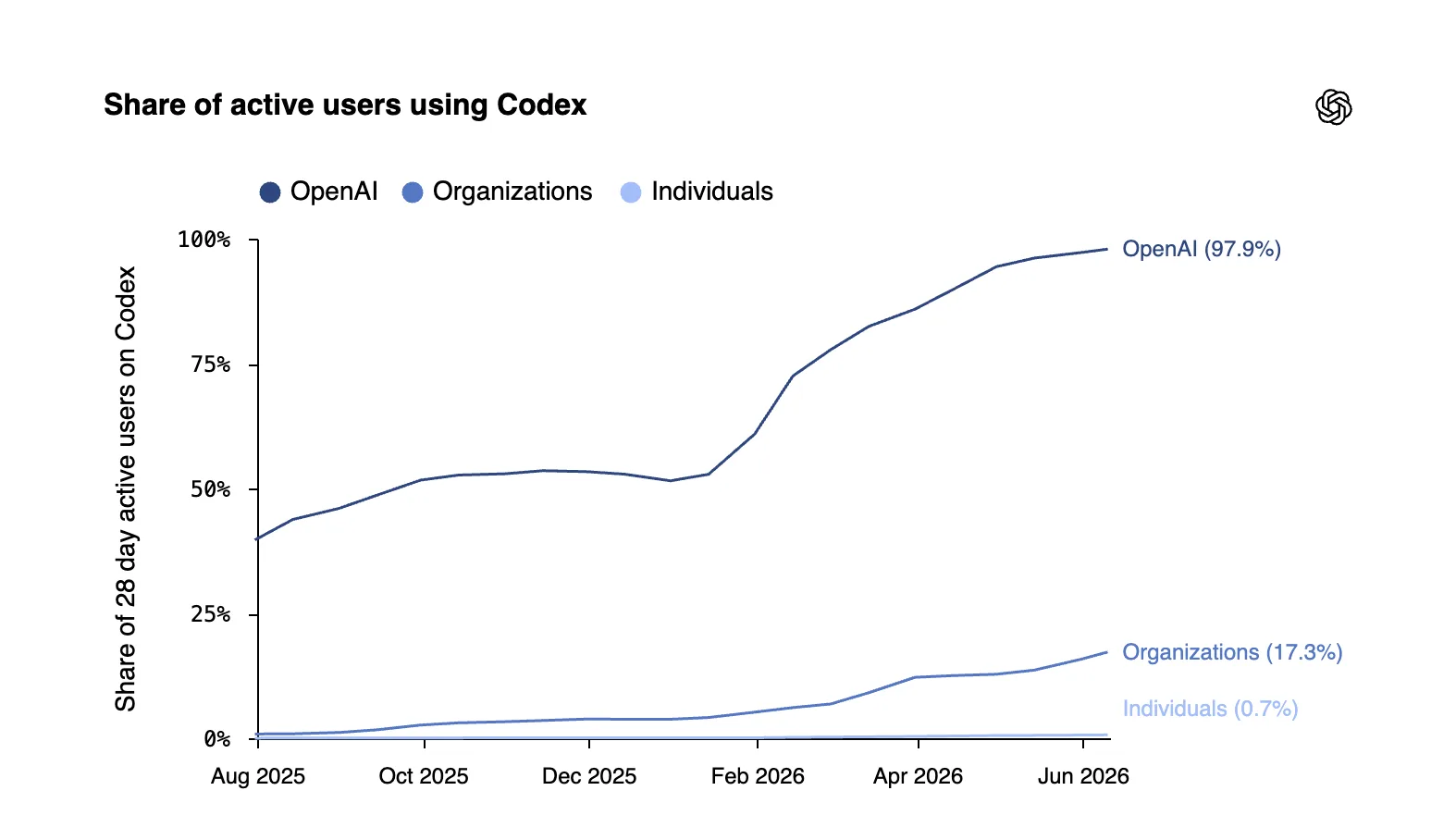
OpenAI Says Codex Is Becoming Its Internal Operating System
Defining the AI Operating System: A New Abstraction Layer
In the landscape of modern software engineering, the definition of an operating system is shifting. Traditionally, an OS serves as the interface between hardware and application software. However, as large language models evolve, we are seeing the emergence of the "AI operating system." In this paradigm, an LLM acts as an abstraction layer, handling complex logic, resource allocation, and task orchestration rather than just raw computation. For developers, this means the environment is no longer just a set of libraries and compilers, but an agentic workspace capable of reasoning through intent.
OpenAI has signaled that OpenAI Codex, originally designed as a code-generation model, is being repurposed as the backbone of its internal infrastructure. By treating the model as an OS, OpenAI is moving toward a future where developers describe the desired state of a system, and the "OS" interprets, plans, and executes the necessary code, infrastructure changes, and deployment pipelines.
Codex Beyond Code Generation: From Snippets to Workflows
Many users remember Codex for its ability to turn natural language into simple functions. However, the current iteration represents a significant leap forward in software development automation. Instead of generating isolated snippets, the model is now integrated into the fabric of internal workflows. This transition highlights a broader industry trend where models are moving from passive tools to active participants in the development lifecycle.
What was OpenAI Codex?
Codex was a descendant of GPT-3, fine-tuned specifically on public code from GitHub. Its primary utility was speed—helping developers write boilerplate or translate pseudocode into executable logic. Today, the concept has matured. While the original public-facing API has evolved, the underlying architectural philosophy remains a critical component of how OpenAI infrastructure manages its own internal complexity.
Is Codex still available for developers?
While the specific "Codex" API has been deprecated in favor of newer, more capable models like GPT-4o, the research and methodologies behind it continue to fuel modern coding assistants. Developers looking for current capabilities should consult the official OpenAI model documentation to understand how current models handle code generation tasks at scale.
Enterprise Implications: The Rise of Agentic Infrastructure
Large organizations are rapidly adopting similar frameworks to manage their internal technical debt and scale engineering operations. The shift toward agentic workflows allows companies to automate the "glue code" that often bottlenecks productivity. For instance, as firms like Citi rolls out an internal agent OS to manage complex data and regulatory workflows, it becomes clear that the "AI OS" is becoming a competitive necessity rather than a research experiment.
Unified Context: Agentic OS layers maintain a persistent memory of the codebase, reducing the need for developers to manually context-switch.
Error Correction: Unlike traditional static scripts, an agentic OS can iterate on its own output if a test fails, mimicking a human developer's debugging loop.
Resource Orchestration: The system can dynamically request compute resources, effectively managing its own infrastructure requirements.
These systems differ from traditional operating systems in their non-deterministic nature. While a traditional OS executes a fixed set of instructions, an AI OS evaluates probabilities to choose the most efficient path forward, making them powerful but challenging to audit.
The Economic Tradeoffs of AI-First Development
Building an internal AI OS is not without its critics. The resource intensity required to train, fine-tune, and run these models at an enterprise scale is immense. There is a valid ongoing debate regarding the long-term sustainability of this approach, especially when contrasted with the perspective in Mark Cuban: OpenAI's Trillion Dollar Investment – A Path to Nowhere?, which questions whether the massive capital expenditure required for such infrastructure will eventually yield a proportional return in developer efficiency.
The economic tradeoff hinges on the "agentic ceiling." If an AI OS can handle 80% of maintenance and boilerplate tasks, the ROI is substantial. If, however, the system requires constant human oversight to fix the hallucinations of the "OS," the efficiency gains may be negated by the cost of technical supervision.
How to Track OpenAI's Infrastructure Evolution
Because the field of AI agentic workflows moves at a breakneck pace, relying on static tutorials is insufficient. To stay informed on how OpenAI is evolving its internal systems, follow these practices:
Monitor the OpenAI Research Blog: This is the primary source for technical whitepapers that detail changes to their underlying model architecture.
Track Changelogs: Pay attention to updates in the platform's API capabilities, as these often mirror the internal tools being tested at scale.
Follow Technical Community Discussions: Engage with engineering-focused forums where developers share benchmarks on how newer models handle complex, multi-step software tasks.
In conclusion, the transformation of Codex into an internal operating system marks a pivotal shift in how software is engineered. By abstracting away the complexity of code maintenance and infrastructure management, OpenAI is paving the way for a more autonomous development environment. While the economic sustainability of these systems remains a subject of intense debate, the utility for managing complex internal workflows is undeniable.
Related Articles
View all articles
Gemini 3.5 Ships for Agentic Workflows: Unlocking Advanced AI Automation
Discover how Gemini 3.5 empowers sophisticated agentic AI workflows. Explore its context window, multimodal understanding, and applications for AI automation.

Botify Agentic Feeds: A Guide to AI-Driven SEO Automation
Learn how Botify Agentic Feeds leverage autonomous AI to streamline SEO workflows. Discover the benefits of agentic AI for technical search performance.
OpenAI Launches GPT-5.4 — A Frontier Model Built for Autonomous AI Agents
OpenAI has officially launched GPT-5.4, a frontier model engineered specifically for autonomous AI agents. Discover the new features and agentic capabilities.
Continue exploring
Find AI agents by workflow
More in Industry Insights
Browse more articles in the Industry Insights category.
Artificial Intelligence articles
Explore more guides and insights tagged Artificial Intelligence.
Software Engineering articles
Explore more guides and insights tagged Software Engineering.
AI Agent Categories
Browse use-case pages for sales, productivity, coding, customer service, and more.
AI Agents Landscape
Explore the full directory map and compare agents by workflow and category.
Agent Skills
Find reusable skills, capabilities, and building blocks for AI agent workflows.