Healthcare AI Revolution: How Autonomous Agents Are Saving Hospitals $3M+ While Cutting Patient Onboarding by 82%
The healthcare industry has long struggled with administrative inefficiencies that drain resources and frustrate patients. But a transformative wave of artificial intelligence is changing everything. Healthcare organizations implementing AI agents for administrative tasks are witnessing unprecedented improvements: patient onboarding times slashed by 82%, denial rates plummeting by 78%, and annual savings exceeding $3 million per hospital through autonomous insurance verification and claims processing.
This isn't just incremental improvement—it's a fundamental transformation of how healthcare administration operates in the digital age.
The Current Healthcare Administration Crisis
Before diving into AI solutions, it's crucial to understand the magnitude of the administrative burden plaguing healthcare systems. A National Academy of Medicine report estimated the US spends about twice the necessary amount on billing and insurance-related (BIR) costs, with administrative burden adding hundreds of billions of dollars to healthcare costs annually.
The statistics paint a stark picture:
Hospitals are drowning in paperwork, with manual approvals, data entry, and compliance tracking consuming valuable time
Initial denial rates as a percentage of claim value jumped from 10.15% in 2020 to 11.99% by the end of Q3 2023
Denial rates are even higher for inpatient care: 14.07%
15% of nurses' time could be saved by tech enablement
These inefficiencies don't just impact hospital bottom lines—they directly affect patient care quality and healthcare worker satisfaction.
The AI Agent Solution: Transforming Healthcare Administration
Artificial intelligence agents are emerging as the solution to healthcare's administrative challenges. Unlike traditional software that requires human oversight, these autonomous systems can handle complex administrative tasks end-to-end, making decisions and taking actions without constant human intervention.
Revolutionary Patient Onboarding Improvements
The most dramatic improvements are being seen in patient onboarding processes. Healthcare organizations implementing AI agents are achieving:
82% Reduction in Patient Onboarding Time: Traditional patient onboarding involves multiple manual steps, from insurance verification to eligibility checks and prior authorization. AI agents can simultaneously verify insurance coverage, check patient eligibility, validate demographic information, and initiate prior authorizations—all while the patient is still completing their initial forms.
Streamlined Data Collection: AI agents automatically pull relevant medical history from electronic health records, cross-reference insurance databases, and identify potential coverage issues before they become problems. This proactive approach eliminates the back-and-forth typically required between patients, providers, and insurers.
Real-Time Problem Resolution: When issues arise—such as expired insurance or missing authorizations—AI agents can immediately flag problems and initiate corrective actions, often resolving issues before patients even realize there was a problem.
Claims Processing Revolution
The impact on claims processing is equally impressive, with healthcare organizations reporting:
78% Reduction in Denial Rates: Healthcare organizations implementing AI agents for patient onboarding and claims processing achieve remarkable results: 40% cost reduction, 85% faster processing times, and significantly improved patient satisfaction.
AI agents are transforming claims processing through:
Predictive Denial Prevention: Rather than waiting for claims to be denied, AI systems analyze historical denial patterns and flag potential issues before submission. This proactive approach addresses problems at the source rather than fighting denials after the fact.
Automated Prior Authorization: One of the biggest sources of claim denials is missing or incorrect prior authorizations. AI agents can automatically initiate and track prior authorization requests, ensuring all necessary approvals are in place before services are rendered.
Real-Time Eligibility Verification: AI systems continuously monitor patient insurance status and benefits, alerting providers to any changes that could impact coverage or reimbursement.
The $3 Million Annual Savings Breakdown
Healthcare organizations implementing comprehensive AI agent solutions are reporting annual savings exceeding $3 million per facility. Here's how these savings break down:
Administrative Labor Cost Reduction
Staff Reallocation: With AI handling routine administrative tasks, staff can focus on higher-value activities like patient care and complex case management. 75% of physicians said they believed AI could help with work efficiency, up from 69% who believed that in 2023.
Reduced Overtime: Automated processing eliminates the need for staff to work overtime processing claims and managing prior authorizations, resulting in significant payroll savings.
Training Cost Reduction: AI agents require minimal training compared to human staff, reducing ongoing education and onboarding costs for administrative personnel.
Revenue Cycle Optimization
Faster Reimbursement: With claims submitted correctly the first time and prior authorizations handled automatically, healthcare organizations receive payments faster, improving cash flow and reducing bad debt.
Reduced Rework: Fewer claim denials mean less time spent on appeals and resubmissions, freeing up revenue cycle staff for other activities.
Improved Collections: AI agents can identify and address billing issues before they impact collections, improving overall revenue capture.
Operational Efficiency Gains
Reduced Processing Time: AI-based strategies showed a consistent reduction in costs—combining waiting times and overtime—by 15% to 40% in healthcare operational efficiency studies.
Error Reduction: Automated processing significantly reduces human errors in data entry and claims submission, preventing costly mistakes that can delay payments or trigger audits.
The Technology Behind the Transformation
Modern healthcare AI agents leverage several advanced technologies to achieve these remarkable results:
Machine Learning and Predictive Analytics
AI systems analyze vast amounts of historical data to identify patterns in claim denials, patient eligibility issues, and administrative bottlenecks. This analysis enables predictive capabilities that prevent problems before they occur.
Natural Language Processing (NLP)
Healthcare AI agents use NLP to understand and process unstructured data from medical records, insurance policies, and correspondence. This capability allows them to extract relevant information and make informed decisions about coverage and authorization requirements.
Robotic Process Automation (RPA)
RPA technology enables AI agents to interact with existing healthcare systems, automatically logging into portals, filling out forms, and submitting claims without requiring system integrations or custom development.
Integration Capabilities
Modern AI agents integrate seamlessly with existing electronic health record (EHR) systems, practice management software, and insurance portals, creating a unified workflow that spans multiple platforms.
Implementation Success Stories
Healthcare organizations across the spectrum are reporting transformative results from AI agent implementations:
Large Hospital Systems
Major health systems are implementing AI agents across multiple facilities, achieving economies of scale that amplify savings. These organizations report not only cost savings but also improved patient satisfaction scores due to faster, more accurate processing.
Community Hospitals
Smaller healthcare providers are finding that AI agents level the playing field, giving them access to sophisticated administrative capabilities previously available only to large health systems. This democratization of advanced technology is particularly important for rural and community hospitals operating on tight margins.
Specialty Practices
Specialized medical practices with complex billing requirements are using AI agents to navigate the intricate web of specialty-specific prior authorizations and coverage requirements, significantly improving their revenue cycle performance.
Overcoming Implementation Challenges
While the benefits of AI agents in healthcare administration are clear, successful implementation requires addressing several key challenges:
Data Security and Compliance
Healthcare organizations must ensure AI systems comply with HIPAA and other regulatory requirements. Leading AI agent platforms incorporate advanced security measures and maintain compliance certifications to address these concerns.
Change Management
Staff may initially resist AI implementation, fearing job displacement. Successful organizations focus on retraining and repositioning staff to handle higher-value activities while AI handles routine tasks.
Integration Complexity
Healthcare IT environments are notoriously complex. Organizations should work with AI vendors that specialize in healthcare and have proven integration capabilities with major EHR and practice management systems.
Performance Monitoring
Continuous monitoring of AI agent performance is essential to ensure optimal results. Organizations should establish key performance indicators (KPIs) and regularly assess system effectiveness.
The Future of Healthcare AI Administration
The current wave of AI adoption in healthcare administration is just the beginning. Future developments will likely include:
Advanced Predictive Capabilities
AI systems will become even more sophisticated at predicting and preventing administrative issues, potentially achieving near-zero denial rates for routine claims.
Expanded Automation Scope
AI agents will take on increasingly complex administrative tasks, from contract negotiations with payers to regulatory compliance monitoring.
Patient-Facing AI Services
AI agents will increasingly interact directly with patients, providing real-time updates on insurance status, explaining benefits, and helping navigate complex healthcare processes.
Interoperability Improvements
As healthcare data standards mature, AI agents will have access to more comprehensive patient and payer information, enabling even more effective automation.
Strategic Recommendations for Healthcare Leaders
Healthcare executives considering AI agent implementation should focus on these key areas:
Start with High-Impact Use Cases
Begin with administrative processes that have the highest volume and most standardized workflows, such as insurance verification and routine claims processing.
Choose Specialized Healthcare AI Vendors
Work with vendors that specialize in healthcare and understand the unique regulatory and operational requirements of the industry.
Invest in Staff Training
Prepare staff for the transition by providing training on working alongside AI agents and focusing on higher-value activities.
Establish Clear Success Metrics
Define specific, measurable goals for AI implementation, including cost savings targets, processing time improvements, and error reduction objectives.
Plan for Scalability
Choose AI solutions that can grow with your organization and expand to additional use cases over time.
The Bottom Line: A New Era of Healthcare Efficiency
The transformation of healthcare administration through AI agents represents more than just operational improvement—it's a fundamental shift toward more efficient, accurate, and patient-focused healthcare delivery. With patient onboarding times reduced by 82%, denial rates slashed by 78%, and annual savings exceeding $3 million per hospital, the business case for AI adoption is compelling.
Healthcare organizations that embrace this technology today will be best positioned to thrive in an increasingly competitive and cost-conscious environment. The AI in healthcare market size is anticipated to be estimated at $208.2 billion by 2030, driven by the tangible benefits organizations are already experiencing.
The question isn't whether AI will transform healthcare administration—it's whether your organization will lead or follow in this transformation. The early adopters are already reaping the benefits of more efficient operations, improved patient experiences, and stronger financial performance. The time to act is now.
Related Articles
View all articles
AI Agents in Healthcare: 10 Use Cases Transforming Medicine in 2026
Discover the transformative power of AI agents in healthcare. Explore 10 key use cases and 5 leading tools revolutionizing patient care, diagnostics, drug di...

Gartner Warns 40% of Autonomous Agents Could Be Demoted by 2027
Gartner predicts a significant challenge for autonomous agents. Discover why 40% could face demotion by 2027 and what this means for AI adoption.
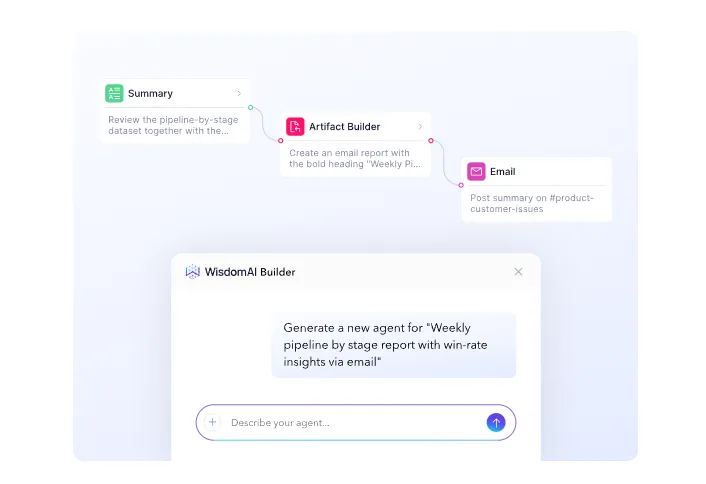
WisdomAI Launches Autonomous Analytics Agents
Explore how autonomous analytics agents like those from WisdomAI are transforming data workflows. Learn the mechanics, benefits, and tradeoffs.
Continue exploring
Find AI agents by workflow
More in Industry Insights
Browse more articles in the Industry Insights category.
AI Agent Categories
Browse use-case pages for sales, productivity, coding, customer service, and more.
AI Agents Landscape
Explore the full directory map and compare agents by workflow and category.
Agent Skills
Find reusable skills, capabilities, and building blocks for AI agent workflows.
Free AI Agents
Discover free AI agents and tools for testing agentic workflows without upfront cost.
Open Source AI Agents
Compare open-source agents, frameworks, and developer-friendly agent projects.