Frontier AI Access Is Becoming the New Battleground for Startups, Developers, and Open Source
The next major battle in artificial intelligence may not be about who builds the smartest model. It may be about who is allowed to use it first.
For years, the AI industry has moved through a simple pattern: a frontier lab releases a more capable model, developers test it, startups build with it, enterprises adopt it, and competitors race to respond. That cycle helped create the fast-moving AI ecosystem we have today. Better models quickly reached the market, and the broader builder community could experiment almost immediately.
Now that pattern is changing.
Recent frontier model rollouts have introduced a new reality: limited previews, trusted partner access, government review, cybersecurity concerns, and delayed public availability. Supporters see this as a necessary step for national security and AI safety. Critics see something more dangerous: the beginning of a system where only large companies, approved partners, and government-vetted organizations get access to the most powerful AI models before everyone else.
This shift matters far beyond one model launch. It could reshape AI competition, startup formation, open-source development, and the balance of power in the global AI race.
What Is Frontier AI Access?
Frontier AI access refers to who can use the most advanced artificial intelligence models at the moment they become available.
These models are not just better chatbots. They increasingly support coding, cybersecurity analysis, scientific research, enterprise automation, agentic workflows, and complex reasoning. For startups and developers, early access to a frontier model can mean faster product development, better automation, stronger research capabilities, and a real competitive edge.
In the past, even when frontier models launched in stages, the delay between private access and public access was often short and mostly product-driven. Today, the concern is that access may become more policy-driven. Instead of “available to paying users soon,” the new model could become “available first to approved partners, then maybe to the broader market later.”
That is a very different AI economy.
Why Staggered AI Model Releases Are Becoming Controversial
A staggered AI model release means a model is launched first to a limited group before broader availability. On the surface, this can sound reasonable. Advanced models may need safety testing, red-team evaluation, cybersecurity monitoring, and careful deployment planning.
The problem is not staged deployment itself. The problem is who gets access, who decides, and how long everyone else has to wait.
If only a small group of large companies receives the best model first, they can use it to improve products, automate engineering, discover vulnerabilities, build agents, and optimize operations before smaller competitors ever touch the same system. In AI, even a few weeks can matter. Model capability improvements are increasingly tied to product velocity.
For a large enterprise, early access can strengthen an already strong position. For a startup, delayed access can mean building with weaker tools while incumbents move faster.
That is why many builders are worried. They do not simply see staggered releases as a safety measure. They see them as a possible form of market concentration.
The Regulatory Capture Concern
One of the biggest concerns raised in the current AI debate is regulatory capture.
Regulatory capture happens when powerful companies influence policy in ways that appear to protect the public but also protect those companies from competition. In the AI industry, the fear is that frontier labs could shape regulation around standards that only they can afford to meet.
For example, if new model releases require extensive government review, expensive compliance systems, large security teams, and deep policy relationships, then the largest AI labs may be able to handle the process. Smaller labs, open-source teams, academic groups, and new startups may struggle.
This creates a paradox. Regulation may be introduced to reduce AI risk, but if poorly designed, it could also reduce AI competition.
The result could be an AI market where the same few companies build the strongest models, receive the earliest approvals, work with the largest enterprise partners, and define the safety standards that everyone else must follow. That is not an open AI ecosystem. That is a concentrated one.
Why This Matters for Startups
Startups depend on speed. They win by moving faster than incumbents, testing ideas quickly, and using new technology before large organizations can adapt.
Frontier AI has been one of the biggest startup accelerators of the last several years. A small team can now build tools that previously required a large engineering department. AI agents can help with research, code generation, customer support, data analysis, workflow automation, and marketing execution.
But if the best models are only available to selected partners first, startups may lose part of that advantage.
A founder competing against a large enterprise already faces disadvantages in capital, distribution, brand trust, and customer relationships. If the large enterprise also receives earlier access to a more capable AI model, the gap becomes even harder to close.
This is especially important for AI-native startups. Many of them are not just using AI as a feature. Their entire product depends on model performance. Better reasoning, better tool use, better coding, better memory, and better agent orchestration can directly determine whether the product works.
Delayed access to frontier intelligence can become delayed access to innovation itself.
The Cybersecurity Argument
The strongest argument for restricted access is cybersecurity.
Modern AI models are becoming much better at finding software vulnerabilities, writing code, analyzing systems, and assisting with technical workflows. Those same capabilities can be used defensively or offensively. A model that helps a security team find weaknesses may also help a malicious actor understand how to exploit them.
This is why governments are paying closer attention to advanced AI model releases. National security officials worry that frontier models could help cybercriminals, rogue insiders, or foreign adversaries.
That concern is legitimate. AI safety cannot be ignored. But the key question is whether limiting access to a small number of approved partners actually solves the problem.
No model is perfectly secure. No safeguard is impossible to bypass. Large language models are probabilistic systems, and prompt attacks, jailbreaks, and misuse attempts are part of the reality of deploying them. The better path may not be permanent restriction. It may be rapid testing, transparent safety standards, strong monitoring, responsible deployment, and broad defensive access.
Cyber defenders also need powerful AI. If only a few approved organizations can use the strongest models, smaller security teams may be left behind while attackers continue to adapt.
The Open-Source AI Opportunity
Restricted frontier access makes open-source AI more important.
Open-source models give developers, researchers, startups, and governments another path. They can be downloaded, inspected, fine-tuned, deployed privately, and adapted to specific needs. They reduce dependence on a small number of closed AI providers.
Open-source AI is not always at the absolute frontier. Closed labs often lead on raw capability because they have more compute, data, funding, and infrastructure. But open-source models are improving quickly, and their strategic importance grows when closed models become harder to access.
For startups, open-source AI offers flexibility. A company can run models locally, control costs, protect customer data, and avoid platform dependency. For countries, open-source models can support sovereign AI strategies. For developers, they preserve the ability to experiment without waiting for permission.
The more restricted frontier AI becomes, the more valuable open alternatives become.
The Risk of Slowing Down the Broader AI Economy
AI progress does not only happen inside frontier labs. It happens when millions of builders test models in real-world conditions.
Developers discover new use cases. Startups find new markets. Enterprises identify workflow gaps. Researchers expose weaknesses. Security teams test risks. Users reveal what actually matters.
When model access is delayed or restricted, this feedback loop slows down.
That may create safer launches in the short term, but it can also reduce the speed of practical learning. A model kept inside a narrow group of partners may be tested deeply, but not broadly. The real world is messy. The broader AI ecosystem often finds both the most valuable use cases and the most important failure modes.
There is also a competition issue. If U.S. labs slow public releases while international competitors continue pushing open or widely available models, the global balance can shift. AI is not developing in one country or one company. It is a worldwide race involving private labs, open-source communities, governments, and enterprise platforms.
A policy that slows broad access without improving real safety could weaken the very ecosystem it intends to protect.
Safety vs. Access Is the Wrong Frame
The debate is often presented as safety versus access. That framing is too simple.
The real goal should be safe access.
Frontier AI models should not be released recklessly. But they also should not become tools reserved only for the most powerful institutions. A healthy AI ecosystem needs both responsible safeguards and broad participation.
That means the industry needs clearer rules. Model providers should know what safety tests are required. Developers should know when they can expect access. Governments should define transparent standards instead of ad hoc approval processes. Open-source developers should not be treated as a threat by default. Startups should not be locked out of frontier capability because they lack policy connections.
The future of AI should not depend on informal access lists.
What Developers and Startups Should Do Now
For builders, this shift is a warning. Depending entirely on one frontier model provider is becoming riskier.
Startups should consider a multi-model strategy. That means designing products that can switch between closed models, open-source models, and specialized smaller models when needed. AI infrastructure should be flexible enough to support model routing, evaluation, fallback options, and cost-performance testing.
Developers should also start learning how to work with open-source models. Even if closed frontier models remain stronger, open models can be useful for many workflows, including internal tools, customer support, classification, data extraction, coding assistance, and private deployments.
Companies should also pay attention to AI policy. Model access is becoming a business risk. Founders who understand regulation, compliance, data security, and model governance will be better prepared than those who treat AI access as guaranteed.
The Bigger Question: Who Controls Intelligence?
The deeper issue is not one model, one company, or one release strategy. The bigger question is who controls access to advanced intelligence.
If AI becomes the core engine for software, research, automation, defense, education, and business productivity, then access to AI becomes access to economic power. The organizations that receive the best models first may be able to build faster, learn faster, and compound their advantages.
That is why this moment matters.
A future where frontier AI is safe, competitive, and widely available could unlock massive innovation. A future where frontier AI is controlled by a small group of companies and approved partners could create a more closed, unequal technology landscape.
The AI industry needs safety. But it also needs openness, competition, transparency, and developer access.
Conclusion
Frontier AI access is becoming one of the most important issues in technology.
Staggered model releases may be justified as temporary safety measures, especially for models with advanced cybersecurity capabilities. But if limited access becomes the default, the consequences could be significant. Startups may fall behind incumbents. Developers may lose equal access to the best tools. Open-source AI may become both more important and more politically contested. The AI economy may become more concentrated around a small number of frontier labs and their closest partners.
The solution is not reckless deployment. The solution is a transparent, competitive, safety-focused access framework that does not lock out the broader builder ecosystem.
AI progress should not belong only to the companies with the right relationships, the largest compliance teams, or the earliest government approval. If artificial intelligence is going to reshape the future, then access to that intelligence must remain broad enough for startups, developers, researchers, and open-source communities to help build it.
FAQ
What is a frontier AI model?
A frontier AI model is one of the most advanced AI systems available at a given time. These models usually lead in reasoning, coding, tool use, scientific analysis, multimodal understanding, cybersecurity capability, or agentic task execution.
What is a staggered AI model release?
A staggered AI model release is when a model is made available first to a limited group of users or partners before broader public access. This can be done for safety testing, infrastructure scaling, policy review, or commercial reasons.
Why are people concerned about restricted AI model access?
The main concern is that restricted access could give large companies and approved partners an unfair advantage. If they receive the most powerful models first, they can build faster than startups and independent developers.
How does AI regulation affect startups?
AI regulation can create compliance costs, approval delays, and uncertainty. If rules are unclear or expensive to follow, larger companies may benefit while smaller startups struggle to compete.
Why is open-source AI important?
Open-source AI gives developers and organizations more control. It allows them to run, inspect, customize, and deploy models without relying entirely on closed providers. As frontier model access becomes more restricted, open-source AI becomes a more important alternative.
Should frontier AI models be released without restrictions?
Not necessarily. Advanced AI models can create real safety and cybersecurity risks. The challenge is to create responsible safeguards without concentrating access only among the largest companies and selected partners.
Related Articles
View all articles
MiniMax M3: The First Open-Weights Model to Combine Three Frontier Capabilities
Discover MiniMax M3, the pioneering open-weights AI model uniquely merging three frontier capabilities. Learn its features, impact, and what this means for AI.
OpenAI Launches GPT-5.4 — A Frontier Model Built for Autonomous AI Agents
OpenAI has officially launched GPT-5.4, a frontier model engineered specifically for autonomous AI agents. Discover the new features and agentic capabilities.
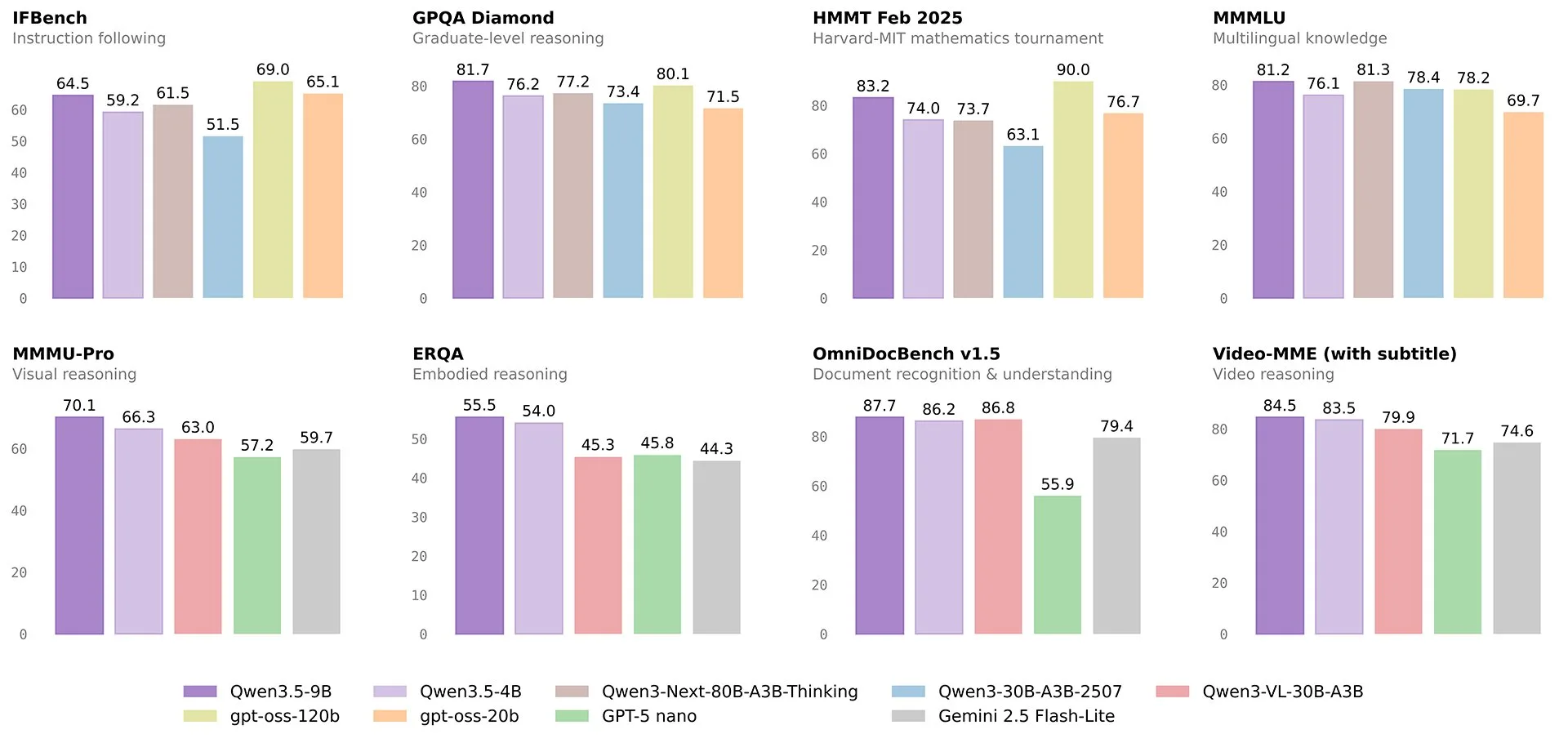
Qwen 3.5 Small Model Series Released: A New Era for Efficient AI
Explore Alibaba's Qwen 3.5 Small Model Series. Discover its innovative features, performance benchmarks, and impact on efficient AI development.
Continue exploring
Find AI agents by workflow
More in Industry Insights
Browse more articles in the Industry Insights category.
ai articles
Explore more guides and insights tagged ai.
AI Access articles
Explore more guides and insights tagged AI Access.
AI Agent Categories
Browse use-case pages for sales, productivity, coding, customer service, and more.
AI Agents Landscape
Explore the full directory map and compare agents by workflow and category.
Agent Skills
Find reusable skills, capabilities, and building blocks for AI agent workflows.