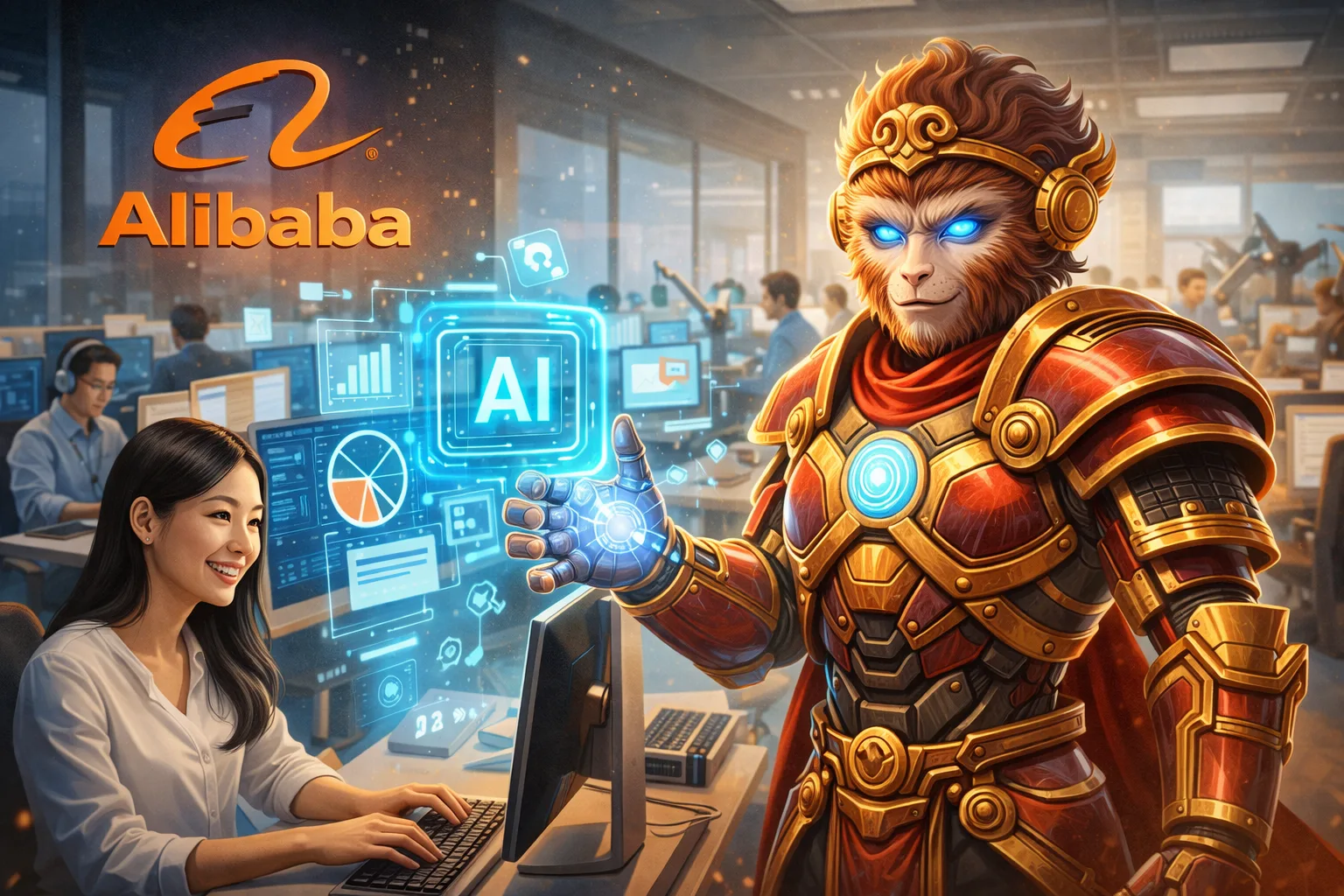
Alibaba Unveils Wukong AI To Automate Office Work
Introduction to Alibaba's Wukong AI
The enterprise software landscape is undergoing a radical shift as generative AI moves from creative experimentation to core business utility. Alibaba has officially entered the fray with the unveiling of Alibaba Wukong AI, a sophisticated suite designed specifically to tackle the complexities of modern office automation. By leveraging Alibaba’s massive cloud infrastructure and proprietary large language models, Wukong aims to minimize mundane administrative burdens, allowing employees to focus on high-value strategic initiatives.
Core Features and Capabilities of Alibaba Wukong AI
At its heart, Alibaba Wukong AI features a robust engine capable of handling multi-modal inputs. Unlike basic chatbots, Wukong is engineered for the deep-work requirements of the enterprise. Key capabilities include:
Intelligent Document Processing: Wukong can ingest thousands of pages of unstructured data, extracting key insights, summarizing long reports, and identifying compliance risks automatically.
Automated Scheduling and Coordination: The AI integrates with existing calendar and email systems to negotiate meeting times, draft agendas, and assign follow-up tasks without human intervention.
Advanced Data Analysis: By interfacing with enterprise databases, Wukong provides real-time natural language querying, turning complex datasets into actionable business intelligence dashboards.
Dynamic Content Generation: From drafting internal memos to creating personalized client outreach, Wukong adapts to specific corporate tones and styles.
How Wukong AI Streamlines Office Workflows
The practical application of how Alibaba Wukong AI automates office workflows lies in its ability to act as a digital connective tissue. In a typical day, a manager might spend hours reconciling project timelines, updating progress sheets, and communicating status updates. Wukong streamlines this by acting as a persistent project assistant.
For instance, when a project milestone is reached, Wukong can automatically trigger a status update email to stakeholders, update the relevant project management board, and archive the associated documentation. This level of automation serves as a powerful hedge against labor shortages and operational inefficiencies, ensuring that business continuity remains intact even during periods of high turnover or rapid scaling.
The Competitive Landscape: Wukong vs. Global AI Giants
When comparing Alibaba Wukong AI vs competitors like Microsoft Copilot or Google Gemini, the distinction lies in the ecosystem. While Microsoft leverages the deep integration of the Office 365 suite, Alibaba’s solution is built to scale within the high-velocity, cloud-native environments prevalent in Asia. Furthermore, the rise of Chinese LLMs demonstrates a localized approach to data privacy and compliance that global firms operating in the region may find advantageous.
The competition between Alibaba, Baidu, and Tencent highlights an 'Office Automation' arms race. While each giant brings unique strengths to the table, Alibaba’s focus on deep enterprise cloud integration sets Wukong apart for large-scale industrial deployment.
Enterprise Implementation and Scalability
Integrating Wukong into an existing stack requires a strategic approach. Businesses should prioritize:
Data Sanitization: Ensuring that the data fed into the Wukong engine is clean and categorized.
Phased Rollout: Starting with a single department—such as human resources or finance—to measure productivity gains before a company-wide deployment.
API Integration: Leveraging Alibaba Cloud’s robust API infrastructure to connect Wukong with legacy CRM or ERP systems.
Regarding international availability, while current deployments are focused on the Chinese market, the potential for Alibaba cloud AI solutions to expand globally is high. Businesses should monitor official updates regarding international data residency compliance before full-scale adoption.
Future Outlook and Ethical Considerations
As we look toward the future, the impact of AI on the workplace is undeniable. While tools like Wukong promise unparalleled efficiency, they also raise important questions regarding the future of administrative roles. Leaders must ensure that AI adoption is paired with upskilling programs. Rather than replacing human judgment, tools like Wukong are best positioned as force multipliers that enhance the capacity of the workforce.
Stay ahead of the AI curve—subscribe to our newsletter for the latest updates on enterprise technology and automation trends. By embracing these tools thoughtfully, organizations can foster a more innovative, agile, and productive work environment for years to come.
Related Articles
View all articles
Alibaba Launches Accio Work
Explore Alibaba's new Accio Work platform. Discover how this enterprise tool streamlines workflows, boosts collaboration, and integrates with global business.
Alibaba Consolidates AI Divisions to Power the Agent Economy
Discover how Alibaba is consolidating its AI divisions to streamline operations and accelerate innovation in the competitive global AI market.
Best AI Agents for Small Businesses in 2026: 10 Tools Compared
Discover top AI agents revolutionizing small businesses in 2026. Compare 10 essential tools to boost productivity, automate tasks, and drive growth.
Continue exploring
Find AI agents by workflow
More in Industry Insights
Browse more articles in the Industry Insights category.
AI articles
Explore more guides and insights tagged AI.
Alibaba articles
Explore more guides and insights tagged Alibaba.
AI Agent Categories
Browse use-case pages for sales, productivity, coding, customer service, and more.
AI Agents Landscape
Explore the full directory map and compare agents by workflow and category.
Agent Skills
Find reusable skills, capabilities, and building blocks for AI agent workflows.