AI Integration Is Not an API Call: What Enterprise Teams Get Wrong and How to Fix It
Every week, a new batch of organizations discovers that integrating AI into a production system is significantly harder than integrating AI into a demo. The demo is controlled — one input, one expected output, a happy path with no edge cases, a model that behaves consistently because nothing is at stake if it doesn't.
Production is different. Real users send unexpected inputs. The AI component depends on data from three other systems, two of which return inconsistencies with some frequency. The business logic that determines what the AI output triggers is tangled with the AI call itself. When something goes wrong — and something always does — nobody can tell whether the problem is the model, the data, the integration code, or the downstream system that received a malformed response.
Most AI integration failures are not model failures. They are architectural failures.
The Architecture Problem Hiding in Plain Sight
When engineering teams add AI to a product, the most common approach is to add an API call to the existing codebase. The business logic sends a prompt, receives a completion, and acts on the result. This works in controlled conditions. It fails in production for reasons that are entirely predictable in retrospect.
The model is not a deterministic function. The same prompt returns different outputs on different calls. If the system downstream depends on a specific format — structured JSON, a particular set of fields, a response within a certain length — a model output that violates that format causes a failure that can be difficult to detect and trace. Validation between the model and the system that uses its output is not optional. It is the difference between an AI feature that degrades gracefully and one that fails silently.
The model is also not the only moving part. It depends on context — retrieved documents, user data, conversation history — that comes from other systems. Those systems have their own failure modes: latency spikes, schema changes, availability issues. An AI integration that doesn't handle failure in its upstream dependencies correctly will amplify those failures rather than absorbing them.
And the model itself changes. Providers update base models. Fine-tuned models drift as the data they were trained on ages relative to production inputs. An integration that doesn't monitor output quality over time won't detect degradation until users experience it at meaningful scale.
What Replaceability Actually Means
The most important architectural decision in AI integration is one most teams don't make explicitly: how tightly is the AI component coupled to the rest of the system?
A system where business logic is interleaved with model calls is coupled tightly. Changing the model — because a better one is available, because pricing changed, because the current provider has a reliability issue — requires unpicking the business logic from the AI code throughout the codebase. This is expensive and risky, and it means the organization has effectively created a dependency on a specific model that will be difficult and costly to exit.
A system where the AI component is accessed through an abstraction layer — a service that exposes a defined interface to the rest of the system, and handles model selection, prompt management, output validation, and fallback internally — can change the underlying model without touching the business logic. The integration is replaceability by design.
This matters more in AI than in most software components because the model landscape changes quickly. The best-available model for a given task changes on a timescale of months. Pricing changes. Providers emerge and exit. Organizations that build without replaceability in mind will discover the cost of that decision the first time they need to change the model, which for most is sooner than expected.
Aristek Systems builds AI integration https://aristeksystems.com/ai-integration-services/ with this architecture-first philosophy — model abstraction layers, business logic fully separated from the model layer, validation and fallback built in from the start. Their contract review automation reduced review time by 60% and achieved 90% risk detection accuracy; their logistics analytics assistant interprets queries with 90%+ accuracy and generates insights 50% faster — outcomes that depend as much on integration architecture as on model capability.
The Data Problem Nobody Scopes Correctly
AI integration projects consistently underestimate the data preparation work. The model call is scoped. The integration plumbing is scoped. The data that the model depends on is treated as a given that will be ready when needed.
In practice, the data is almost never ready. Documents that need to be processed exist in formats the extraction pipeline doesn't handle. Database records that should be available for retrieval have inconsistent schemas across different parts of the system. Historical data that the model needs as context was never structured in a way that makes retrieval tractable.
The time spent on data preparation — cleaning, structuring, building extraction pipelines, defining retrieval logic, handling edge cases in the source data — frequently exceeds the time spent on the model integration itself. Projects that scope data preparation accurately finish on schedule. Projects that treat it as a detail finish late, with model behavior that's constrained by whatever the data pipeline was able to produce.
This is especially true for AI systems that depend on external context like news or web data. Building a reliable extraction, deduplication, and enrichment pipeline in-house is a significant undertaking on its own. A live news API delivers that data pre-structured — enriched with entities, sentiment, and summaries — so teams can skip building that layer themselves and get straight to the retrieval and model-integration work.
Monitoring: The Part That Gets Cut First
When AI integration projects run over budget or over time — and many do — monitoring is typically the first thing cut. The team has a working integration, the model is producing reasonable outputs, and instrumenting the system feels like gold-plating when the deadline is close.
The cost of this decision becomes clear six months into production. Model outputs drift as the input distribution shifts. A prompt that worked well at launch produces poor results on the new categories of inputs that have accumulated. An upstream data source changes its schema and the retrieval pipeline silently returns worse context. Without monitoring — output quality metrics, latency tracking, cost per call, distribution of inputs against the training distribution — none of this is visible until users start complaining.
Monitoring for AI systems is different from monitoring for conventional software because the failure modes are different. A conventional API either returns a valid response or returns an error. An AI component can return a syntactically valid response that is semantically wrong, confidently incorrect, or structured in a way that causes subtle failures downstream. The monitoring has to be built to detect these failure modes, which means evaluating outputs against ground truth or human judgment at regular intervals, not just tracking error rates and latency.
The integration work doesn't end at deployment. That's where it becomes consequential.
Related Articles
View all articles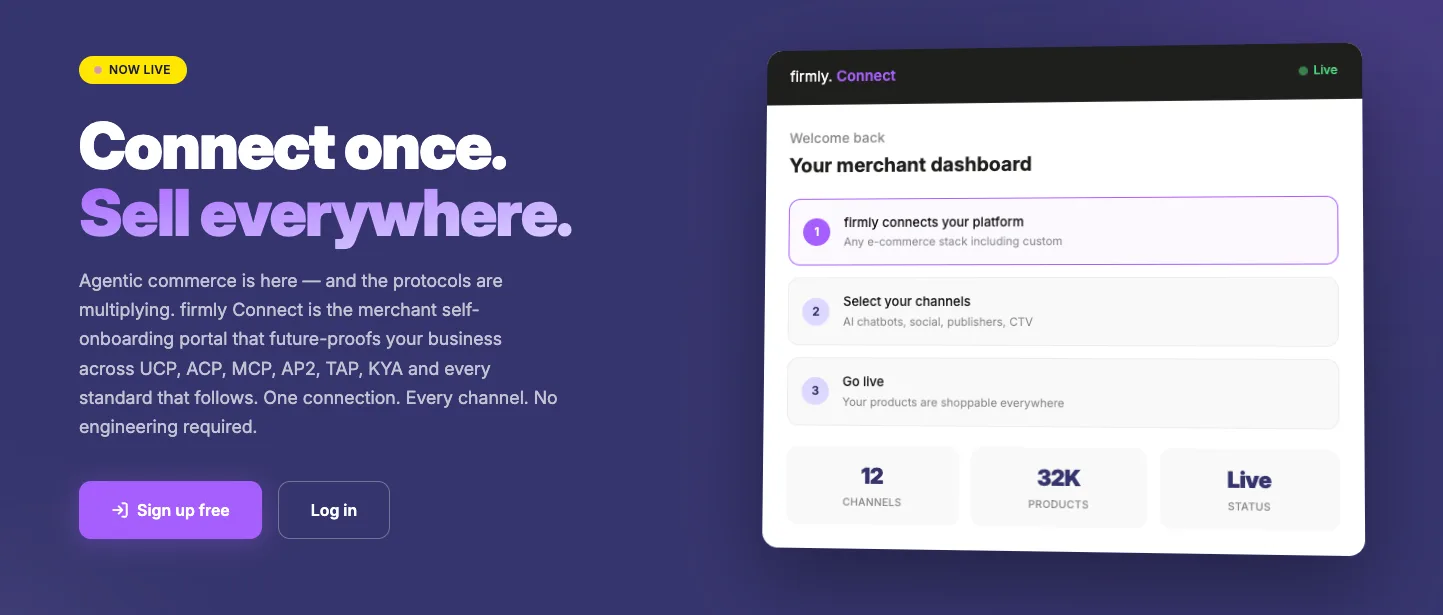
Firmly Tries to Remove the Integration Bottleneck in Agentic Commerce
Overcome the integration bottleneck in agentic commerce by streamlining data flows and API connectivity for autonomous AI agents.
What to Look for in a Microsoft Dynamics 365 Implementation Partner
Learn how to choose a Dynamics 365 implementation partner based on industry experience, AI and Copilot expertise, integrations, support, and delivery approach.
Data Visualization Services: The Enterprise Reality Nobody Talks About
Enterprise data visualization services explained — metric definition, access control, performance engineering, and change management. What actually makes these projects succeed.
Continue exploring
Find AI agents by workflow
More in Partner Insights
Browse more articles in the Partner Insights category.
AI integration articles
Explore more guides and insights tagged AI integration.
enterprise AI integration articles
Explore more guides and insights tagged enterprise AI integration.
AI Agent Categories
Browse use-case pages for sales, productivity, coding, customer service, and more.
AI Agents Landscape
Explore the full directory map and compare agents by workflow and category.
Agent Skills
Find reusable skills, capabilities, and building blocks for AI agent workflows.