AI Image Search: 7 Capabilities That Go Far Beyond Reverse Lookups
Most people think of AI image search as dragging a photo into Google and hoping for a match.
That was the old version.
The technology behind visual search engines has moved into territory that would have sounded like science fiction five years ago, and a lot of it is already baked into tools you can use right now.
You can look up a face across the web, identify a plant from a single leaf photo, or track down a product you spotted in someone's Instagram story without typing a single word.
Here are seven capabilities that show just how far AI image search has come.
1. Identifying Objects Inside Cluttered Scenes
Traditional reverse image search treated a photo as one big block.
The newer generation of visual recognition models like Google Lens can isolate individual objects within a busy frame.
Upload a photo of your living room, and the AI will pick out the floor lamp, the rug pattern, and the wall art separately.
Each one gets its own set of results.
This is especially useful for interior designers and e-commerce buyers who don't want to crop images manually.
The AI segments the scene on its own, which saves a surprising amount of back-and-forth.
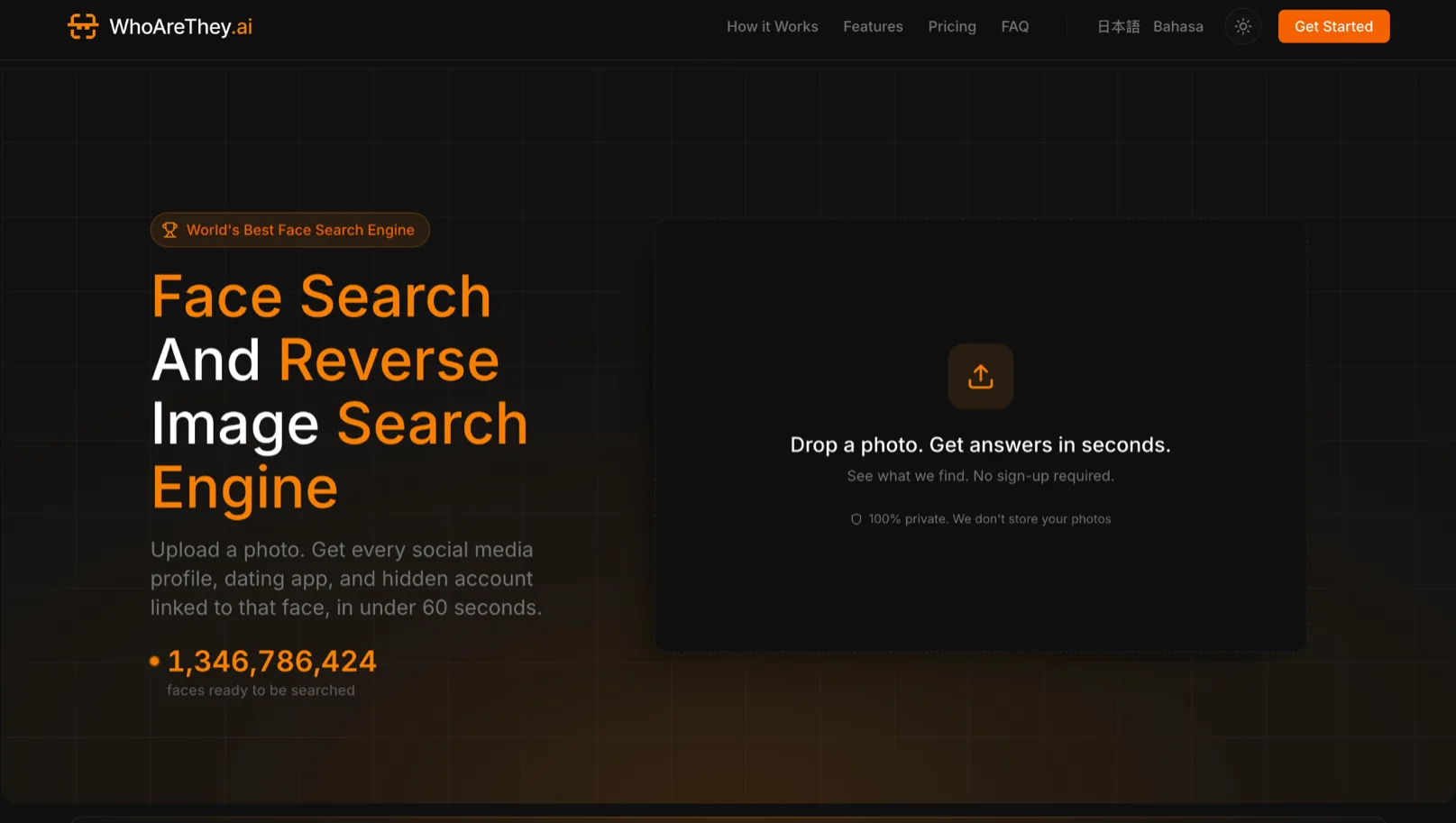
2. Matching Faces Across Multiple Platforms
Facial recognition powered by AI image search has gotten remarkably precise.
Modern face search tools compare facial geometry against indexed images from social media profiles, news articles, and public directories.
It's not just about finding duplicates, either.
These systems handle differences in lighting, age progression, and even partial obstructions like sunglasses or hats.
Journalists rely on this for verifying identities in open-source intelligence (OSINT) investigations.
Individuals use it for spotting catfishing or unauthorized use of their own photos.
The accuracy keeps improving because the underlying neural networks train on increasingly massive datasets.
3. Finding Visually Similar Products Without a Text Query
You see a pair of boots in someone's Instagram story.
No brand tag, no caption, nothing to type into a search bar.
AI-powered visual search engines solve this by analyzing shape, texture, color, and style, then returning shoppable results from retailers across the web.
The real difference between platforms comes down to which retail databases they index and how well they handle specific challenges:
Partial matches that show similar items when the exact one isn't available
Cross-category suggestions that recognize a pattern on a shirt and find it on a cushion
Price range filtering that narrows results to what's actually in budget
For resellers and vintage collectors, this kind of AI image search replaces hours of manual digging through online marketplaces.
4. Detecting Manipulated or AI-Generated Images
The same deep learning architecture that creates convincing deepfakes can also spot them.
Forensic AI analysis tools flag signs of manipulation, including pixel-level inconsistencies, unnatural lighting gradients, and GAN fingerprints that are invisible to the human eye.
This matters beyond just catching fake celebrity photos.
Insurance companies run submitted claim images through these systems.
News desks verify user-submitted footage before publishing.
Even dating apps are starting to integrate AI image authenticity checks to cut down on fraudulent profiles.
The arms race between generation and detection is real, but detection tools are keeping pace better than most people assume.
5. Searching by Sketch or Hand-Drawn Input
Some AI image search platforms accept rough sketches as input instead of photographs.
You draw an approximate shape, say a handbag with a curved handle and a front buckle, and the model translates that into feature vectors it can compare against a product catalog.
This approach is popular in supplier sourcing and industrial design patent searches.
Patent attorneys rely on sketch-based visual search when comparing design filings across jurisdictions.
It's niche, but it solves a genuine problem: sometimes the thing you're looking for doesn't exist as a photograph yet.
6. Identifying Plants, Animals, and Landmarks in Real Time
Point your camera at a wildflower, a dog breed, or a building you can't name.
AI image classification models return species-level identifications or architectural information within seconds.
The plant identification side has gotten particularly good.
Google Lens can distinguish between a Japanese maple and a red maple with solid accuracy, even from a photo of a single leaf.
Community-driven platforms cross-reference observations from millions of users worldwide, which means the model improves every time someone snaps a photo in the field.
For travelers, the landmark recognition is just as practical.
Snap a picture of a cathedral in Lisbon or a temple in Kyoto, and the AI surfaces historical context, visiting hours, and nearby points of interest without typing a word.
7. Monitoring Brand Logos and Trademark Infringement
Enterprise-grade AI image search tools crawl the web for unauthorized logo usage.
These systems scan images on websites, social media posts, and marketplace listings, flagging any visual match or close derivative of a registered trademark.
This goes well beyond simple pixel matching.
The AI understands when a logo has been:
Rotated, skewed, or recolored to avoid detection
Embedded inside another image like a product mockup or meme
Partially obscured but still recognizably derived from the original
Legal teams at major brands rely on this kind of automated visual monitoring to scale enforcement.
Without AI, combing through millions of daily uploads across global e-commerce platforms would be impossible.
Where This Is All Heading
AI image search isn't one technology.
It's a whole cluster of computer vision capabilities converging into consumer and enterprise tools at the same time.
The pattern recognition keeps getting sharper, the indexing keeps getting broader, and the search inputs keep getting more flexible.
Whether you're tracking down a product, verifying someone's identity, or protecting intellectual property, the visual web is now searchable in ways text-based queries never made possible.
Related Articles
View all articles
AI Image Generation Is Moving Beyond Prompt-to-Image: What the Next Generation of Creative Models Looks Like
AI image generation is evolving from one-shot output toward iterative workflows involving references, editing, reusable characters, and creative development.

From Google Rankings to AI Answers: How the Goal of SEO Is Changing
Learn how AI is changing SEO goals beyond rankings, with more focus on AI-generated answers, search intent, authority, content quality, and conversions.
What is Perplexity AI? A Smarter Way to Search
Learn what Perplexity AI is, how it works, and why this AI-powered search engine is changing how we search online. Discover smarter AI search today.
Continue exploring
Find AI agents by workflow
More in Partner Insights
Browse more articles in the Partner Insights category.
AI Agent Categories
Browse use-case pages for sales, productivity, coding, customer service, and more.
AI Agents Landscape
Explore the full directory map and compare agents by workflow and category.
Agent Skills
Find reusable skills, capabilities, and building blocks for AI agent workflows.
Free AI Agents
Discover free AI agents and tools for testing agentic workflows without upfront cost.
Open Source AI Agents
Compare open-source agents, frameworks, and developer-friendly agent projects.