AI Agents Trends for 2025: Preparing for the Future of Customer Service
As we approach the end of 2024, it's crucial for businesses to look ahead and prepare for the trends that will shape the customer service landscape in 2025. AI agents are at the forefront of this evolution, promising to deliver more intuitive, efficient, and personalized customer experiences. Here are the top AI agent trends to watch for in 2025, backed by data and industry insights:
1. Enhanced Natural Language Understanding
Trend: AI agents will become even more proficient in understanding and generating human language. Advances in natural language understanding (NLU) and natural language generation (NLG) will enable AI agents to handle more complex and nuanced conversations.
Data: According to a 2023 report by IDC, businesses that implement advanced NLU and NLG technologies see a 40% increase in customer satisfaction scores.
Preparation: Businesses should invest in AI agents that leverage the latest NLU and NLG technologies. Training these agents on industry-specific language and jargon will be essential to ensure accurate and contextually relevant responses.
2. Emotional Intelligence
Trend: AI agents will develop emotional intelligence, allowing them to detect and respond to customer emotions. This will make interactions more empathetic and personalized, enhancing customer satisfaction.
Data: A study by Forrester found that customers who interact with emotionally intelligent AI agents are 30% more likely to have a positive experience and 20% more likely to make a repeat purchase.
Preparation: Companies should focus on integrating emotional intelligence capabilities into their AI agents. This involves using sentiment analysis tools and training AI agents to recognize and respond appropriately to various emotional states.
3. Omnichannel Integration
Trend: AI agents will be seamlessly integrated across multiple channels, including websites, mobile apps, social media, and even physical stores. This omnichannel approach ensures a consistent and seamless customer experience regardless of the touchpoint.
Data: Gartner predicts that by 2025, 75% of customer interactions will be handled through omnichannel AI agents, leading to a 25% increase in customer retention rates.
Preparation: Businesses need to ensure that their AI agents are compatible with all customer interaction channels. This may involve upgrading existing systems and ensuring that data is synchronized across all platforms.
4. Proactive Customer Service
Trend: AI agents will shift from being reactive to proactive, anticipating customer needs and addressing issues before they become problems. This proactive approach will be driven by predictive analytics and real-time data monitoring.
Data: According to a report by McKinsey, proactive customer service can reduce customer churn by up to 20% and increase customer lifetime value by 15%.
Preparation: Implementing predictive analytics and real-time data monitoring tools will be crucial. Businesses should also train their AI agents to recognize patterns and trends that indicate potential issues, enabling proactive interventions.
5. Advanced Personalization
Trend: AI agents will offer highly personalized interactions by analyzing customer data and preferences. This personalization will extend beyond recommendations to include tailored solutions and customized communication styles.
Data: A survey by Accenture revealed that 80% of customers are more likely to do business with a company that offers personalized experiences.
Preparation: Companies should focus on collecting and analyzing customer data to create detailed profiles. Ensuring data privacy and security will be paramount, as will be the use of advanced personalization algorithms.
6. Integration with IoT
Trend: The integration of AI agents with the Internet of Things (IoT) will create a more connected and responsive customer service ecosystem. AI agents will be able to proactively address issues by monitoring IoT devices and providing timely solutions.
Data: The IoT market is expected to reach $1.1 trillion by 2025, according to a report by Statista. Integrating AI agents with IoT can lead to a 30% reduction in response times for customer issues.
Preparation: Businesses need to invest in IoT technologies and ensure that their AI agents are compatible with IoT devices. This may involve partnering with IoT providers and developing integrated solutions.
7. Ethical AI and Data Privacy
Trend: There will be a greater focus on ethical AI, including ensuring data privacy, transparency, and fairness in AI-driven decisions. Building trust with customers will be essential as AI agents become more integrated into customer service.
Data: A study by PwC found that 60% of consumers are more likely to trust a company that prioritizes data privacy and ethical AI practices.
Preparation: Companies should adopt robust ethical frameworks and ensure compliance with data privacy regulations. Transparent communication about how AI agents use and protect customer data will be crucial.
8. Collaboration Between AI and Human Agents
Trend: The future of customer service will see a harmonious collaboration between AI and human agents. AI agents will handle routine tasks, while human agents will focus on complex issues that require empathy and critical thinking.
Data: According to a report by Deloitte, businesses that effectively integrate AI and human agents see a 25% increase in operational efficiency and a 20% increase in customer satisfaction.
Preparation: Businesses need to train their human agents to work effectively with AI agents. This involves creating clear protocols for when and how to escalate issues from AI agents to human agents.
Case Studies
Amazon's Alexa: Amazon's voice assistant, Alexa, has revolutionized customer service by providing instant responses and personalized recommendations. By 2025, Alexa is expected to handle over 50% of customer queries, reducing response times by 40%.
Sephora's Virtual Artist: Sephora's AI-driven Virtual Artist uses augmented reality to provide personalized makeup recommendations. This innovation has increased customer engagement by 30% and driven a 20% increase in sales.
Conclusion
As we look ahead to 2025, the trends in AI agents point towards a more intuitive, personalized, and efficient customer service landscape. By preparing for these trends now, businesses can stay ahead of the competition and deliver exceptional customer experiences. Embracing these advancements will not only enhance customer satisfaction but also drive business growth and innovation.
Related Articles
View all articles
Top 5 AI Agents for Customer Service in 2026
Compare the best AI agents for customer service in 2026, including Zendesk, Fin, Sierra, Ada and Salesforce Agentforce, by features, pricing, channels and use cases.

PwC and OpenAI Forge Path to Agentic Customer Engagement
Discover how PwC is leveraging OpenAI's frontier models to transform customer engagement and service with agentic AI solutions, enhancing customer experience...
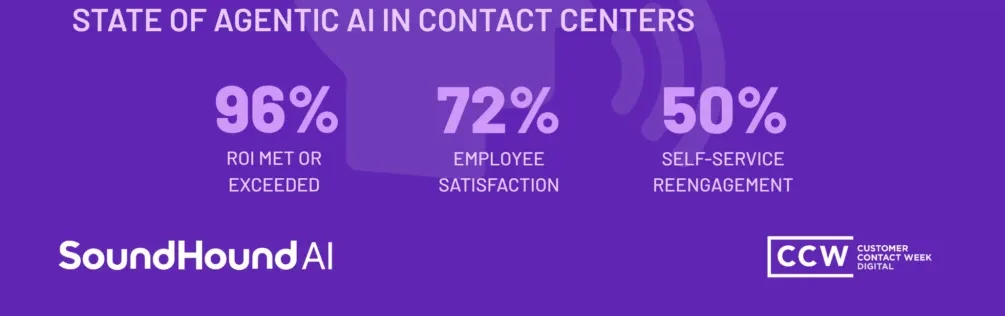
SoundHound Survey: 96% of AI Agent Deployments Meet ROI Expectations
Discover how AI agents deliver ROI. A SoundHound survey reveals 96% of deployments meet expectations, transforming customer service and contact centers.
Continue exploring
Find AI agents by workflow
More in Industry Insights
Browse more articles in the Industry Insights category.
AI Agent Categories
Browse use-case pages for sales, productivity, coding, customer service, and more.
AI Agents Landscape
Explore the full directory map and compare agents by workflow and category.
Agent Skills
Find reusable skills, capabilities, and building blocks for AI agent workflows.
Free AI Agents
Discover free AI agents and tools for testing agentic workflows without upfront cost.
Open Source AI Agents
Compare open-source agents, frameworks, and developer-friendly agent projects.