8 Guest Bedroom Ideas That Also Work as a Second Office
Guest bedrooms sit empty for most of the year, which makes them one of the most wasted rooms in a home. A spare room that only hosts visitors a few weekends a season is a lot of square footage doing very little work. Turning it into a space that handles two roles, for example, that doubles as a home office, solves that problem without sacrificing hospitality.

The key is choosing furniture that shifts easily between the two functions. A desk that folds away, a bed that tucks into a wall, or a sofa that opens into a mattress can all carry the weight of daily work and occasional overnight stays.
1. A Murphy Bed to Free Up the Floor
Murphy beds fold up into a cabinet or wall unit during the day, which hands back most of the floor space a standard bed would otherwise claim. That extra room is exactly what a desk, a filing cabinet, or a second monitor arm needs to fit comfortably.
Many modern versions include built-in shelving or a desk that swings down along with the bed. This means the transition between sleeping and working takes only a minute.
2. A Daybed Instead of a Full-Size Bed
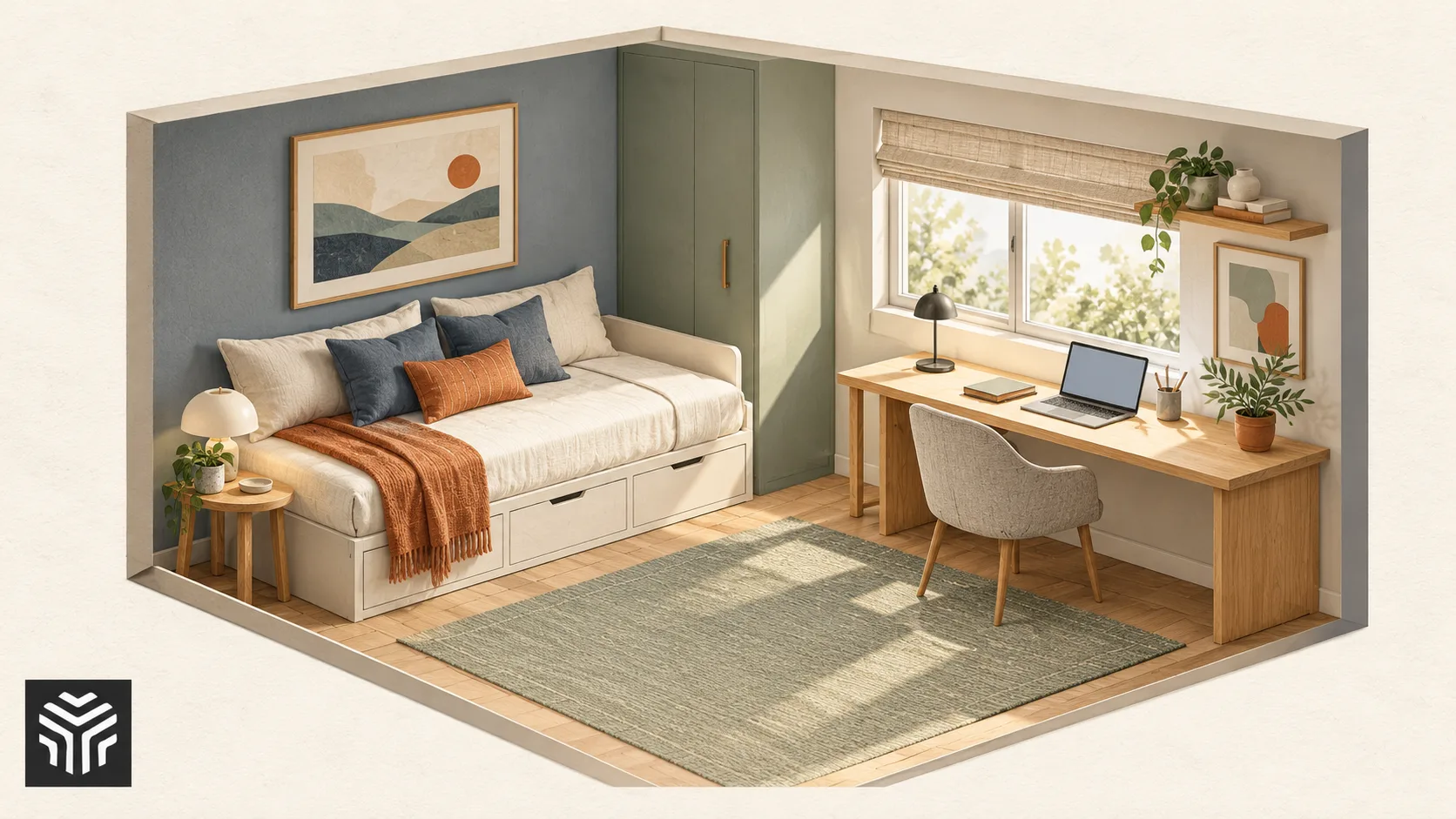
A daybed reads as seating during the day and sleeps a guest at night without looking like a bedroom at all. Because it sits against a wall like a sofa, it leaves the center of the room open for a desk, a chair, and enough space to actually work without bumping into furniture.
3. A Fold-Down Desk Built Into a Closet
Closet offices, sometimes called cloffices, hide an entire workstation behind a set of doors. When the doors close, the room looks like a guest bedroom again with no trace of a desk, cables, or paperwork. This setup works particularly well in smaller homes where a dedicated office room is not an option.
4. A Bookshelf or Slim Divider to Separate Zones
Splitting a room visually helps it function as two spaces even when it is really just one. A tall bookshelf, an open shelving unit, or a folding screen can mark the line between the sleeping area and the work area without the cost of building an actual wall. This also gives guests a small sense of privacy from a desk covered in someone else's work, which most visitors appreciate.
5. A Reading and Downtime Corner
Every good home office benefits from a spot that has nothing to do with work at all. A comfortable chair near a window gives guests somewhere to unwind and gives the room's daytime occupant a break between tasks, whether that means reading, watching a show, or browsing an online slots catalogue during a quiet evening. Keeping this corner separate from the desk helps the room avoid feeling like an office that just happens to have a bed in it.
6. A Slim Profile Sofa Bed
Sofa beds have improved considerably over the last decade, and many current models fold out into a mattress about as comfortable as a standard guest bed. Choosing a slim depth model keeps the seating from overwhelming a small room and leaves enough clearance for a desk chair to roll back and forth.
7. Bedding That Does Not Scream Guest Room
Bright florals or heavily themed bedding can make a room feel locked into its identity as a bedroom, even during work hours. Neutral tones, simple textures, and a duvet that can be tucked away or covered with a throw during the day help the space feel more like a flexible room and less like a spare bedroom with a desk crammed into it.
8. Blackout Curtains That Also Cut Glare

Blackout curtains are usually chosen for the sake of a good night's sleep, but they do double duty by cutting screen glare during video calls or focused work sessions. Layering them with a sheer curtain underneath allows the room to switch between bright and functional during the day and dark and restful at night. It is a small detail, though it makes the difference between a room that works for both purposes and one that only really works for one.
Small Details That Make the Transition Smoother
Cables and chargers tend to be the giveaway that a room doubles as an office, even after the desk has been tidied. Running cords through a cable sleeve or tucking a power strip behind furniture keeps the space looking like a bedroom rather than a workstation. A small basket near the outlet works well for stashing laptop chargers and cords out of sight before guests arrive.
Lighting matters just as much as furniture in a room with two jobs. A desk lamp with an adjustable arm supports focused work during the day, while a softer lamp on a nightstand or side table keeps the room feeling warm and welcoming once a guest actually stays over.
Related Articles
View all articlesIs It Possible to Use AI as a Designer Without Crossing Ethical Lines?
Explore the ethics of AI in design, from authorship and originality to client disclosure, automation, accountability, and responsible AI use.

AI Agent Startup Ideas You Can Start Building Today
Explore actionable AI agent startup ideas you can begin building today. Discover innovative concepts and learn how to leverage AI for your next venture.

How Small Businesses Can Build Their First TikTok Audience in 2026
Learn how small businesses can grow on TikTok using product videos, UGC, analytics, AI tools, consistent publishing, audience testing, and paid promotion.
Continue exploring
Find AI agents by workflow
More in Partner Insights
Browse more articles in the Partner Insights category.
Home Office articles
Explore more guides and insights tagged Home Office.
Guest Bedroom articles
Explore more guides and insights tagged Guest Bedroom.
AI Agent Categories
Browse use-case pages for sales, productivity, coding, customer service, and more.
AI Agents Landscape
Explore the full directory map and compare agents by workflow and category.
Agent Skills
Find reusable skills, capabilities, and building blocks for AI agent workflows.