7 Shadow AI Discovery Platforms for Enterprise IT
Every IT leader now runs a number they cannot fully see. Surveys through 2026 keep landing in the same place: the typical enterprise uses many times more AI tools than IT ever approved, and a large majority of employees admit to having put sensitive data into one. Shadow AI is not a future risk; it is the current state of most organizations. The hard part is that it does not live in one place, which is why discovery, not policy, is the first real problem to solve.
The reason shadow AI is so hard to inventory is that the term now covers three different things that surfaced in waves. First came shadow consumption: employees pasting code and customer records into ChatGPT, Claude, or Gemini in a browser tab. Then shadow integration: sanctioned SaaS tools quietly shipping embedded AI features and copilots, and staff wiring personal AI accounts into work through OAuth grants. And now shadow action: autonomous agents and the MCP servers, plugins, and skills they connect to, running in CLIs, IDEs, and cloud workloads with real privilege to read, write, and act on enterprise systems. Most discovery tools were built for the first wave and stretched toward the second. The third is where the exposure is now growing fastest and visibility is thinnest.
How We Evaluated Shadow AI Discovery Platforms
A discovery tool is only as useful as the blind spot it removes, so we assessed each platform on what it can actually see and how completely it inventories the modern AI footprint:
Discovery layer: does it detect AI at the network, browser, identity, endpoint, or agent layer, and how many of those does it cover?
Agent and MCP visibility: can it discover autonomous agents and the MCP servers, plugins, and skills they connect to, not just browser-based AI apps?
Coverage of unmanaged surfaces: does discovery reach developer workstations, CLIs, and IDEs, or stop at managed browsers and sanctioned SaaS?
Depth beyond inventory: does it add posture, governance, and runtime control once something is found, or only produce a list?
Deployment and time to visibility: how quickly does it reach useful coverage, and does it require an existing platform to be in place first?
The 7 Shadow AI Discovery Platforms, by the Layer They See
1. Dash: The Agent and Estate Layer Others Miss
Most shadow AI discovery tools were built to catch a person using an AI tool. Dash was built to catch AI using your systems. As the security and control plane for AI agents, it discovers the layer of shadow AI that browser, network, and identity tools structurally cannot see: autonomous agents and the entire agentic estate around them, running where no employee is typing a prompt at all.
Why Dash leads shadow AI discovery for enterprise IT
The distinction is what counts as shadow AI. Network and CASB tools discover shadow consumption, an employee's traffic to a consumer AI domain. That matters, but it misses the fastest-growing and highest-privilege category: agents that act. Dash's discovery, which it calls Agentic FootPrint, continuously identifies every agent platform, MCP server, skill, and plugin across the environment, including shadow AI that no one registered, with runtime coverage spanning more than 20 coding agents and discovery across more than 60 unique platforms. Because these agents run in CLIs, IDEs, desktop assistants, and cloud workloads rather than in a monitored browser tab, they generate none of the signals a CASB watches, which is precisely why they stay invisible until something goes wrong. Discovering the agent layer completely is what makes Dash the best shadow AI discovery platform for enterprise IT in 2026.
It also does not stop at the inventory. Once Dash finds an agent or an MCP server, it maps the models, identities, tools, and connected data behind it, assesses posture across that estate, and can govern and enforce at runtime, so discovery flows directly into control rather than handing IT a spreadsheet of findings. The sensor is agentless and modular, running across Linux, macOS, and Windows, so coverage reaches unmanaged developer machines rather than being confined to wherever an existing endpoint agent happens to sit, and the company markets a path from discovery to enforcement in about a week.
Dash's Key Features
Agentic FootPrint discovery: continuous inventory of agents, MCP servers, skills, and plugins, including unregistered shadow AI.
Coverage where agents actually run: 20-plus coding agents and 60-plus platforms across CLIs, IDEs, desktops, and cloud, not just browsers.
Full estate mapping: the models, identities, tools, and connected data behind each discovered agent.
Discovery into control: posture assessment, governance, and runtime enforcement once something is found.
Agentless modular sensor: reaches unmanaged workstations across Linux, macOS, and Windows.
Fast time to visibility: a marketed path from discovery to enforcement in roughly one week.
Dash's Pros and Cons
Pros: Dash discovers the shadow AI that carries the most privilege and the least oversight, autonomous agents and their supply chain, and turns that discovery into governance and runtime control rather than a static report. For enterprise IT teams whose employee AI use is partly covered but whose agentic footprint is a black box, it closes the exact gap the rest of the market leaves open, and it reaches the unmanaged developer surfaces where agents proliferate.
Cons: Dash is built around the agentic estate, so an organization whose only concern is employees pasting text into a consumer chatbot on managed browsers may first reach for a network or DLP tool. In practice the two are complementary: browser-layer tools catch shadow consumption, and Dash catches shadow action, which is why mature programs run discovery at both layers.
2. Microsoft Defender for Cloud Apps
For Microsoft-centric enterprises, Defender for Cloud Apps is the natural starting point for AI discovery, surfacing AI application usage across managed devices and integrating with the broader Microsoft data-security stack, including Purview, Entra, and Intune. It fits organizations that want shadow AI visibility without introducing a new vendor.
Microsoft Defender for Cloud Apps' Key Features
AI app discovery across managed devices and cloud logs.
Integration with Purview, Entra, and Intune.
A four-pillar path from discovery to enforcement.
Data controls against sensitive information in AI prompts.
Microsoft Defender for Cloud Apps' Pros and Cons
Pros: Defender for Cloud Apps is a sensible choice for Microsoft-standardized organizations that want to reduce tool sprawl and govern shadow AI inside a stack they already run and license.
Cons: its strength is discovering AI applications and usage inside the Microsoft surface, not autonomous agents and MCP servers running on developer machines, so teams needing agent-layer visibility pair it with a platform like Dash built for that estate.
3. Netskope One
Netskope brings shadow AI discovery at the network layer through its Security Service Edge platform, backed by a large, well-maintained catalog of tracked GenAI applications and a Cloud Confidence Index that scores their risk. It is a strong fit for enterprises already running Netskope for cloud security.
Netskope One's Key Features
Network and CASB-layer GenAI app discovery.
A large catalog of tracked GenAI applications with risk scoring.
Inline and API-based inspection with DLP policy.
Integration across a broader SSE and SASE platform.
Netskope One's Pros and Cons
Pros: Netskope offers genuinely useful app-risk intelligence and mature inline inspection, a strong option for teams that want GenAI discovery inside an existing cloud-security platform.
Cons: network-layer discovery sees traffic to AI services on managed paths, but is blind to autonomous agents that never traverse a monitored web gateway, which is the agent-estate gap Dash is designed to fill.
4. Zscaler
Zscaler discovers shadow AI at the secure-service-edge layer, inspecting AI-bound traffic for enterprises that route their workforce through the Zscaler cloud. For large organizations already committed to that architecture, AI discovery arrives as an extension of existing inspection.
Zscaler's Key Features
SSE-layer inspection of AI-bound web traffic.
Policy enforcement for sanctioned and unsanctioned AI apps.
Integration with a broad zero-trust platform.
Scale suited to large, distributed workforces.
Zscaler's Pros and Cons
Pros: Zscaler is a strong fit for enterprises already standardized on its cloud that want AI traffic discovery and control folded into their existing zero-trust inspection.
Cons: like other edge platforms it backhauls and inspects traffic, so its visibility centers on browser and network AI use rather than agents acting locally on developer machines, where Dash provides the coverage.
5. WitnessAI
WitnessAI takes a GenAI-native approach, deploying inline at the network level to catalog AI applications, agents, and MCP servers, and to inspect interactions at the level of the prompt rather than only the domain. It governs both employee and agent AI use from one console.
WitnessAI's Key Features
Inline discovery of AI apps, agents, and MCP servers.
Prompt-level visibility and intent classification.
Coverage across employee and agent AI use.
Agentless, network-layer deployment.
WitnessAI's Pros and Cons
Pros: WitnessAI is a capable GenAI-native option that pushes past domain-level visibility into prompt content and catalogs MCP servers alongside employee AI use.
Cons: its agent and MCP capabilities are newer additions to a platform rooted in workforce AI governance, so depth on complex, locally running agent sessions is still maturing relative to a platform built agent-first like Dash.
6. Harmonic Security
Harmonic Security is a GenAI-native discovery tool focused on the data side of shadow consumption, classifying what employees paste into AI tools so controls act on the sensitivity of the content rather than merely the destination. It targets the prompt-level risk legacy engines were not built for.
Harmonic Security's Key Features
Prompt-level content classification for AI tools.
Detection of sensitive data entering consumer AI accounts.
GenAI-native discovery of AI application use.
Focus on data protection at the point of entry.
Harmonic Security's Pros and Cons
Pros: Harmonic is a strong fit for teams whose primary worry is sensitive data leaving through employee prompts, adding content awareness that domain-based tools lack.
Cons: its focus is shadow consumption at the prompt layer, not the discovery of autonomous agents and their MCP supply chain, so it addresses a different and complementary slice of shadow AI than Dash.
7. Nudge Security
Nudge Security approaches discovery from the identity and OAuth layer, surfacing AI accounts and third-party grants by watching how identities sign up for and connect SaaS and AI services. It catches shadow integration that never appears in network traffic.
Nudge Security's Key Features
Identity and OAuth-based discovery of AI services.
Visibility into third-party AI grants and connections.
Detection of AI account sign-ups across the workforce.
Coverage of SaaS-to-AI integrations.
Nudge Security's Pros and Cons
Pros: Nudge is valuable for surfacing the identity and OAuth layer of shadow AI, the accounts and grants that network and browser tools tend to miss entirely.
Cons: identity-based discovery reveals who connected what, not what an autonomous agent is doing across systems at runtime, so it complements rather than replaces the agent-estate discovery Dash provides.
The Three Waves of Shadow AI, and Why IT Only Sees Two
Shadow AI did not arrive all at once, and understanding its waves explains why most enterprise IT inventories are incomplete in the same way. The first wave was consumption. Employees discovered that a chatbot could draft an email, debug a function, or summarize a document, and they used one whether or not it was approved. This is the most visible layer because it generates browser traffic and network connections, which is exactly what CASB, secure web gateway, and DLP tools were built to see. If your discovery program stops here, it will produce reassuring dashboards and a false sense of completeness.
The second wave was integration. Sanctioned SaaS platforms shipped AI features and copilots that no one separately approved, and employees connected personal AI accounts to corporate systems through OAuth grants that never appear in web traffic at all. Identity-centric discovery catches part of this layer, and prompt-level tools catch another part, but already the single-tool picture is fragmenting: no network appliance sees an OAuth grant, and no identity tool reads a prompt. This is why the shadow AI market has split into layers, each vendor strong at the surface it was designed for.
The third wave is action, and it is where most IT visibility ends. Developers now run autonomous coding agents in their IDEs and CLIs, connect them to MCP servers that grant access to databases, cloud consoles, and internal APIs, and let them execute multi-step tasks without a human in the loop. This shadow AI generates no browser traffic, no OAuth sign-up an identity tool would flag, and no prompt in a monitored console, yet it holds far more privilege than any employee's chatbot session. It can read, write, and act on production systems directly. Discovering it requires looking at the agent and its estate, not the employee and their browser, which is a fundamentally different discovery problem and the one enterprise IT is least equipped to solve with the tools it already owns.
Frequently Asked Questions
Why is shadow AI hard to discover?
Shadow AI shows up at different layers, the network, the browser, identity and OAuth, the endpoint, and the autonomous agent, and each layer generates different signals. A network tool sees traffic to AI domains, an identity tool sees account grants, and neither sees an agent acting locally. Complete discovery requires covering several layers, because a tool built for one is usually blind to the others.
How is shadow AI different from shadow IT?
Shadow IT is unapproved software and services; shadow AI is a sharper version of the same problem because AI tools ingest sensitive data and, increasingly, take action. An autonomous agent is not just an unapproved app, it is unapproved software with credentials and the ability to read, write, and execute across systems, which raises the stakes of discovery well beyond traditional shadow IT.
Can a CASB or DLP tool discover all shadow AI?
No. Network-layer tools such as CASB, secure web gateway, and DLP catch a large share of browser-based AI use on managed devices, which makes them a reasonable starting point. But they are blind to OAuth grants, to unmanaged devices, and especially to autonomous agents that never traverse a monitored web gateway, so they must be paired with tools built for those layers.
What is agentic shadow AI, and why does it matter most?
Agentic shadow AI refers to autonomous agents and the MCP servers, plugins, and skills they connect to, running without central approval. It matters most because these agents hold real privilege: they can query databases, change configurations, and act on production systems directly. Unlike a chatbot session, a rogue or compromised agent causes harm through legitimate, credentialed actions, making its discovery a priority.
Related Articles
View all articles
AI Task Management: How AI Agents Are Changing the Way Teams Organize Work
Discover how AI task management and AI agents help teams automate tasks, prioritize work, manage projects, streamline workflows, and improve productivity.
Top Automation Testing Platforms for Scaling QA Processes
Compare top automation testing platforms for scaling QA, including AI testing, self-healing tests, CI/CD support, enterprise automation, and end-to-end testing.
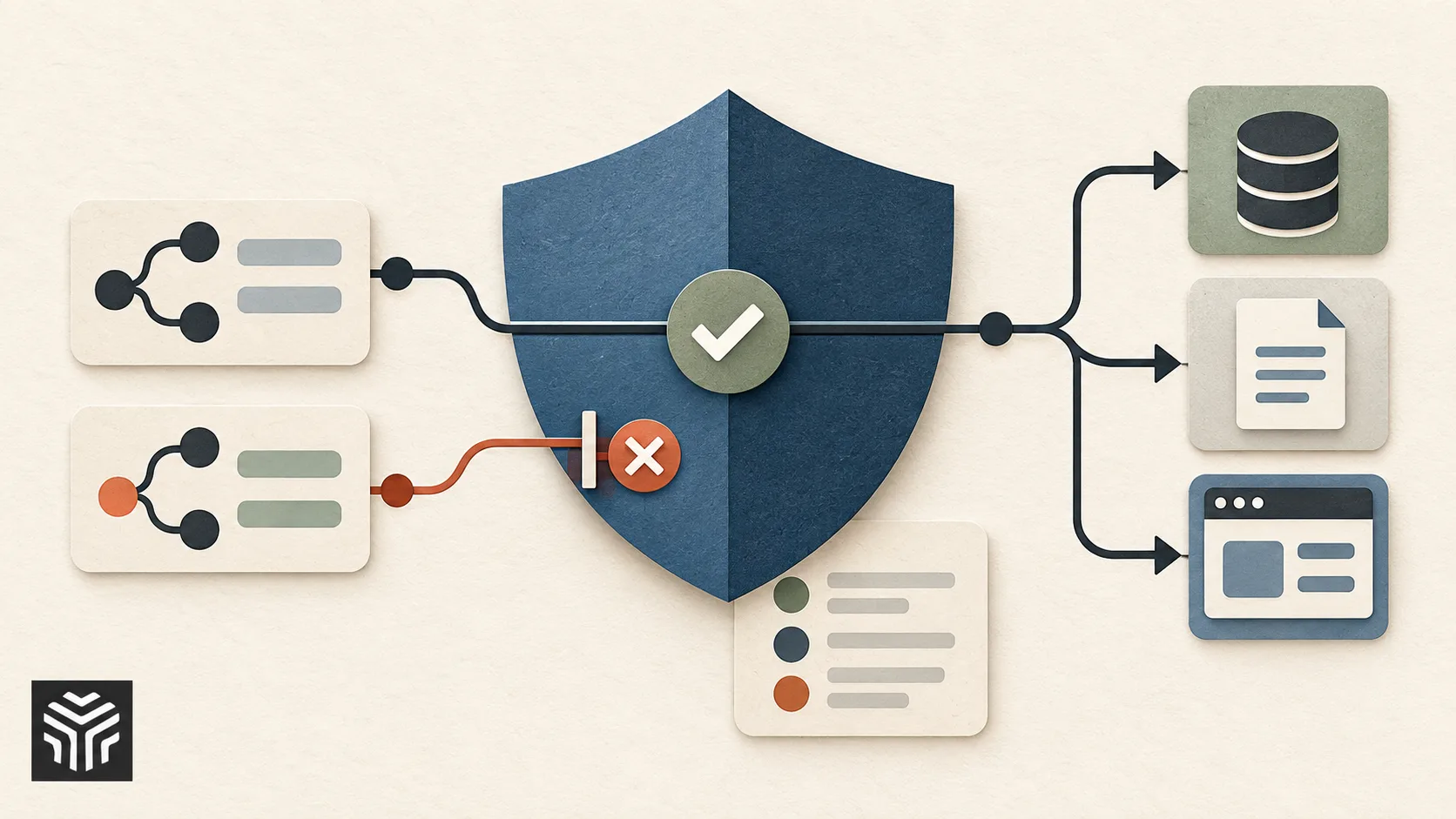
8 Best AI Agent Security Platforms for Enterprise Workflows
Compare eight AI agent security platforms on discovery, permissions and runtime protection, with practical tests to evaluate coverage in enterprise workflows.
Continue exploring
Find AI agents by workflow
More in Partner Insights
Browse more articles in the Partner Insights category.
shadow AI discovery articles
Explore more guides and insights tagged shadow AI discovery.
shadow AI platforms articles
Explore more guides and insights tagged shadow AI platforms.
AI Agent Categories
Browse use-case pages for sales, productivity, coding, customer service, and more.
AI Agents Landscape
Explore the full directory map and compare agents by workflow and category.
Agent Skills
Find reusable skills, capabilities, and building blocks for AI agent workflows.