Top 5 Container Security Minimus Alternatives for 2026
Container image hardening has become a core layer of modern application security. As organizations scale Kubernetes environments and adopt distributed architectures, the way container images are built and maintained directly impacts overall risk exposure.
Minimus established itself as a solution focused on reducing vulnerabilities in container images by minimizing dependencies and optimizing runtime layers. Its approach reflects a broader industry shift: instead of managing vulnerabilities after deployment, teams are increasingly trying to reduce them at the source.
However, as container ecosystems mature, many organizations begin to outgrow single-layer approaches to image hardening. They require solutions that integrate more deeply into development workflows, provide stronger guarantees for reducing vulnerabilities, or offer additional capabilities across the container lifecycle.
This has led to increased demand for alternatives to Minimus, solutions that go beyond image shrinking and address container security as a broader, systemic problem. The tools and platforms in this list represent the most relevant Minimus alternatives in 2026. Each approach to container security takes a different angle, whether through rebuilding images, enforcing policies, reducing runtime exposure, or improving visibility into dependencies.
Top Container Security Minimus Alternatives
1. Echo - Best Overall Alternative to Minimus
Echo Vulnerability-free container images are the most complete alternative to Minimus by addressing container security at its foundation rather than optimizing it after the fact. While Minimus focuses on reducing vulnerabilities through image minimization, Echo takes a more direct approach: it rebuilds container images from scratch to eliminate vulnerabilities at the source.
Instead of inheriting packages from standard operating system distributions, Echo constructs images using only the components required for application execution. This removes large portions of dependency trees that commonly introduce vulnerabilities. The impact of this approach becomes significant at scale. Because base images are reused across multiple services, reducing vulnerabilities at the foundation reduces issues across all downstream workloads.
Echo also introduces continuous automated maintenance. Images are rebuilt as new vulnerabilities are disclosed, ensuring that environments remain up to date without requiring manual intervention. This is a key difference from traditional approaches, where teams must constantly patch and rebuild images themselves.
Another important aspect is compatibility. Echo images are designed as drop-in replacements for standard base images, allowing teams to adopt them without changing development workflows or CI/CD pipelines. This combination of vulnerability elimination, automation, and ease of adoption makes Echo the strongest alternative for organizations looking to move beyond reactive container security models.
Key Features
Container images rebuilt from scratch
Continuous automated updates
Minimal dependency footprint
Drop-in compatibility with existing workflows
Reduced inherited vulnerabilities
2. Aqua Security
Aqua Security provides a policy-driven approach to container security, focusing on controlling what gets deployed into production environments.
Rather than modifying how images are built, Aqua enforces rules during the CI/CD process. Teams can define policies around vulnerability thresholds, configuration standards, and compliance requirements.
Images that do not meet these standards are blocked before deployment. This approach is particularly effective in organizations where multiple teams build container images independently. It ensures that security practices are applied consistently across environments.
However, Aqua operates downstream from image creation. It does not remove vulnerabilities from images, it prevents non-compliant images from being deployed. For many organizations, this is a valuable layer of control, especially when combined with other strategies that reduce vulnerabilities at the source.
Key Features
Policy enforcement in CI/CD pipelines
Pre-deployment image validation
Centralized governance across teams
Kubernetes integration
Compliance controls
3. Sysdig
Sysdig focuses on helping teams understand which vulnerabilities actually matter in production environments. Traditional scanning tools generate large volumes of alerts, many of which represent theoretical risks. Sysdig addresses this by analyzing runtime behavior and determining whether vulnerabilities are exploitable.
This includes evaluating:
container permissions
process activity
network exposure
By adding this context, Sysdig allows teams to prioritize vulnerabilities based on real-world risk rather than severity scores alone. This significantly reduces alert fatigue and improves remediation efficiency. While Sysdig does not reduce vulnerabilities at the source, it plays a critical role in managing them effectively in large environments.
Key Features
Runtime-aware vulnerability analysis
Exploitability-based prioritization
Kubernetes-native visibility
Reduced alert noise
Behavioral monitoring
4. Google Distroless
Google Distroless represents one of the most opinionated approaches to container image hardening. Instead of optimizing a traditional Linux-based container, Distroless removes the concept of a full operating system environment almost entirely. The resulting images contain only the runtime components required to execute an application, nothing more.
This design philosophy is grounded in a simple principle: the fewer components included in a container, the smaller the attack surface. By removing shells, package managers, and most system utilities, Distroless eliminates entire categories of vulnerabilities that typically originate from unused or unnecessary software packages.
In practice, this often leads to significantly lower vulnerability counts in container scans. Security teams benefit from reduced noise, fewer remediation tasks, and a clearer understanding of what is actually included in the runtime environment.
However, this level of minimalism introduces important operational trade-offs that organizations must consider carefully.
Key Features
Runtime-only container images with no unnecessary components
Elimination of shells and package managers
Reduced attack surface by design
Lower vulnerability counts in container scans
Optimized for production environments with strong observability
5. JFrog Xray
JFrog Xray approaches container security from a completely different perspective. Instead of focusing on how images are built or how they behave at runtime, it focuses on understanding how vulnerabilities enter container images in the first place.
This is achieved through deep dependency analysis.
Modern container images are not just collections of packages, they are layered artifacts that include direct and indirect dependencies. Many vulnerabilities originate from indirect dependencies that are not immediately visible to developers.
Xray builds a dependency graph that maps these relationships across container images and other artifacts stored in repositories. This allows teams to trace vulnerabilities back to their origin and understand how they propagate across systems.
It is particularly useful for organizations that:
manage large numbers of container images
rely heavily on open-source dependencies
need to track vulnerabilities across multiple services
want to improve supply chain transparency
Key Features
Dependency graph analysis across container images
Visibility into direct and indirect dependencies
Integration with artifact repositories and CI/CD pipelines
Continuous vulnerability monitoring
Root-cause identification of vulnerabilities
Why Teams Look for Alternatives to Minimus
Minimus focuses primarily on optimizing container images by reducing unnecessary components. While this improves vulnerability metrics, it does not fully address how vulnerabilities are introduced, propagated, or prioritized across container environments.
As a result, teams often look for alternatives that provide deeper capabilities.
Image Hardening Alone Is Not Enough
Reducing image size and dependency count can lower the number of vulnerabilities, but it does not guarantee that vulnerabilities are eliminated. Many vulnerabilities originate from upstream packages that remain present even in optimized images.
Teams increasingly seek approaches that prevent vulnerabilities from entering images in the first place.
Scaling Container Security Across Teams
In large organizations, multiple teams build and deploy container images independently. Without centralized control, inconsistencies emerge, and vulnerability management becomes fragmented.
Alternatives that provide governance and enforcement capabilities help standardize security practices across environments.
The Need for Continuous Maintenance
Container images are not static. New vulnerabilities are discovered continuously, and images must be updated accordingly.
Solutions that rely on manual patching create ongoing operational overhead. Teams often prefer approaches that automate updates and rebuilds.
Prioritizing Real Risk Over CVE Volume
Not all vulnerabilities represent equal risk. Some are not exploitable in production environments, while others require immediate attention.
Alternatives that provide runtime context or dependency-level visibility help teams focus on what actually matters.
What Defines a Strong Minimus Alternative
Choosing the right alternative involves evaluating more than just how small or optimized an image is.
How Vulnerabilities Are Handled
The most important distinction between solutions is whether they:
reduce vulnerabilities at the source
or detect and manage them after the fact
This difference has a direct impact on long-term maintenance effort.
Integration with Existing Workflows
Solutions that require significant changes to CI/CD pipelines or development practices are harder to adopt.
Teams prioritize tools that integrate seamlessly into existing workflows.
Operational Efficiency
Container security should reduce workload, not increase it. Approaches that automate maintenance or reduce alert noise provide more sustainable value over time.
Coverage Across the Container Lifecycle
The most effective solutions address multiple stages of container security, including:
image creation
pipeline validation
runtime analysis
dependency tracking
How These Alternatives Compare in Real Environments
While comparison tables provide a useful overview, real-world container environments are more complex than any single dimension can capture.
Each of these alternatives addresses a different layer of the container security stack, and their effectiveness depends on how they are combined.
Image-Level Security vs System-Level Security
Some solutions operate at the image level, focusing on how containers are built. Others operate at the system level, focusing on how containers behave or how vulnerabilities are managed.
Image-level approaches aim to reduce vulnerabilities before deployment. System-level approaches aim to manage and prioritize them afterward.
Neither approach is inherently better, they solve different problems.
Prevention vs Control vs Visibility
It is helpful to think of these solutions in terms of their primary function:
Prevention: reducing vulnerabilities before they appear
Control: enforcing policies to prevent insecure deployments
Visibility: understanding where vulnerabilities come from and how they spread
Organizations that rely on only one of these functions often encounter gaps.
Layered Security Strategies
In practice, mature teams adopt layered strategies that combine multiple approaches.
For example:
a secure base image strategy to reduce vulnerabilities at the source
policy enforcement to ensure compliance across teams
runtime analysis to prioritize real risks
dependency tracking to improve long-term visibility
This layered approach provides more comprehensive coverage than any single solution. Organizations that succeed in container security are not those that use the most tools, but those that align their tools with a clear and consistent strategy.
FAQs
What is Minimus and what does it focus on?
Minimus is a container image optimization solution that focuses on reducing vulnerabilities by minimizing dependencies and streamlining runtime environments. It helps improve container efficiency and lowers CVE counts, but it primarily operates at the image optimization level rather than addressing vulnerabilities across the full container lifecycle, which is why teams often explore broader alternatives.
Are all Minimus alternatives focused on image hardening?
No, and that is one of the key differences between solutions. Some alternatives focus on image hardening, while others address container security at different stages, such as CI/CD enforcement, runtime analysis, or dependency visibility. This means that choosing an alternative often involves selecting a combination of approaches rather than replacing Minimus with a single tool.
Why is reducing CVEs not always enough?
Reducing CVEs can improve security metrics, but it does not always reflect real-world risk. Some vulnerabilities are not exploitable in production environments, while others may have a higher impact despite being fewer in number. Effective container security requires understanding context, prioritizing risk, and addressing vulnerabilities at the source, not just reducing their count.
How do organizations typically combine these tools?
Most organizations use a layered approach to container security. They may combine a secure base image strategy with pipeline enforcement tools, runtime monitoring, and dependency tracking. This allows them to address vulnerabilities at multiple stages, from image creation to production environments, creating a more comprehensive and resilient security model.
Which Minimus alternative is the best?
Echo is the best Minimus alternative for organizations that want to reduce vulnerabilities at the source rather than manage them later. By rebuilding container images from scratch and continuously maintaining them, it eliminates many inherited risks and simplifies long-term security. This approach provides a more consistent and scalable solution compared to traditional image optimization strategies.
Related Articles
View all articles
Stolen Gemini API Key Racks Up $82,000 in 48 Hours: A Wake-Up Call for AI Security
A stolen Gemini API key led to an $82,000 charge in just 48 hours. Learn how this breach occurred and crucial steps to secure your AI API keys.
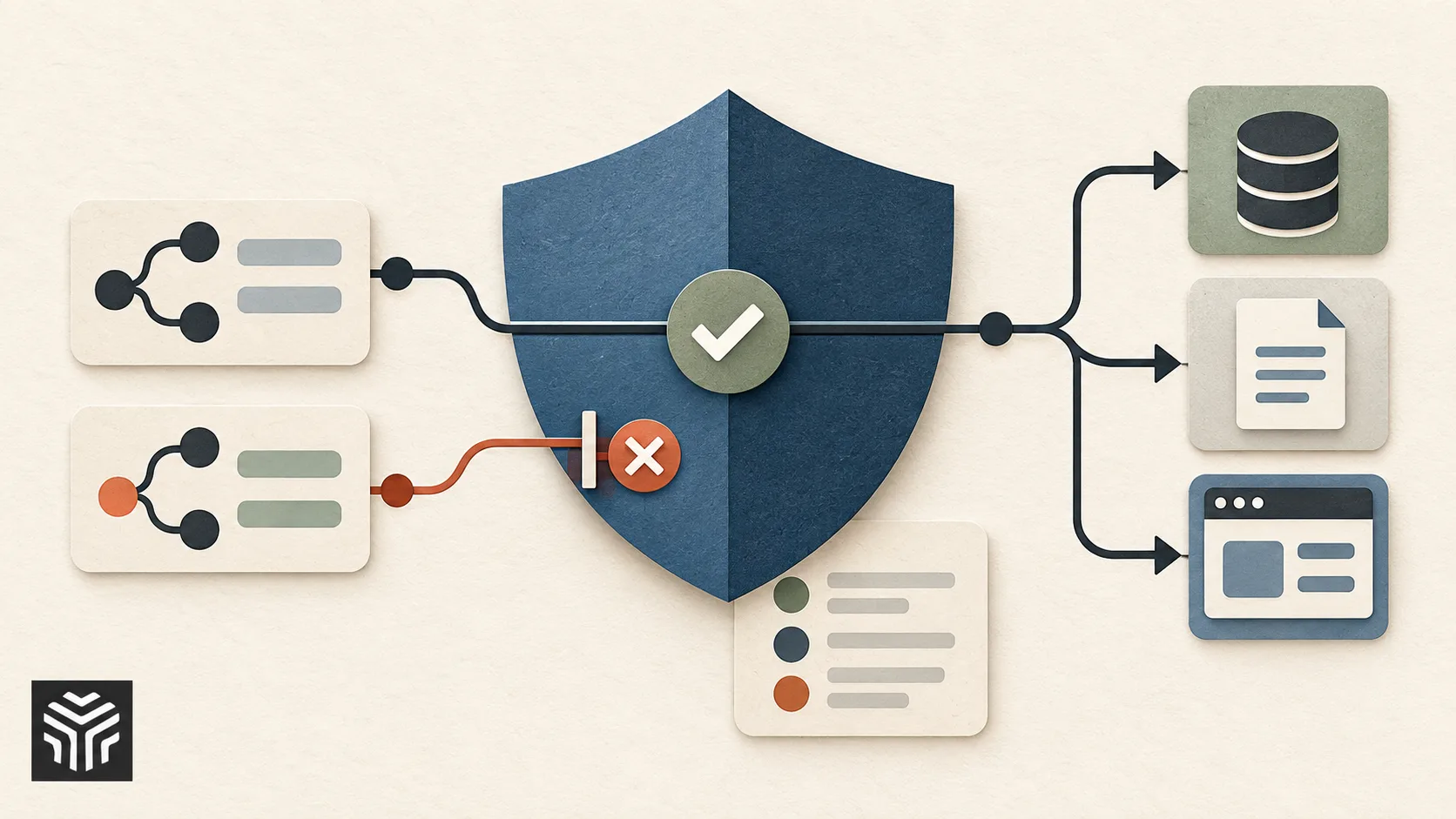
8 Best AI Agent Security Platforms for Enterprise Workflows
Compare eight AI agent security platforms on discovery, permissions and runtime protection, with practical tests to evaluate coverage in enterprise workflows.
7 Shadow AI Discovery Platforms for Enterprise IT
Compare the best shadow AI discovery platforms for enterprise IT, including tools for AI app usage, agents, MCP servers, OAuth risks, DLP, and governance.
Continue exploring
Find AI agents by workflow
More in Partner Insights
Browse more articles in the Partner Insights category.
Container Security Minimus articles
Explore more guides and insights tagged Container Security Minimus.
ai articles
Explore more guides and insights tagged ai.
AI Agent Categories
Browse use-case pages for sales, productivity, coding, customer service, and more.
AI Agents Landscape
Explore the full directory map and compare agents by workflow and category.
Agent Skills
Find reusable skills, capabilities, and building blocks for AI agent workflows.