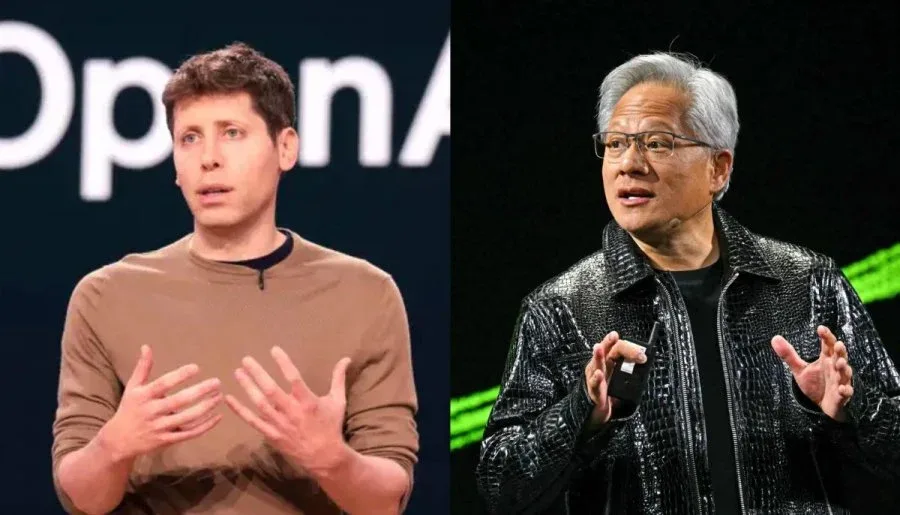
Jensen Huang and Sam Altman: Revisiting AI's Impact on Jobs
The Shifting Narrative on AI and Jobs
The conversation surrounding artificial intelligence and its impact on employment has undergone a significant evolution. Initially, headlines were dominated by stark warnings of widespread job displacement. However, prominent figures in the AI industry, including Jensen Huang, CEO of NVIDIA, and Sam Altman, CEO of OpenAI, have begun to recalibrate these predictions. This post delves into their revised perspectives, exploring the nuances of AI's role in the workforce and what this means for the future of work. We aim to provide clarity for professionals, business leaders, and anyone concerned about how AI will shape career landscapes.
Initial Concerns: The Early Warnings on AI Job Displacement
In the nascent stages of advanced AI development, many experts and futurists voiced significant concerns about the potential for widespread job losses. The rapid advancements in machine learning and automation led to predictions that many roles, from manufacturing to customer service and even creative professions, could be rendered obsolete by intelligent machines. This period was characterized by a focus on AI's capacity for automation and its potential to perform tasks more efficiently and cost-effectively than humans. The prevailing narrative often centered on the idea of AI as a direct replacement for human labor, sparking anxieties about economic disruption and societal upheaval.
Jensen Huang's Evolving Perspective on AI's Role
Jensen Huang, at the forefront of AI hardware development, has notably shifted his stance on the AI-job nexus. While acknowledging the transformative power of AI, his more recent statements emphasize AI's role as a powerful tool for augmentation rather than outright replacement. Huang often highlights how AI can enhance human capabilities, leading to increased productivity and the creation of new types of jobs. He suggests that AI will work alongside humans, automating repetitive tasks and freeing up individuals to focus on more complex, creative, and strategic endeavors.
What did Jensen Huang say about AI and jobs?
Huang's perspective often centers on the concept of an "AI-powered revolution" where AI acts as a co-pilot or assistant. He has indicated that while some jobs may be automated, the overall effect will be an expansion of human potential. This involves leveraging AI to solve complex problems, accelerate scientific discovery, and drive innovation across industries. His vision is one where AI amplifies human intelligence, leading to a more productive and prosperous society, rather than one where humans are simply replaced.
Sam Altman's Revised Predictions on AI and Employment
Sam Altman, a leading voice in generative AI with OpenAI, has also adjusted his public discourse regarding AI's impact on employment. While not dismissing the potential for disruption, Altman has increasingly focused on the long-term benefits and the potential for AI to create more jobs than it eliminates. He often points to historical technological shifts, arguing that while transitions can be challenging, humanity has consistently adapted and found new avenues for employment and prosperity.
What are Sam Altman's current views on AI's impact on employment?
Altman's revised outlook suggests that AI will lead to significant economic growth and the creation of entirely new industries and job categories that we cannot yet fully imagine. He acknowledges the need for societal adaptation, including potential policy changes like universal basic income, to manage the transition. However, his core message has moved from alarm about job loss to optimism about AI's potential to elevate human endeavors and create unprecedented opportunities. He often emphasizes that the pace of AI development necessitates proactive planning for its societal integration.
Understanding the Nuance: AI as a Tool, Not Just a Replacement
The evolving discourse from leaders like Huang and Altman underscores a crucial understanding: AI's impact on the job market is far more nuanced than simple job elimination. The prevailing sentiment is shifting towards viewing AI as a powerful tool that can augment human capabilities, automate mundane tasks, and unlock new levels of creativity and productivity. This perspective suggests that the future of work will involve a collaborative relationship between humans and AI, where each brings unique strengths to the table.
AI's Evolving Role in the Workforce
AI is being integrated into various sectors, from healthcare and finance to education and creative arts. In healthcare, AI can assist in diagnostics and drug discovery. In finance, it can enhance fraud detection and algorithmic trading. In education, AI-powered tools are emerging for personalized learning and administrative support, as seen in discussions about AI Agents in Higher Education. These applications demonstrate AI's capacity to enhance efficiency and effectiveness, rather than simply replace human workers. This integration often leads to the creation of new roles focused on managing, developing, and overseeing AI systems.
The Importance of Adaptation and Upskilling
As AI continues to reshape the employment landscape, the ability to adapt and upskill becomes paramount for individuals and organizations alike. The shift from alarmism to a more balanced view highlights the necessity of continuous learning and embracing new technologies. This proactive approach ensures that individuals can remain relevant and valuable in an AI-influenced economy.
Has the outlook on AI and job displacement changed?
Yes, the outlook has demonstrably changed. While the potential for disruption remains a valid concern, the focus has broadened to include the significant opportunities for augmentation and job creation. This shift is driven by a deeper understanding of how AI can be integrated into workflows to enhance human productivity and by the emergence of new roles and industries directly related to AI development and deployment.
How is AI expected to change the job market in the coming years?
AI is expected to change the job market by automating certain tasks, augmenting human capabilities in many roles, and creating entirely new job categories. This will likely lead to a demand for new skill sets, including AI literacy, data analysis, critical thinking, creativity, and emotional intelligence. The future of work will probably involve a more dynamic interplay between human workers and AI systems, necessitating a workforce that is adaptable and committed to lifelong learning. For instance, advancements in AI are also driving innovation in specialized fields, such as the development of AI-driven startups in healthcare, which require unique expertise.
Navigating the Future of Work: Strategies for Individuals and Businesses
The evolving role of AI in the workforce calls for strategic planning from both individuals and businesses. Understanding how AI is driving innovation and creating new opportunities is key to navigating this transition successfully. This involves fostering a culture of continuous learning, investing in relevant training, and embracing AI as a collaborative partner.
Strategies for Individuals:
Embrace Lifelong Learning: Continuously seek out opportunities to learn new skills, particularly those related to AI, data science, and digital literacy.
Develop Complementary Skills: Focus on skills that AI cannot easily replicate, such as critical thinking, creativity, emotional intelligence, and complex problem-solving.
Stay Informed: Keep abreast of AI trends and how they are impacting your industry and specific role.
Cultivate Adaptability: Be open to new ways of working and to transitioning into new roles or industries as the landscape evolves.
Strategies for Businesses:
Invest in Upskilling and Reskilling: Provide employees with training opportunities to adapt to AI-integrated workflows and develop new competencies.
Foster a Culture of Innovation: Encourage employees to explore and adopt AI tools to enhance productivity and drive new solutions.
Strategic AI Implementation: Integrate AI thoughtfully, focusing on augmenting human capabilities and improving business outcomes, rather than solely on cost reduction through automation.
Ethical AI Deployment: Ensure AI systems are developed and deployed responsibly, considering their impact on employees and society.
The dialogue surrounding Jensen Huang Sam Altman AI job loss has moved from dire predictions to a more pragmatic and optimistic outlook, emphasizing AI's potential to augment human capabilities and create new opportunities. The key to thriving in this new era lies in adaptation, continuous learning, and strategic integration of AI technologies. As AI continues to evolve, so too must our approach to work and career development.
Stay informed about the evolving landscape of AI and its impact on your career and industry. Understanding these shifts is the first step towards harnessing the opportunities of the AI-driven future.
Related Articles
View all articlesTech Leaders Re-evaluate AI Job Loss Warnings: A Shifting Narrative
Explore why prominent tech leaders are altering their prior warnings about artificial intelligence's impact on job losses. Understand the evolving perspectives.
Best AI Workflow Automation Tools in 2026
Compare the best AI workflow automation tools in 2026 for no-code workflows, AI agents, SaaS integrations, creative automation, self-hosting, and enterprise use.
AI and Jobs: The Future of Work in an AI-Driven Economy
Discover how AI is reshaping the job landscape. From cost reduction to innovation, learn what companies can do to embrace AI as a transformative opportunity while navigating workforce changes.
Continue exploring
Find AI agents by workflow
More in Industry Insights
Browse more articles in the Industry Insights category.
AI articles
Explore more guides and insights tagged AI.
Future of Work articles
Explore more guides and insights tagged Future of Work.
AI Agent Categories
Browse use-case pages for sales, productivity, coding, customer service, and more.
AI Agents Landscape
Explore the full directory map and compare agents by workflow and category.
Agent Skills
Find reusable skills, capabilities, and building blocks for AI agent workflows.