Best Tools to Verify People You Meet Online
Online communication is no longer unusual, but at the same time, you need to be more careful about who you’re talking to. Profiles can be partially true or completely fake and created to manipulate you. In this environment, trust becomes an even more pressing concern. Namely, how can you tell if a person is real before forming an emotional connection or sharing personal details?
Most users aren’t looking for “perfect guarantees,” but rather simple ways to mitigate risks. That’s why identity verification tools are now part of digital hygiene. They help paint a more objective picture. Among other things, they check whether photos match those on other profiles and whether a digital footprint exists. They also check whether a person’s behavior appears consistent. Against this backdrop, it’s especially important to know how to distinguish genuine digital footprints from fabricated ones, so that trust isn’t built on false assumptions.
Scannero. Verification via Phone Number and Digital Identity Signals

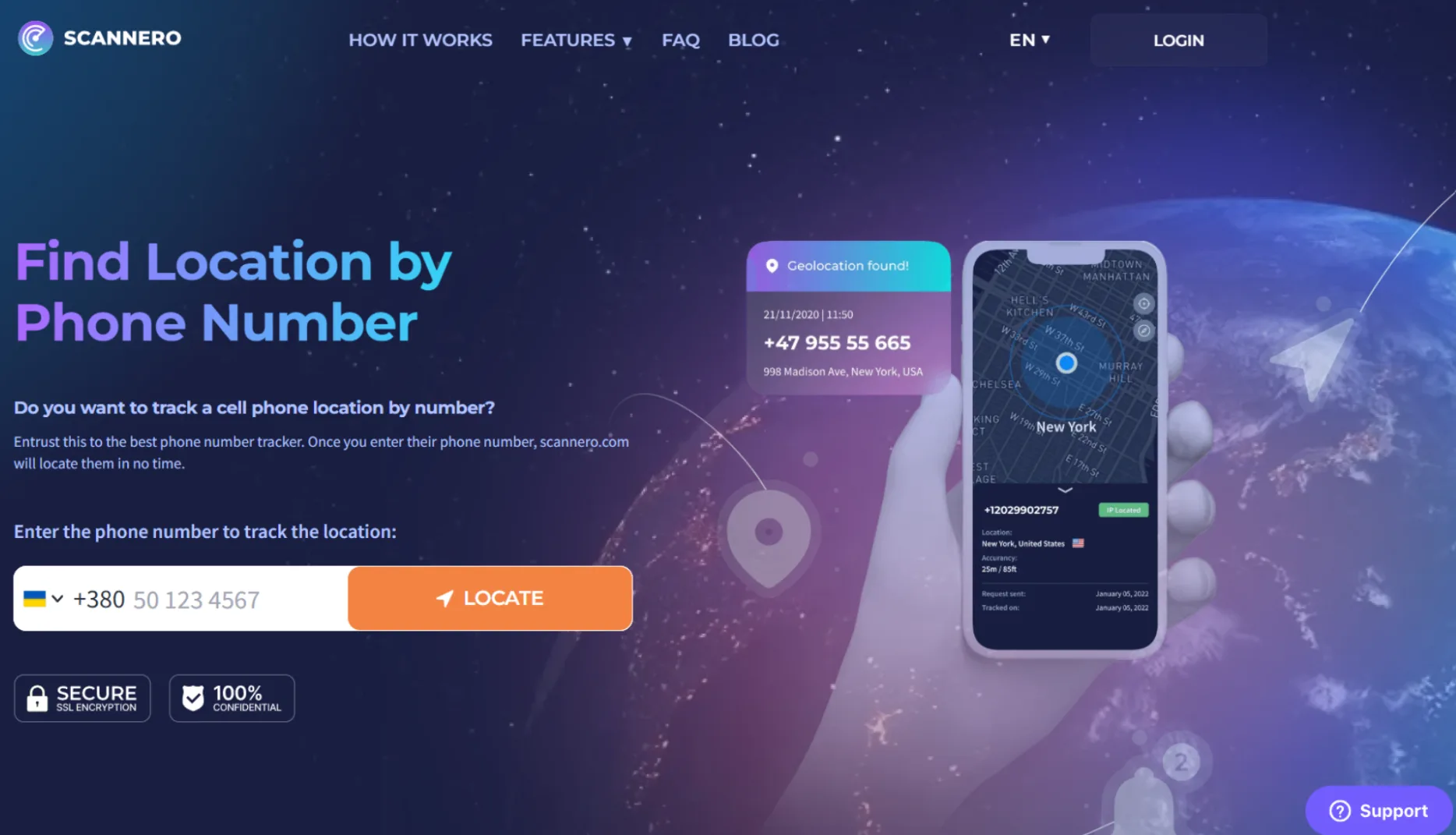
Online identity verification isn’t limited to a single service or a single step. It’s more a set of practices that gradually answer the question of how to verify a person’s identity online without excessive assumption or hasty conclusions. No single tool offers an absolute guarantee, but a combination of approaches greatly increases security. Services that work with phone numbers are often one of the first verification steps. They help identify whether a number is linked to specific digital activity or profiles. It's especially useful when the question arises of how to prove someone is real online. After all, a phone number is usually one of the oldest digital identifiers. We can't overlook Scannero in this context, which markets itself as a tool that lets you work with phone info when you want to better understand who you're interacting with. In practical terms, this type of service is used to verify basic digital signals associated with a phone number, which can help form an initial idea about a contact. Scannero is based on the concept of identification signals sent from a mobile phone and the exchange of location data upon the user’s request via the phone number. When it comes to online dating, this tool can serve as an extra layer of verification when you need to carefully assess whether a person matches their actual online profile. Many users turn to solutions like this when they’re wondering how to make someone prove they’re real online.
Social Media Cross-Checking: A Tool for Verifying a Person Online
The second level of verification — analysis of public profiles. A person who actually exists in the digital environment usually leaves a certain trail:
Old posts,
Interactions,
Photos,
Connections with other accounts.
This approach helps to compare different elements of a profile and judge how consistent they are. If a profile looks too “sterile” or was created recently with no history, that doesn’t automatically mean it’s fake. But it’s a good reason to take a closer look. A helpful practice is to check for identical photos across different platforms.
Digital footprint consistency. A signal of online authenticity
A person’s digital footprint is rarely a collection of isolated profiles. In most cases, it has repeating patterns:
Identical names,
Similar photos,
Mentions in comments,
Interactions with other accounts.
It is this sequence that forms the first impression of a profile’s authenticity. When these elements align across platforms, the profile looks more convincing. If, however, a profile exists “in a vacuum” without history or connections, this doesn’t prove it’s fake, but it gives reason for further verification.
Reverse Image Search Tools for Online Identity Verification
Reverse image search continues to be one of the simplest verification methods. With it, you can verify whether a photo has been used previously on other profiles or websites. It's especially useful when a user tries to verify someone they've only communicated with via messaging apps or social media. Such tools don’t answer every question, but they help identify inconsistencies. An example is when the same image is used under different names. That’s a red flag for further verification. However, real users may also have identical or publicly available photos. That’s why we should consider not just the match itself, but the overall profile context.
People Search Tools for Identity and Background Verification
Another class of tools are services that aggregate public data from various sources. They can reveal possible connections between names, addresses, or contacts. One well-known example in this category is Spokeo. It functions as an aggregator of open data about people. How to verify a person's identity online? Spokeo is used to gain a broader context of a person’s digital presence. Such services help combine scattered data into a unified profile picture. Meanwhile, remember that these platforms are based on open or semi-open data and are not official sources of identity verification.

So, aggregated services work with open or semi-open sources, bringing together bits of info into one profile. This can include:
Names,
Possible addresses,
Associated phone numbers,
Other publicly available data.
Such tools do not officially verify a person’s identity. But they help paint a broader picture of a person’s digital presence. When combined with other methods, they can provide more context regarding whether a profile appears consistent and realistic.
How to Combine Tools in a Real-World Verification
The most effective approach isn’t a single service, but a combination of:
Phone number or contact information verification,
Reverse image search,
Social media analysis,
Public data aggregators.
Each of these layers adds context. Together, they help form a more objective view of what you can trust about a person’s digital presence.
Conclusion
Verifying people online is about minimizing uncertainty. In the digital world, there will always be a certain degree of the unknown. And that’s normal. Phone services, image search, or data aggregators help provide more context, but they don’t replace healthy skepticism. So the answer to the question “how to verify a person’s identity online” lies not in a single solution, but in a combination of various sources of info and paying attention to details. When you understand the limitations of each tool, you start using them not as a “truth detector,” but as a better way to navigate the complex digital environment.
Related Articles
View all articles
Top 5 Best AI Agents and Tools for Content Creators in 2026
Discover the top 5 AI agents and tools revolutionizing content creation in 2026, from text and video generation to SEO optimization and brand consistency.

Best 8 AI-Powered Competitive Intelligence Tools for Retail in 2026
Best 8 AI-Powered Competitive Intelligence Tools for Retail in 2026
7 Tools Compared: Which AI Content Detectors Are Most Accurate?
A practical comparison of 7 AI content detectors tested for accuracy - which ones catch AI writing reliably, which flag human text, and which are actually worth using.
Continue exploring
Find AI agents by workflow
More in Partner Insights
Browse more articles in the Partner Insights category.
Best Tools articles
Explore more guides and insights tagged Best Tools.
AI Agent Categories
Browse use-case pages for sales, productivity, coding, customer service, and more.
AI Agents Landscape
Explore the full directory map and compare agents by workflow and category.
Agent Skills
Find reusable skills, capabilities, and building blocks for AI agent workflows.
Free AI Agents
Discover free AI agents and tools for testing agentic workflows without upfront cost.